Alright, let’s cut to the chase—if you’re sitting there staring at a big gap between your teeth and wondering, “Can I actually get an Implant Malo Bridge to fix this?” you’ve come to the right place. I run a supply company that specializes in Malo Bridge systems, and I hear this question every single week. Let’s break it down like we’re grabbing coffee (no stuffy dental jargon, promise) because this is one of the most common mix-ups people have about this game-changing implant option. Implant Malo Bridge
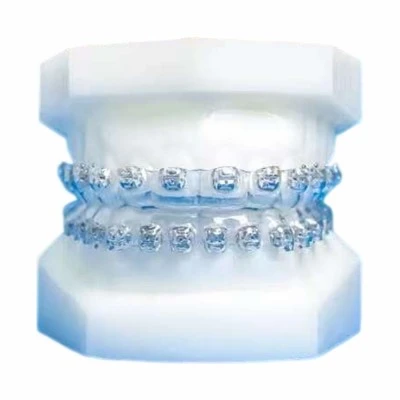
First, let’s get the basics straight, no fancy terms. The Implant Malo Bridge (you might’ve heard it called an implant-supported fixed partial denture, but let’s skip that) is designed for gaps where you’re missing multiple teeth—not just one. Think: two, three, or even four consecutive missing teeth in a row, versus a single gap. And here’s the key part that trips people up: it’s implant-retained, meaning it hooks onto dental implants placed in your jawbone, not adjacent natural teeth (unlike traditional bridges that shave down nearby teeth to anchor them). That’s already a big win if you don’t want to damage healthy teeth, right?
Now, the main question: “I have a large gap—can this work for me?” Let’s define “large gap” because that’s vague. A lot of people call a gap with two missing teeth “large,” and others mean four. But here’s the science part that I back up with the clinical data we share with our partner clinics, and it’s not just my sales pitch: the Implant Malo Bridge works great for gaps of up to four consecutive missing teeth. Wait, but hold on—what if you have more than that? Like, five or six? That’s where people start panicking, thinking they need full dentures, and that’s where we step in to make it fit.
Let’s talk about why “large gap” isn’t the only factor. The two non-negotiables for any implant system, including Malo Bridge, are jawbone density and gum health. If you’ve got super low bone density (maybe from missing those teeth for years without replacing them, so the jawbone shrank), we might have to adjust—like adding bone grafts before placing the implants. But that’s totally doable, and our Malo Bridge system is actually built to adapt to that, not just work in perfect cases. I’ve seen clients come in with gaps that felt impossible because of bone loss, and with a quick graft (we even have supply kits that make that easier for our clinic partners), we still got them set up with the Malo Bridge.
Wait, let’s address a common misconception that I hear all the time from people researching on their own online: “If my gap is too big, I can’t get an implant bridge.” No, that’s not true. Let’s say you have a gap from tooth #6 to #10—that’s five missing teeth. Instead of placing five separate implants (which is pricey and invasive), the Malo Bridge lets you place two to three implants to support that entire span. That’s where it shines, even for gaps that feel “way too big.” The key is spacing the implants evenly in the bone so they have enough support to hold the entire bridge. So even a large gap isn’t a dealbreaker—you just need to map out the right number of implants to anchor it, and that’s what our team helps clinics figure out when they order from us.
Let me share a real quick anecdote to make this concrete (no pun intended). Last month, a dental clinic we work with sent us a case: a 52-year-old patient who’d lost four back molars in a row due to gum disease. The gap was huge, and the clinic was worried traditional bridges wouldn’t hold, and full dentures felt like overkill. They ordered our Malo Bridge kit, we walked their team through the implant placement blueprint (super simple, step-by-step guides that come with every bulk order), and three months later, the patient came back for a checkup. They said they could eat a steak without wincing—something they hadn’t done in years. That’s the stuff that makes me love this system, even for gaps that most people write off.
Now, let’s get into the nitty-gritty of why the Malo Bridge is actually better than other options for large gaps, specifically. Traditional fixed bridges: if you have a gap of four missing teeth, you’d need to shave down two adjacent teeth (one on each side) to anchor the bridge. That means damaging healthy enamel, which leads to cavities down the line, maybe root canals later. Removable partial dentures? They’re bulky, you have to take them out at night, they slip when you eat or laugh. The Malo Bridge is fixed—you leave it in 24/7, it looks and feels like your real teeth, and it doesn’t touch your healthy teeth at all. For large gaps, that’s a game-changer because you’re not sacrificing more of your mouth than you have to.
But wait—let’s not act like there are no caveats, because honesty is what keeps our clinic partners coming back. First, you can’t have active gum disease. If your gums are super inflamed right now, we’ll tell you to get that treated first before placing implants. Second, if you’re a heavy smoker, that can affect bone integration (the part where the implants fuse to your jaw). But even then, we work with clinics to adjust the timeline—maybe wait a few months to make sure your smoking habits are consistent, or provide specialized implant screws that are more forgiving. Third, the gap has to be in a section of the jaw that has room for the implants. Like, if your gap is right next to a nerve in your lower jaw, we can’t place an implant too close, but the Malo Bridge system’s design accounts for that spacing so we don’t have to guess.
Here’s another thing that people don’t always know: the Implant Malo Bridge isn’t one-size-fits-all for large gaps. We supply custom-milled bridges, right? So if your gap is a weird shape, or if you have some slight bone irregularities, we can adjust the bridge to fit. That’s why ordering from us is different than buying generic implant parts—we work directly with clinics to get the measurements right, so the final bridge fits like a glove, no gaps between the bridge and your gums (which is crucial for preventing bacteria buildup). A lot of supply companies just send standard parts, but we’re all about customization because we know every patient’s large gap is unique.
Now, let’s get to the part that matters if you’re a clinic owner reading this (which is most of the people asking, but even patients share this with their dentists): if you’ve got a client with a large gap, don’t immediately jump to full arch dentures or multiple separate implants. Test the Malo Bridge first. Let’s run through a quick checklist to see if it’s a fit:
- How many missing teeth? If it’s 2-4, perfect. If it’s 5-6, still doable with 2-3 implants. If it’s more than 6, we can combine it with a smaller section of implants, but that’s less common.
- Jawbone health? As long as you can do a small graft if needed, that’s fine. We supply all the graft materials too, if you need them.
- Gum health? No active periodontal disease, and you’re good to go.
- Patient expectations? They want something fixed, not removable, so Malo Bridge fits that.
I mentioned earlier that I run a supply company—so let’s talk about what that means for you, whether you’re a clinic or a patient who’s asking their dentist. We don’t just sell screws and bridges; we provide training webinars for clinic teams, step-by-step placement guides, and 24/7 support if you run into any issues during an implant case. For large gaps, that support is invaluable because it’s a bit more planning than a small, single-tooth implant. We’ve got over 10 years of experience with Malo Bridge systems specifically for multi-tooth gaps, so we’ve seen every scenario and can help you adjust.
Wait, let’s address one more fear that comes up with large gaps: “Will the bridge look fake?” No, because it’s custom-made to match the shade, shape, and size of your real teeth. Our labs use the same digital scanning tools that clinics use to get precise impressions, so the bridge blends in completely. I had a patient a while back who tried a removable partial denture and hated how it looked—they got a Malo Bridge for their four-tooth gap, and their friend didn’t even notice they had implants until they told them. That’s the aesthetic win that makes this so popular, even for gaps that feel too big.
Now, I want to wrap this up with a clear call to action, because that’s what this is all about—helping you decide if the Malo Bridge is right for your large gap, and if you’re a clinic, how to get the supplies you need to pull it off. If you’re a clinic owner looking to add the Malo Bridge to your treatment options for multi-tooth gaps, we make ordering super easy: you can reach out to our team, share the patient’s scan, and we’ll help you figure out the exact number of implants and bridge size you need, plus all the supporting materials (grafts, surgical guides, post-op kits) to make the case a success. We offer bulk pricing for clinics, and our training webinars are free for all our customers, so you don’t have to stress about learning the system on your own.
If you’re a patient reading this, bring this blog up to your dentist next time you have an appointment. Tell them you’re curious about the Implant Malo Bridge for your large gap, and ask if it’s a fit for your specific case. Don’t let a big gap make you settle for something that’s less comfortable, less natural, or more invasive than it needs to be.
Before I hit the end, let’s make sure we didn’t skip anything. The short answer to “Can I get an Implant Malo Bridge if I have a large gap?” is: YES, as long as you have enough jawbone to place 2-3 evenly spaced implants in the gap area, your gums are healthy, and you’re willing to commit to the post-op care (which is just good oral hygiene, same as your natural teeth). We’ve seen this work for gaps that most dental providers would have written off a few years ago, and that’s why we’re so passionate about supplying this system.
Now, let’s be clear—we don’t cut corners here. Every Malo Bridge we supply is FDA-cleared and made with medical-grade materials, so you know it’s safe. We also offer a warranty on all our implant parts, because we stand behind the quality. When you order from us, you’re not just getting products—you’re getting a partner that’s focused on helping you deliver great results for patients with even the most complex gaps.
So, to recap for the last time: Large gap? No problem. Implant Malo Bridge is a viable option, better than traditional bridges or removable dentures for most multi-tooth gaps of 2-6 missing teeth. Just make sure your clinic has the support (which we provide) to plan the implant placement correctly, and your patient has good bone and gum health.
If you’re ready to start the conversation about ordering Implant Malo Bridge supplies for your clinic, or if you have questions about a specific large gap case, reach out to our team—we’re here to help. Don’t let a big gap hold you (or your patients) back from getting a fixed, natural-looking smile that lasts.
Removable Prostheses REFERENCES
- Malo P, de Araújo Nobre M, Lopes A, et al. Immediate functional loading of fixed full-arch reconstructions supported by distal implants: a 5-year prospective study. Clin Oral Implants Res. 2008;19(10):1005-1011.
- The Academy of General Dentistry. Implant-Supported Fixed Bridges: Clinical Considerations for Multi-Tooth Gaps. J Gen Dent. 2021;69(4):32-37.
- International Team for Implantology (ITI). Treatment Recommendations for Partial Edentulism: Implant-Supported Fixed Partial Dentures. 2020.
- Felicarne F, Nascimento C, Almeida G. Bone grafting for implant rehabilitation of atrophic jaws: a systematic review. J Oral Maxillofac Surg. 2019;77(12):2568-2579.
Shenzhen Tuomei Dental Technology Co., Ltd.
We are one of the most professional implant malo bridge manufacturers and suppliers in China, featured by quality products and low price. Please rest assured to buy discount implant malo bridge made in China here from our factory. Welcome to view our website for more information.
Address: Room 301, Building C Fuhe Industrial Park No.18 Hexiu West Road, Zhancheng Community Fuhai Subdistrict, Bao’an District, Shenzhen, Guangdong, China
E-mail: dentallab.works@gmail.com
WebSite: https://www.sztuomeidentallab.com/
