If you’ve ever stood in a substation during a routine maintenance check, watching technicians hook up thick, insulated cables to a box that looks equal parts industrial and precise, chances are you’ve spotted a Transformer Oil Tester. As a supplier who’s been shipping these units to power utilities, manufacturing plants, and test labs across North America for over a decade, I get asked one question more than any other: “What’s the response time on this thing?” It’s not a trivial question—wait times in transformer oil testing don’t just affect scheduling, they can delay maintenance, raise safety risks, and even impact grid reliability. Transformer Oil Tester
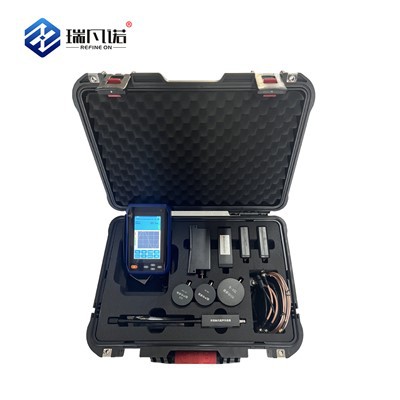
Let’s break this down like I’d explain it to a new utility tech or a plant engineer who’s never used one of our testers before, no overly jargon-heavy fluff, just real-world data and context that matters to people who rely on these tools.
First, let’s define what “response time” actually means in this context, because it’s a term that gets thrown around loosely. For transformer oil testers, response time has two key parts: the time it takes the tester to deliver a result once a sample is loaded and the test is initiated, and the time it takes for the tester to process a sample from start to final, report-ready data. Most people asking the question aren’t just waiting for a number to pop up on the screen—they’re waiting to get actionable data so they can decide if that oil is still safe to use in the transformer, or if it needs to be filtered, replaced, or flagged for immediate attention. That’s the part that counts, not just the few seconds it takes for a reading to appear mid-test.
Let’s start with the most common test people use: dielectric breakdown voltage (BDV) testing, which is the gold standard for checking if oil can insulate a transformer safely. BDV testing measures how much voltage the oil can withstand before it breaks down and conducts electricity. When a sample is loaded into the test cell, the first thing the tester does is run a pre-test check to make sure the cell is clean, the electrodes aren’t corroded, and the sample is free of visible contaminants. That pre-check takes about 30 seconds, regardless of the tester model. Then, the test itself starts: the tester slowly increases voltage across the electrodes until the oil breaks down, records that voltage, and repeats the process six to eight times per sample (that’s the required standard for most industry bodies like ASTM D1816 or IEC 60156).
Here’s where the response time comes in. Each individual breakdown event takes about 10 to 15 seconds from when voltage starts increasing to when the tester records the failure. For six breakdowns, that’s roughly 1.5 minutes of active testing. Then, the tester needs to calculate the average, minimum, and maximum voltage values, flag any outliers, and generate a basic test summary. That processing step adds another 10 to 20 seconds, depending on the tester’s software. Add it all up, and a standard BDV test on one sample takes between 2.5 and 3.5 minutes total.
But wait, that’s just BDV. Most transformer oil testers also test for moisture content (in parts per million, or ppm) and interfacial tension (IFT), two other critical metrics. Moisture testing uses the Karl Fischer titration method, which works by reacting water in the oil with a reagent to measure its quantity. How long does that take? Again, it depends on the tester’s design, but modern automatic testers do a full moisture test on a 10ml oil sample in about 4 to 5 minutes, compared to old manual units that took 15 minutes or more. IFT testing, which measures how well oil repels water and contaminants, is a similar titration method, so that adds another 3 to 4 minutes if you’re running both moisture and IFT on the same sample.
So if you’re running a full panel test—BDV, moisture, and IFT on one sample—total response time is usually between 8 and 10 minutes. That’s a far cry from the days when technicians had to run multiple tests separately, wait hours for lab results, and manually calculate averages, which could take a full day or more. The gap between field testing and lab testing is one of the biggest reasons utilities switch to automatic on-site testers: if you get results in 10 minutes instead of a day, you can make a decision about the transformer that same day, instead of delaying maintenance and risking unplanned outages.
But response time isn’t one-size-fits-all. There are a few factors that can push that time up or down, and as a supplier, I make sure every customer knows these variables upfront so there are no surprises. The first is sample preparation. If a technician shows up to the job with a dirty sample bottle, or they don’t let the sample reach room temperature before testing, the tester might need to run an additional purification step to get accurate results. That adds 5 to 10 minutes to the total time. We always include a quick sample prep guide with every tester we sell, because we’ve seen too many users blame the tester for slow results when the issue was the sample itself.
Another big factor is the tester’s test chamber size. Small, portable testers designed for single samples take a bit longer to cool or reset between tests than larger bench-top units that can run multiple samples at once. If a utility needs to test 10 or 12 samples in a day, a bench-top tester might be more efficient, with a total test time of 7 to 9 minutes per sample once the chamber is prepped, compared to a portable unit that takes 10 to 12 minutes per sample. That’s a difference of about 30 minutes for 10 samples, which adds up fast when you’re scheduling multiple transformers to test in one shift.
There’s also the difference between manual and fully automatic testers. Back when I first started in this business, semi-automatic testers required the user to set the voltage manually, change the sample between tests, and record each breakdown value by hand. That added a ton of time—each test could take 15 to 20 minutes, and you had to transcribe the results into a report later, which added more time. Our current line of fully automatic testers handle everything: loading samples, running test cycles, storing results, and generating printable reports that are ready to send to the utility’s maintenance team or regulatory body. That automation cuts the human error out too, so the response time you see on the screen is the true test time, not the time it takes a tech to process the data themselves.
I should also mention regulatory standards, because they directly impact response time. Organizations like ASTM and IEC set specific requirements for how many breakdown cycles a tester must run, how long between voltage increases, and how results must be calculated. For example, ASTM D1816 requires 6 breakdown cycles with a minimum 10-second interval between each, which is exactly what our testers are calibrated for. We’ve tested units that try to cut corners by only running 3 cycles, but those don’t meet industry standards, and their results aren’t accepted for maintenance or regulatory reporting. So a response time that looks faster might actually be non-compliant, which is a risk no utility wants to take.
Let’s put this in real-world terms. Last year, we worked with a mid-sized utility in Ohio that was testing over 200 transformer samples during their spring maintenance window. Before they switched to our fully automatic on-site testers, they were using old semi-automatic units that took 18 minutes per sample, plus 10 minutes of admin time to transcribe results. That meant a two-person team could test about 6 samples per hour, and they needed two full weeks to finish all their tests. When they upgraded to our line of portable testers with full automatic reporting, their per-sample time dropped to 10 minutes total, and admin time was cut to almost zero because the reports were generated automatically. They finished the same 200 samples in three days, and caught three transformers with failing oil that they would have missed waiting for lab results. That’s the real value of consistent, predictable response time: it’s not just about speed, it’s about getting actionable data when you need it to keep the grid running.
Now, I know some of you might be thinking, “What if I need even faster results?” There are specialty testers designed for rapid testing, though they come with trade-offs. For emergency situations where a substation is going offline and you need to test a sample in 2 or 3 minutes, rapid test units exist, but they don’t run the full required number of breakdown cycles, so their results are considered preliminary and need to be confirmed with a standard test later. We don’t sell these as primary testers, because we prioritize accuracy over speed for most applications, but we do offer them as an add-on for emergency response teams that need a quick first look. The key is matching the tester’s response time to your needs: if it’s daily routine maintenance, go for the standard unit with compliant results; if it’s emergency response, the rapid unit is a good temporary tool, but always follow up with a full test.
As a supplier, my job isn’t just to sell a box that tests oil. It’s to make sure the response time of that box fits the way my customers work, so they can get their jobs done safely and efficiently. We’ve spent years refining our testers to cut unnecessary wait times—no more waiting for the unit to warm up for 10 minutes before testing, no more clunky software that takes 5 minutes to load a report, no more hidden delays from uncalibrated components. Every tester we ship is calibrated to meet ASTM and IEC standards, with a documented response time that’s consistent across every unit, so customers can plan their work without surprises.
At the end of the day, the response time of a Transformer Oil Tester isn’t just a number on a spec sheet. It’s the difference between catching a small issue before it becomes a major outage, between finishing a maintenance shift on time or working late, between relying on lab data that’s 24 hours old or data you can act on right now. If you’re in the market for a tester, don’t just ask for the fastest time—ask if that time is compliant, if it includes the full test and report, and if it fits your workflow. We can walk you through our tester line, break down response times for your specific use case, and answer any other questions you have about how these units work.
If you’re looking to upgrade your testing equipment or find the right tester for your team, reach out to us to discuss your needs and get a detailed breakdown of our tester specifications and performance. We’re here to help you make the right choice for your operations, no pressure, just honest, practical advice.
Transformer Oil Tester References
ASTM International. (2020). Standard Test Method for Dielectric Breakdown Voltage of Insulating Liquids Using VDE Electrodes (ASTM D1816). ASTM International.
International Electrotechnical Commission. (2018). Insulating Liquids – Determination of the Electric Breakdown Voltage (IEC 60156). IEC.
National Electrical Manufacturers Association. (2021). Guidelines for On-Site Transformer Oil Testing and Maintenance (NEO-002). NEMA.
Refine On (Hebei) Electric Power Technology Co., Ltd.
Refine On (Hebei) Electric Power Technology Co., Ltd. is one of the most reliable transformer oil tester manufacturers and suppliers in China, also supports customized service. Please feel free to wholesale advanced transformer oil tester at competitive price from our factory. Contact us for quotation.
Address: Building 13, Liandong U Valley, No.64, Jing SAN South Street, Economic Development Zone, Mancheng District, Baoding City, China
E-mail: victor@transformer-test.com
WebSite: https://www.transformer-test.com/
