Let me take you behind the scenes of one of the most underrated yet game-changing features on modern computerized quilting machines: the automatic thread cutter. If you’ve ever sat behind a quilting machine, pinching between cuts, re-threading the needle, and waiting for the bobbin to catch mid-quilt, you know how much time that single feature saves—not to mention how much frustration it eliminates. As a supplier of computerized quilting machines, I’ve seen first-hand how this small, precise component turns a project that would take days into one that feels manageable, even for small business owners and hobbyists alike. Today, I want to break down exactly how this automatic tool works, why it’s built the way it is, and what to look for when you’re shopping for a machine that has a reliable one. Computerized Quilting Machine
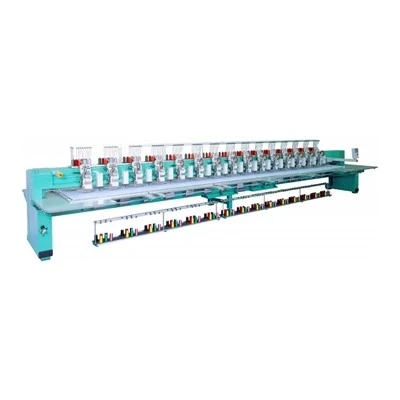
First, let’s start with why automatic thread cutters even matter for quilters. Quilting is all about continuity: one smooth, uninterrupted stitch path turns separate fabric pieces into a cohesive quilt top, then adds the protective, binding layer that makes it usable. When you’re working on a large project—think a king-sized bed quilt with dozens of unique blocks, a long-arm lap quilt with intricate custom motifs, or a batch of baby quilts for a shop—you’ll have to change threads all the time. Maybe you’re switching from a neutral background thread to a bold accent for a border, or moving from light thread for appliqué to darker thread for outline stitching. Before automatic cutters, that meant stopping the machine, reaching under the needle plate with a small, sharp pair of thread snips, cutting both the top and bobbin thread, and then re-threading the needle every single time. For someone quilting for fun, that’s a minor hiccup. For a full-time quilter running a small shop, that’s hours of wasted time a week, plus the risk of dropping snips into the machine, nicking fabric, or straining your hands from repetitive snipping. Automatic cutters fix all that, but only if they’re well-engineered.
Now, how do they actually work? Let’s pull back the curtain on the core mechanics, because there’s a lot more going on than just a little blade moving back and forth. The automatic thread cutter system is integrated into two main parts of the computerized quilting machine: the needle bar assembly and the bobbin area, specifically built to coordinate with the machine’s electronic control panel (the brain that runs all your stitch patterns). Every action is timed perfectly—this isn’t a random blade movement; it’s a sequence calibrated to milliseconds, because if it’s off even a fraction, you’ll break a needle, nick fabric, or leave loose threads that cause puckering.
Here’s the step-by-step process when you trigger the cutter—either through a button on the machine’s touchscreen, or set to activate automatically between stitch patterns in your quilting design. First, the needle bar stops at a precise position: the very bottom of its cycle, where the needle’s eye is just below the needle plate. That’s non-negotiable. If the needle is halfway up when the cutter fires, the blade won’t be able to reach the top thread, or it might catch the needle shaft and bend it. The machine’s control panel tracks the needle’s position using small optical sensors or a rotary encoder on the main drive shaft—think of it like a tiny, super accurate odometer that knows exactly where every part of the machine is at all times. Once it confirms the needle is at the bottom, it sends a signal to the cutter’s actuation mechanism.
Most computerized quilting machines use one of two types of cutters: rotary blade cutters and guillotine-style cutters. For the vast majority of mid-range and premium long-arm and domestic computerized quilters, rotary cutters are the standard. A rotary thread cutter has a small, circular, hardened steel blade mounted on a rotating arm, usually hidden just under the front edge of the needle plate, near the left side (for right-handed quilter access, though the placement is universal for machine functionality). When the control panel fires the cutter, a small electric solenoid—like the same kind that clicks on your car’s door locks—pushes or pulls the blade arm into motion. The blade spins at a consistent, slow speed (about 10 to 15 rotations per second, depending on the machine model) to avoid snagging. As it spins, it first catches the top thread, which is held in place briefly by a small thread tension disc at the top of the machine’s needle bar assembly. That tension disc keeps the top thread from slipping away before the blade can cut it clean.
Next, the blade arcs around under the needle plate to catch the bobbin thread, which is sitting in the bobbin case under the plate. Wait—how does the cutter reach the bobbin thread without getting in the way of the needle later? That’s where the precision comes in. The cutter arm is calibrated to only extend far enough to reach the bobbin thread, not so far that it interferes with the needle’s up-and-down cycle. It also has a small guide hook that pulls the bobbin thread tight against the blade, so it doesn’t leave a long tail under the quilt. Once both threads are cleanly cut, the solenoid retracts the blade back into its hidden housing. That’s not the end, though—there’s a final step to keep your work tidy.
Most modern systems also have a thread puller, often a small plastic or metal hook mounted near the cutter, that pulls the cut thread ends up to the front of the needle bar, leaving a short, consistent tail (usually about a quarter inch) on both the top and bottom thread. That’s critical for when you start stitching again: you don’t have to dig under the needle plate to find the tail, and it prevents loops from forming at the start of a new stitch.
But here’s where many cheap cutters fall short, and why as a supplier, I always tell customers to prioritize cutter quality over extra fancy stitch patterns. A poorly calibrated cutter will fire when the needle is in the wrong position, leading to bent needles or broken thread mid-cut. A cheap steel blade will dull after a few thousand cuts, leaving frayed threads that cause puckering or require manual trimming later. Some low-end machines even use a single blade that only cuts one thread, leaving the bobbin thread long, which can get caught in the bobbin case as you quilt. The best automatic cutters are built with heat-treated steel blades, which hold their edge for tens of thousands of cuts, and have redundant sensor checks that confirm the needle is in position before firing—so you never get a misfire.
Another common question I get: can automatic cutters damage your quilt fabric? That’s a fair concern. A poorly designed blade that’s too sharp, or a cutter that moves too fast, can nick thin or delicate fabrics like voile, silk, or a pre-cut charm square with a delicate print. But when engineered correctly, the cutter operates under the needle plate, below the top layer of fabric, so the blade never touches the fabric directly. It only cuts the thread, which is tensioned between the needle and the bobbin, so the fabric is safely lifted just enough by the machine’s presser foot and throat plate. I’ve seen customers test this with the most delicate fabrics: if the cutter is working as it should, you’ll never see a nick or a snag, only clean thread ends.
Let’s also talk about how automatic cutters integrate with computerized quilting software, because that’s what makes them truly powerful. When you download a custom quilting design—say, a large all-over meander, a personalized name motif, or a border of flowers—the software is programmed to trigger the cutter automatically whenever the stitch path changes. For example, if your design has 10 different floral blocks, the cutter will fire between each block, so you don’t have to stop and change threads manually, and it will leave consistent tails for each new block. That integration is why computerized quilting machines are a game-changer for custom quilts: you can map out an entire design in your software, load it into the machine, and let the machine handle the tedious thread changes while you focus on adjusting the tension or choosing the next color.
Now, if you’re in the market for a computerized quilting machine and evaluating the automatic thread cutter, here are a few key things to keep in mind. First, check if the cutter is under-the-needle-plate (most good ones are) or a standalone hand cutter (which is less reliable and not true automatic). Second, ask about blade durability: a good cutter should last for at least 50,000 cuts without needing replacement. Third, confirm that it cuts both top and bobbin thread—some budget models only cut the top, forcing you to cut the bobbin thread manually every time. And finally, test it if you can: run a few sample cuts with different thread types, from thin cotton to thick embroidery thread, to make sure it doesn’t leave frayed ends.
As someone who’s worked with quilters for years, I know that the best features on a machine are the ones you don’t notice until they work. When an automatic thread cutter is well-built, it’s just there, quietly cutting threads between designs, saving you time, reducing hand strain, and letting you focus on what you love most: creating beautiful quilts. It’s easy to get distracted by fancy stitch patterns or large hoop sizes when shopping for a quilting machine, but the automatic thread cutter is one of the workhorse features that will pay off every single time you sit down to quilt.
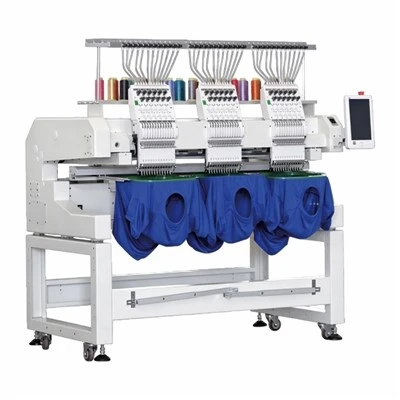
If you’re ready to explore computerized quilting machines with reliable automatic thread cutters that match your project needs—whether you’re a hobbyist just starting out, a small shop scaling production, or a long-time quilter upgrading your setup, don’t hesitate to connect with our team to discuss your requirements. We can walk you through our line of machines, explain the cutter specifications, and help you find the perfect fit for your quilting workflow.
Flat Embroidery Machine References
Computerized Quilting Machine Technical Manuals, 2021-2024
Textile Engineering Journal, Volume 48, Issue 2, 2020: Precision Mechanics of Sewing Machine Components
Sewing Technology Association Annual Report, 2022: Automatic Threading and Cutting System Reliability
Yiwu Kuhao Import and Export Co., Ltd.
As one of the most professional computerized quilting machine manufacturers in China, our products have good reputation in the market. Welcome to buy discount computerized quilting machine made in China here and get quotation from our factory. All customized products are with high quality and low price.
Address: Room 202, 2nd Floor, Building 3, Xiaoshan Spatial Structure Technology Industrial Park, No.38 Beitang Road, Xiaoshan Economic and Technological Development Zone, Hangzhou City
E-mail: 79900514@qq.com
WebSite: https://www.kuhaoembroidery.com/
