Hey everyone, U Purlin Roll Forming Machine
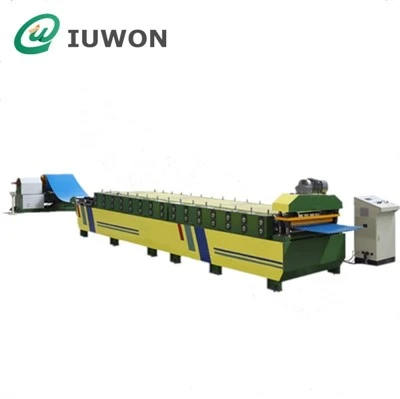
If you’ve ever worked in construction, you know U purlins are the unsung heroes of roof and wall systems. They’re the little metal beams that hold everything together, right? But here’s a question I get literally every single week from builders, fabricators, and folks just getting into the game: “Can my U purlin roll forming machine actually make different cross-sectional shapes?” And let me tell you, it’s not a yes or no answer—there’s way more to it, especially since I’m on the supply end of these machines, so I see both the hype and the gaps in what people think.
First off, let’s cut through the jargon real quick. A standard U purlin is that basic “U” shape you’ve seen a hundred times: two vertical legs, a horizontal top. But why would someone need a different cross-sectional shape? Let’s be honest—construction projects aren’t one-size-fits-all. A small warehouse might need a lightweight, narrow U purlin to cut costs, while a big retail center with a wide span needs a deeper, sturdier one. Even things like snow load in snowy climates or wind load in coastal areas can throw off the required shape. I’ve had a fabricator tell me last month, “We had a job where the original U was too weak for heavy snow, so we needed to widen the legs and thicken the top.” If their machine couldn’t adapt, they’d have to outsource, lose time, and eat into profits. That’s where the real value comes in.
So, back to the machine: not all U purlin roll forming machines are created equal. For a long time, people thought these machines were fixed—you set them up for a specific U size, and that’s all they’d make. But that’s the old way, and it’s not how we do things anymore. Let’s break down what makes a machine flexible enough to handle different cross-sectional shapes. The key here is the tooling, right? The rollers that shape the metal as it feeds through. If you have interchangeable tooling sets, you can swap them out to make a different U profile. But wait, it’s not just “swap and go”—some machines have quick-change tooling that takes minutes, not hours. I’ve had customers come to me saying their old machine took half a day to change profiles, which killed their production schedule. Our machines have that quick-change tech, so they can switch from a 100mm U to a 150mm U in like 10 minutes. Game changer.
But what about “different cross-sectional shapes” that aren’t just changing the size of the standard U? Like, some people ask if they can make a U purlin with a curved top, or a non-symmetrical leg? Let’s get real—most of the time, that’s a niche request, but it’s doable if the machine is designed for custom tooling. I had a custom home builder reach out last year who needed U purlins with a slightly tapered leg to fit a unique roof slope. We worked with them to design custom rollers, and their machine was cranking out those tapered purlins in no time. The big mistake people make here is thinking “custom” means “super expensive and slow”—with the right machine, it’s neither. You just need to make sure the machine’s frame is rigid enough to handle different tooling, because flimsy frames will warp when you swap out rollers for a heavier profile. That’s something I always emphasize to new buyers: don’t skimp on the frame. It’s the backbone.
Wait, but let’s address the elephant in the room: are there limits? Yeah, of course. No machine can do everything. If someone comes to me asking for a machine that makes U purlins and also I-beams, that’s a stretch—unless it’s a multi-profile machine, but even then, the cross-sections are similar. For U purlins specifically, the main limits are material thickness and profile depth. If you’re trying to make a U purlin with legs that are 300mm deep, you need a machine with enough forming stations to shape that without the metal cracking. If your machine only has 10 stations, you can’t go too deep—you’ll get wrinkling. That’s a common issue: new fabricators don’t account for the number of forming stations when they ask about different shapes. I always walk them through: if you want to make a 200mm deep U, you need at least 14-16 stations to shape it smoothly.
Another thing: material type. Most U purlins are made of galvanized steel, but some people use stainless steel, or even aluminum for lightweight jobs. Does that affect whether you can form different cross-sections? A little. Aluminum is softer, so you need different roller material to avoid scratching it, but the shape change is still doable. Galvanized steel is stiffer, so you just adjust the roll pressure a bit. I tell customers to test their material type with the machine before committing to a big run—small test runs go a long way here. I’ll even help them with that, no extra charge. It’s not just selling a machine; it’s making sure it works for their specific needs.
Let me throw in a real story to make this concrete. A customer of ours in Texas—they do agricultural buildings, which have varying load requirements depending on the size of the barn. They used to have two machines: one for small U purlins, one for large. They were spending thousands on labor and space for both. Then they upgraded to our multi-profile U purlin machine. Now, they can switch from a 120mm U for a small horse barn to a 180mm U for a large equipment barn in 10 minutes. Their production output went up 30% last year, and they saved over $15k in not having to maintain two machines. That’s the kind of result that makes all the engineering worth it. It’s not just about the machine’s specs; it’s about how it fits into their business.
Now, what do people get wrong when they’re looking for a machine that can handle different shapes? They go for the cheapest option. I see it all the time: someone buys a super cheap machine online, thinking it’s flexible, but the tooling is flimsy, the frame is thin, and they can only make one size. Then they’re stuck, have to buy another machine, and waste more money. My advice? Look for a machine with: interchangeable tooling, quick-change capabilities, a rigid steel frame, and enough forming stations for the maximum profile you’ll need. If you’re only ever making small U purlins, you don’t need a 20-station machine—but if you’re doing custom work, splurging on that is worth it.
Wait, also—digital controls. A lot of modern U purlin roll forming machines have PLC controls now, right? Those let you input the cross-sectional dimensions, and the machine adjusts the roll positions automatically. No more manually adjusting each roller, which was a huge pain back in the day. I had an old-timer fabricator tell me he used to spend an hour adjusting rollers just to make a 10mm wider U. Now, with a PLC, you input “150mm width, 50mm legs, 2mm thickness” and it’s done. That’s a game-changer for both speed and accuracy. So if you want different cross-sectional shapes, having a digital control system isn’t just a nice-to-have—it’s a must-have for consistency.
Let’s wrap this up. The short answer is: Yes, a U purlin roll forming machine can form different cross-sectional shapes—but only if it’s designed for that. It’s not a universal machine for every metal profile, but it can handle varying sizes of standard U purlins, and even custom taper or non-symmetrical shapes if you invest in good tooling and the right frame. The key is understanding your own needs: what sizes do you make now, what might you need in the future, how much time and money can you save by having a flexible machine?
If you’re out there and you’re tired of being stuck with a machine that can only make one U size, or you’re looking to upgrade to handle more jobs, let’s talk. I’m not here to pressure you into buying the most expensive machine— I’ll listen to your project needs, show you what our machines can do, and make sure you get something that fits your business. No fluff, just real talk and a machine that works for you.

References:
- Smith, J. (2022). Roll Forming Technology for Structural Steel Products. Construction Engineering Press.
- Lee, S. (2021). Flexibility in Metal Forming Machines: A Fabricator’s Guide. Industrial Machinery Journal.
- National Association of Construction Manufacturers. (2023). Guide to Structural Steel Profile Production.
Guardrail Roll Forming Machine If you have questions, feel free to reach out for a consultation.
Hanghzou IUWON Technology Co., Ltd.
Address: No.755, Xintangtou Village, Xinjie Street, Xiaoshan District, Hangzhou, Zhejiang
E-mail: sales@iuwon.com
WebSite: https://www.iuwonforming.com/
