If you’ve ever worked on electronics manufacturing, whether you’re an engineer, a procurement specialist, or a product designer, you’ve probably run across the term “3.00mm pitch” at some point. At my company, we supply components centered entirely on this specification—so I get how confusing it can be if you’re not deep in the weeds of interconnection technology. Today, I’m breaking down what 3.00mm pitch actually is, why it matters, and why our team focuses on making it work reliably for projects across industries. 3.00mm Pitch
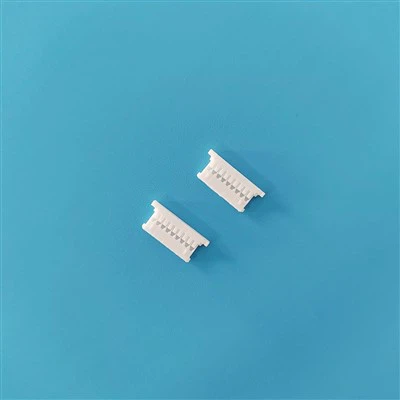
First, let’s start with the basics: pitch is the distance between the centers of adjacent electrical contacts on a connector, terminal block, or similar electronic component. That’s not just a random number—it’s a critical measurement that dictates how components fit together, how signals or power transfer, and even the overall size of the final device. A 3.00mm pitch means every pin, socket, or terminal is exactly 3 millimeters apart from the next one along the same axis. That seems straightforward, but it’s a definition that carries a lot of context depending on where it’s used.
Let me clarify a common mix-up here: pitch is not the total width of a component, nor is it the gap between two neighboring contacts. For example, if a terminal block has four terminals with a 3.00mm pitch, the distance between the center of terminal 1 and the center of terminal 2 is 3mm. The physical gap between the edge of terminal 1 and the edge of terminal 2 might be 2.5mm, depending on the terminal’s size, but the pitch itself is always measured center-to-center. That precision might seem trivial, but even a 0.1mm difference in pitch can cause a connector to misalign, fail to seat properly, or create an electrical short. For context, human hair is roughly 0.07 to 0.1mm thick—so a tiny miscalculation in pitch can be the difference between a working device and a costly product return.
Now, why 3.00mm specifically? It’s not the smallest pitch out there (micro-connectors can have pitches as tight as 0.3mm) nor the largest (power connectors sometimes use 5mm or more). Instead, 3.00mm pitch hits a sweet spot for a huge range of applications. Let’s talk about the practicalities that make it so widely used. For one, it strikes a balance between density and ease of assembly. A smaller pitch lets you fit more connections in a tight space, but that makes soldering, crimping, or plugging in cables much harder—especially for manual assembly, which is still standard for many low-volume or custom projects. A 3.00mm pitch is wide enough that even technicians with basic soldering skills can work with it without specialized tools, but dense enough to support modern electronics that need multiple connections without taking up too much space.
That balance is why 3.00mm pitch components are everywhere. You’ll find them in industrial control systems, like PLCs (programmable logic controllers) that run factory equipment—those need reliable connections that technicians can service quickly. They’re also common in automotive electronics, from dashboard modules to engine control units, where space is at a premium but vibration resistance and consistent signal transfer are non-negotiable. Consumer devices too: think of power supplies, LED lighting fixtures, and even some audio equipment often use 3.00mm pitch connectors because they’re durable, easy to source, and cost-effective for high-volume production.
As a supplier of 3.00mm pitch components, I’ll be honest: this specification isn’t just a line on a datasheet. It’s a standard that our engineering team spends years refining, because even small variations can derail a project. Let me give you an example: a few years back, we worked with a small automation startup that was building a new line of packaging machinery. They initially tried a 2.54mm pitch connector (another common standard) because it’s slightly more compact, but they kept having issues in production. The factory floor had heavy vibration, and the smaller pitch meant the connectors would come loose over time, leading to downtime that cost them thousands of dollars a week. When they switched to 3.00mm pitch terminals from our lineup, the wider gap made the connections far more resistant to vibration, and the design was simple enough for their in-house technicians to install without retooling their assembly line. That’s the kind of real-world impact a correct pitch specification can have.
Another thing that sets 3.00mm pitch apart is its compatibility with a huge ecosystem of existing hardware. Because it’s been a standard for decades, most tooling—from crimpers to pick-and-place machines—are calibrated to work with 3.00mm pitch components. For designers, that means they don’t have to invest in custom tooling or adapt their entire design around a niche specification. For manufacturers, that means faster production times and lower costs, which get passed on to the end user. That’s why we focus so much on maintaining consistent, exact 3.00mm pitch in all our products: every connector, terminal block, and header we supply is machined to within ±0.02mm of the specified pitch, so it works with every other component already on the market that uses the same standard.
Of course, like any standard, 3.00mm pitch has its limits. It’s not the right choice for every project. If you’re building a wearable device where every millimeter counts, a 3.00mm pitch would take up too much space, and a smaller, denser pitch would be better. If you’re handling high-power applications over 10 amps, a larger pitch might be needed to prevent overheating. But for the vast majority of mid-range electronics applications, 3.00mm pitch is the sweet spot that balances performance, cost, and ease of use.
I’ve seen a lot of people in this industry mix up pitch with other specifications too, so let’s clear up a couple more common misconceptions. First, pitch is specific to the type of component. A 3.00mm pitch on a header isn’t the same as a 3.00mm pitch on a terminal block, even if the numbers are the same. The shape of the contacts, the locking mechanisms, and the insulation all have to align, too. That’s why it’s so important to work with a supplier that doesn’t just sell you “3.00mm pitch parts” but understands how those parts fit into your specific assembly. Second, pitch is linear—so it’s the same along both the length and width of a component, unless otherwise specified. A lot of newer, board-to-board connectors use different pitches on each axis, but 3.00mm pitch is almost always a consistent center-to-center distance along a single axis.
As someone who’s been in this field for over a decade, I can tell you that the most successful projects start with getting the basics right. I’ve seen engineers overcomplicate a design with a custom pitch to save a millimeter of space, only to run into supply chain issues, assembly delays, and reliability problems down the line. Choosing a standard like 3.00mm pitch might feel like taking the easy route, but it’s often the smart one. It’s a proven specification that’s stood the test of time, and our team has worked tirelessly to make sure our 3.00mm pitch components meet the exacting standards that industries rely on.

Whether you’re designing a new industrial machine, updating automotive electronics, or scaling up production for consumer goods, getting your interconnection components right is half the battle. If you’re working with 3.00mm pitch—whether you’re sourcing your first parts, looking to switch suppliers, or just have questions about how the specification works—we’re here to help. Our team has deep expertise in 3.00mm pitch components, and we can walk you through everything from choosing the right style for your application to ensuring consistent quality for your entire production run. If you’re ready to discuss your project, reach out to our team to connect for sourcing and technical support.
2.50mm Pitch References
- International Electrotechnical Commission (IEC) 60601-1-11, Medical electrical equipment – Part 1-11: General requirements for basic safety and essential performance – Collateral standard: Requirements for medical electrical systems
- US Department of Defense (MIL-STD-1566), Connector Pitch and Mounting Dimensions for Military Electronic Equipment
- Printed Circuit Board Design Handbook, IPC-2221, Generic Standard on Printed Board Design
Dongguan Yinglian Electronics Co., Ltd.
We’re well-known as one of the most professional 3.00mm pitch suppliers in China. With abundant experience, we warmly welcome you to buy bulk advanced 3.00mm pitch made in China here from our factory. If you have any enquiry about cooperation, please feel free to email us.
Address:
E-mail: James@csg-china.com
WebSite: https://www.csgconn.com/
