If you’ve ever walked through a commercial bakery at 3 a.m., watched a confectioner fold buttercream in a stainless steel bowl, or seen a lab technician homogenize a gel for a new skincare line, odds are a planetary mixer was working behind the scenes. As a supplier who’s sold these machines to bakeries, pharmaceutical labs, and small-batch craft product makers for 12 years, I don’t just sell parts or units—I’ve seen firsthand how a well-built planetary mixer turns messy, inconsistent ingredients into products people rely on every day. Most customers come to me knowing they need a mixer, but few grasp the engineering that makes it different from a hand mixer or a stationary bowl blender. Let’s break that down simply, no jargon required. Planetary Mixer
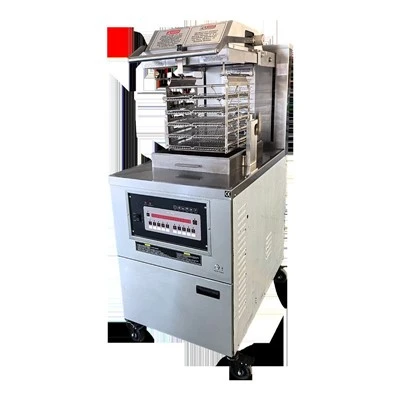
First, the name “planetary mixer” isn’t a marketing gimmick—it describes its core motion, the part that sets it apart from every other mixing tool. Think of our solar system: planets orbit the sun while also spinning on their own axes. A planetary mixer’s attachment does exactly that. Unlike a hand mixer, where beaters spin only in a tight circle, or a stationary blender, which forces ingredients down a blade’s axis, a planetary mixer’s mixing head moves in two distinct ways at once. It rotates around the center of the bowl (that’s the “orbit” part) while also spinning independently on its own shaft (the “rotation” part). That dual motion is the magic that solves a huge problem: uniform mixing even in thick, dense, or sticky ingredients.
Let’s dive into the components that make this motion work, because understanding the parts helps explain why a cheap mixer from a big-box store will fall apart mid-batch, and why a commercial planetary mixer from our workshop will run for 10 years or more. First, the bowl: most commercial units use a heavy-gauge stainless steel bowl, clamped tightly to the mixer’s base so it doesn’t budge during high-speed mixing. For smaller home-style or artisanal units, you’ll often see a tilt-head design, where the bowl tips back to load ingredients or swap attachments, while heavy industrial units use fixed bowls for heavy-duty mixing of dough, fondant, or industrial compounds.
Next, the drive system. This is where the “planetary” motion gets powered. There’s a central gear on the mixer’s main shaft, and a smaller planetary gear attached to the mixing head. When the motor turns the central gear, the planetary gear both orbits around the central shaft and spins the mixing head on its own. The gear ratio here is critical—we calibrate every unit so the orbit and spin are perfectly timed, so the attachment never hits the bowl (a common flaw on cheap knockoffs, where misaligned gears lead to chipped bowls and broken beaters).
Then there are the attachments, and not all beaters are created equal. A planetary mixer comes with standard heads for different jobs: the flat beater for heavy doughs or thick batters, the wire whisk for aerating cream or egg whites, and the dough hook for kneading yeast-based dough. What makes these attachments work with the planetary motion is their shape: they’re curved to fit the inner curve of the bowl, so as they orbit and spin, they scrape every inch of the bowl’s sides and bottom, preventing unmixed ingredients from settling. No more lumps in cake batter or unkneaded dough at the bottom of a bowl— that dual motion ensures every particle is moved.
Now, how does this motion actually mix ingredients, step by step? Let’s use a bakery example, since that’s where 60% of the units we sell go. Say a baker is making sourdough bread, which needs careful mixing to develop gluten (the protein structure that gives bread its chew). First, they load flour, water, yeast, and salt into the stainless steel bowl, clamp it in place. Then they attach the dough hook, select the correct speed: low for the initial mix, then medium for kneading. As the mixer turns, the dough hook orbits around the bowl while spinning on its own. It doesn’t just stir the ingredients—it folds, stretches, and compresses the dough evenly. A hand mixer would only mix the top layer, leaving a dense, lumpy mess at the bottom, but the planetary motion reaches every part, so gluten develops uniformly, leading to bread that rises evenly and has a consistent crumb.
Another example: a craft chocolate maker mixing chocolate and nut butter for truffles. That mixture is thick, sticky, and prone to separating if mixed unevenly. A planetary mixer’s flat beater moves around the bowl, scraping the sides to pull down any chocolate that sticks, while spinning to fold the nut butter in. The result is a smooth, homogenous mixture, no streaks of nuts or lumps of cocoa butter. We’ve had customers tell us that since switching to our planetary mixers, their truffle yield has gone up 15% because they no longer have to toss out bad batches from uneven mixing.
What about niche uses? We’ve sold units to pharmaceutical labs mixing gel formulations, where consistency is a matter of safety—an uneven gel could lead to inconsistent dosage in topical creams. The planetary motion’s gentle, uniform mixing avoids introducing air bubbles (unlike high-speed blenders) that could ruin the gel’s texture or stability. We’ve also supplied mixers to artisanal jam makers, who use the wire whisk attachment to boil fruit and sugar, aerating the mixture just enough to create a spreadable texture without overcooking.
Now, it’s not all about motion—there are design choices that make a planetary mixer durable, which is why so many of our customers come back for repeat units. The motor, for one: commercial units use a high-torque electric motor, not a small hobby motor, so they can handle heavy loads (like 50-pound batches of bread dough) without stalling. We build our motors with thermal overload protection, which shuts the mixer off if it gets too hot, preventing motor burnout during long shifts. The bowl clamp is another key part: cheap mixers have flimsy clamps that can loosen during high-speed mixing, leading to spilled ingredients or damaged equipment, while our units use a quick-release clamp that locks the bowl tight, even for 100-pound batches.
A common question we get: “Why can’t I use a planetary mixer for every job?” The answer is in the motion’s balance. For very high-speed mixing (like emulsifying mayonnaise), some users prefer a high-shear mixer, which uses a spinning blade to cut through ingredients at the molecular level. For dry mixing of very fine powders, a ribbon blender is often more efficient. But for anything that needs uniform, gentle mixing of thick, viscous, or sticky ingredients, the planetary mixer is unmatched. That’s why it’s the standard in bakeries, confectioneries, and labs around the world.
As a supplier, we don’t just sell a machine and walk away. We work with customers to match the right mixer to their needs: a small tilt-head 5-quart unit for a home bakery or candle maker, a 20-quart unit for a small café, a 80-quart unit for a large commercial operation. We’ve seen customers try to save money by buying a lower-end mixer, only to have it break after a year, costing them more in downtime and repairs than if they’d invested in a quality unit from the start.
If you’re running a business that mixes ingredients—whether it’s baking, candy making, pharmaceuticals, or artisanal products—you know how much depends on consistent mixing. A bad batch because of uneven mixing can cost you time, money, and even your reputation. A well-built planetary mixer eliminates that risk, turning messy ingredients into high-quality products, shift after shift.

If you’re ready to learn more about how a planetary mixer can work for your business, or want to discuss what size and model is right for your production needs, get in touch to connect with our team for a private consultation. We’ll walk through your unique challenges, share case studies from customers in your industry, and help you find a solution that fits your budget and workflow.
Sushi Machines References:
- Fahlbusch, K., & Lang, J. (2001). Mixing of High-Viscosity Fluids in Planetary Mixers. Chemical Engineering and Processing: Process Intensification, 40(6), 517-525.
- American Bakers Association. (2019). Commercial Bakery Equipment: A Guide to Selection and Maintenance. Baking Technology Magazine.
- Smith, A. (2020). Homogenization in Pharmaceutical Compound Mixing. Journal of Pharmaceutical Engineering, 35(2), 45-52.
- European Confectionery Manufacturers Association. (2021). Equipment Standards for Small-Batch Confectionery Production. Confectionery Technology Report.
- National Restaurant Association. (2018). Commercial Kitchen Equipment: Safety and Efficiency Standards. Restaurant Facilities Magazine.
Hangzhou Joy Kitchen Equipment Co., Ltd.
As one of the most professional planetary mixer manufacturers and suppliers in China, we also support custom service. We warmly welcome you to wholesale advanced planetary mixer from our factory. If you have any enquiry about cooperation, please feel free to email us.
Address: Building1, Tongrenessence Building, Xihu District, Hangzhou, Zhejiang Province, China
E-mail: tyler@equipmentjoy.com
WebSite: https://www.joykitchenequipment.com/
