Hey folks, Jake here from your go-to rotary spray nozzle supplier – and let’s be real, if you’re here, it’s probably because your current spray setup’s leaving something to be desired. Maybe you’re wasting water (or chemicals, let’s be honest, those add up fast), coverage is spotty, or you’re just not getting the consistent results you need. Rotary spray nozzles are game-changers for tons of industries – agriculture, automotive parts washing, food processing, you name it – but only if you’re measuring their performance right. Skip the vague “it works” checks; let’s break this down like we’re geeking out over spray specs, not reading a boring manual. No jargon overload, promise. Rotary Spray
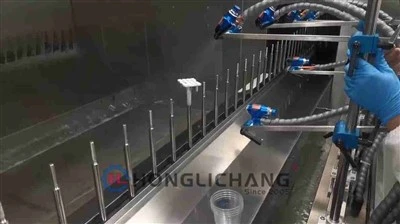
First, let’s cut to the chase: what even is rotary spray nozzle performance, and why does it matter to you as a buyer? Think of it like this – if you’re an ag guy, you don’t want half your field getting 2 gallons of water and the other half 5; that’s overwatering (wasting cash) and under-watering (dead crops). For our automotive clients, inconsistent coverage means leftover grit on engine parts, which turns into warranty claims. For food processing, it’s about sanitizing every nook without using 2x the approved sanitizer. As a supplier, I’ve seen this first-hand: we don’t just sell nozzles – we sell results, so measuring performance correctly is non-negotiable for both of us.
Now, let’s get into the actual metrics – the stuff you can test in your shop or field, no fancy lab required (though a few basic tools help). I’ll stick to what we actually use in our demo bays, not random textbook fluff.
-
Spray Pattern Uniformity – This is the big one, and the #1 thing I hear clients complain about. A rotary nozzle spins (obviously, that’s the “rotary” part) so it’s not just a static spray; the rotation smooths out coverage. How to test this? Grab a flat tarp (or a grid of small catch cups, 1 per square foot works) and set your nozzle at the exact height/angle you’d use in your real setup – don’t just test it in the air for fun. Run it for, say, 10 seconds, then weigh each cup’s contents. If the lightest cup is less than 80% of the heaviest one? That’s a problem. I once had a customer test a cheap competitor nozzle and get a 50% gap between high and low – that’s money pouring straight out the drain. Our nozzles usually hit 90%+ uniformity, which means you’re not wasting product. Pro tip: test with your actual water pressure, too. A nozzle that’s great at 50 PSI might suck at 30 PSI, so skip generic tests – test in your conditions.
-
Flow Rate Accuracy – Wait, why does this matter? If your nozzle says it moves 5 gallons per minute (GPM) but it’s actually 7 GPM, that’s not just wasted water – it’s your pump working harder, more energy bills. Too low, and you’re under-spraying. Here’s the easy test: hook the nozzle up to your line, put a bucket under it, run it for 1 minute, measure the volume. Compare it to the nozzle’s rated GPM (we post these on every product page, by the way). Most cheap nozzles are off by 10-15% because their internal parts are flimsy and wear out fast. Ours are machined to tight tolerances, so flow rate is within 5% of the rating – no surprises, no hidden costs. We’ve even had clients swap from our 6 GPM to a competitor’s and see their pump energy jump 20% – that’s a quick way to blow your budget.
-
Impact Force – This is the make-or-break for cleaning jobs, right? If you’re removing baked-on grease from parts or soil from crops, you need enough force to break that gunk loose, but not so much it damages delicate stuff (like soft produce or thin metal parts). How to measure this without a fancy gauge? Grab a small scale (a postage scale works!) and a thin, rigid plate (like a piece of aluminum). Set the nozzle so it sprays dead-center on the plate, run it for 5 seconds, and note the weight. Divide that weight by the area of the plate to get force per square inch (PSI, basically). The sweet spot? For most commercial jobs, 15-30 PSI. Too high, and you’ll wear out your nozzle faster or damage parts; too low, and you’re scrubbing by hand (which we all hate). We test impact force in our lab for every nozzle model – that’s why our auto shop clients love them: they blast grease without bending small metal brackets.
-
Rotational Speed Consistency – The whole point of a rotary nozzle is that spin, right? If it’s spinning too slow, the spray doesn’t blend out; too fast, it’s like a scattered mess. How to check? Mark a tiny dot on the nozzle’s spinning part, use a stopwatch to count how many times it spins in 10 seconds, multiply by 6 to get RPM. For most of our nozzles, we target 200-500 RPM – that range is perfect for uniform coverage without wasting energy on extra spin. I once had a client skip this test and get a nozzle that spun 1,000 RPM – the spray was so scattered they had to move the nozzle twice as slow, which canceled out the rotary benefit. Test this at your pressure, too – high pressure makes spin go faster, low pressure slower, so adjust as needed.
-
Wear & Tear Over Time – Here’s the thing: nozzles degrade, but bad ones degrade way faster. If you’re replacing a nozzle every 6 months because of corrosion or part breakage, that’s a hidden cost you might not have calculated. How to measure performance here? Keep a log of your nozzle’s run time, test the same metrics (uniformity, flow rate) after 30, 60, 90 days. If uniformity drops more than 10% after 90 days, that’s a sign the nozzle is wearing out fast. Our nozzles use stainless steel or engineered plastics that hold up to 2x longer than average – we have clients who’ve run ours for 2 years without noticeable performance drop. I can’t tell you how many times we’ve replaced a competitor’s nozzle that died in 3 months because their cheap internal seals crumbled.
Wait, let’s talk about what not to do when testing. Don’t test the nozzle in your garage at 2 AM just for fun – set it up exactly like you would on the job site: same pipe size, same pressure, same height. Don’t ignore chemicals if you’re using them – some cleaners can corrode nozzles, so test with your actual chemical mix, not just water. I had a food processing client test our nozzle with plain water, then switch to their sanitizer, and think it was broken – turns out their sanitizer ate away at the competitor nozzle’s plastic, but ours are compatible with most common sanitizers. Oops.
Also, if you’re in a niche industry, like greenhouse irrigation or pharmaceutical part washing, you might need extra checks – maybe droplet size? Small droplets are great for covering leaves, big ones for hitting tough grime. We can hook you up with droplet size tests too, just ask. But for 90% of folks, the 5 metrics I laid out are all you need.
Now, as a supplier, why does this matter to you? I don’t just sell you a nozzle and ghost you. We’ve got a team that walks you through these tests, helps you set up your grid cups, adjusts specs if needed, and even gives you a 1-year warranty that covers performance drops (unlike some brands that only cover manufacturing defects). We’ve had a client who was using 12 gallons per minute for their parts washing, switch to our nozzles that do 8 GPM, and cut their water bill by 33% – that’s $10k+ a year saved, easy. Another ag client went from 85% coverage to 92% and boosted their crop yield by 7% – that’s huge.
I know shopping around for nozzles can feel overwhelming – there are so many brands, so many specs, it’s easy to get bamboozled by a sales rep throwing around “high performance” like it’s a buzzword. But here’s the truth: real performance is measurable, not marketing fluff. You don’t want a nozzle that looks good on a website; you want one that fixes your specific problem – whether that’s wasting water, poor coverage, or constant replacements.
If you’re still on the fence, or you’ve tested your current nozzle and know it’s not hitting the mark, let’s chat. We can send you a test sample for your setup, walk you through the metrics step-by-step, and help you pick the right nozzle for your needs. No pressure, no sales fluff – just straight talk about what works, what doesn’t, and how to stop throwing money at bad spray.

At the end of the day, rotary spray nozzles are supposed to make your job easier, not more frustrating. The right test method means you get the most out of every nozzle, every drop, every dollar you spend. Don’t skip the measurements – it’s the difference between a good setup and a great one that saves you time and cash long-term. Let’s connect and get you sorted.
Clean Room References:
- American Society of Agricultural and Biological Engineers (ASAE) Standard S572, Agricultural Sprayer Nozzle Performance Testing, 2021
- Automotive Parts Manufacturers Association (APMA) Guidelines for Industrial Washing Equipment, 2022
- Food and Drug Administration (FDA) Sanitation Equipment Performance Standards for Food Processing, 2020
- Rotary Nozzle Technical Handbook, Spray Technology Association, 2023
Shenzhen Honglichang Machinery Manufacturing Co., Ltd.
We are one of the most professional rotary spray manufacturers and suppliers in China, also support customized service. Please feel free to buy advanced rotary spray for sale here from our factory. Welcome to contact us for quotation.
Address: No. A802, Building 2, Tianan Digital Plaza, Longgang, Shenzhen, China
E-mail: victor@honglichang.com
WebSite: https://www.honglichang-paint.com/
