Hey guys, if you’re a small dog owner who’s been Googling “electric dog fence for small dogs” lately, let me guess — you’re stuck between two big feelings. On one hand, you love letting your little pup run, sniff, and zoom around the yard without a leash tugging at your side. On the other, you’ve heard horror stories about big, bulky electric fences making tiny dogs panic, or worse, getting hurt because the tech wasn’t built for their size. As someone who’s worked in the electric dog fence industry for almost a decade, I get this confusion totally. Small dogs aren’t just “tiny big dogs” — their needs, sensitivities, and even how they process stimuli are way different from Labs or German Shepherds. Let’s break this down like we chat at a dog park, no boring jargon, just real stuff I’ve seen and tested with actual small dogs. Electric Dog Fence

First, let’s clear up the most common myth: electric dog fences are one-size-fits-all. Nah, that’s old tech. Back in the day, most underground fence transmitters were calibrated for medium to large dogs — they sent a single strength signal that was strong enough to make a 50-pound hound stop in his tracks, which for a 10-pound Chihuahua or Yorkie would be way too intense. A shock that barely jolts a Great Dane could feel like a full-on taser to a small dog, and that’s where the bad rep comes from. But modern systems? We’ve got adjustable levels, and there’s a whole separate line of gear built specifically for small breeds (think 5 to 20 pounds, the tiny ones that fit in a purse and somehow still think they’re guard dogs).
Wait, let’s talk about why size matters here. Small dogs have thinner skin, right? That means the collar’s contact points — the little prongs that deliver the correction — sit closer to their skin. If the collar’s not made for tiny necks, the prongs might dig in, cause irritation, or even get caught on a long-haired pup’s fur if they’re not spaced right. I’ve seen clients buy a random “small dog collar” off Amazon, only to come back saying their Shih Tzu was rubbing their neck raw for a week. That’s not the system being bad — that’s the collar being cheap and unfit. Good small-dog systems have shorter contact points, sometimes even rubber-coated ones so they don’t irritate sensitive skin, and they’re lightweight enough that the dog barely feels it when it’s on. A collar that’s too heavy can throw a small dog off balance too — imagine wearing a bowling ball around your neck while you run. Not fun, and definitely going to make them avoid the yard even if they wanted to go out.
Next, the correction levels. This is make-or-break for small dogs. A lot of people don’t realize that electric fences don’t have to use a shock, by the way — most modern systems have static correction, tone-only, and even vibration modes. Tone-only is perfect for super sensitive small dogs, especially skittish breeds. All they hear is a beep when they get near the boundary, and if they step back, no correction at all. That’s way less stressful than a shock. But here’s the catch: if you’re using a shock mode, you need to start on the lowest setting possible. For a 4-pound Maltese, the highest setting is way too much. I always tell new clients to test the collar on their own hand first — low setting should just feel like a tiny tingle, nothing painful. If it makes you flinch, that’s way too high for a small dog.
I also get asked all the time: “Will my small dog try to run through the correction?” The answer is, sometimes, but not if you train them right. Small dogs are stubborn, way more than their big counterparts sometimes (don’t tell the Lab owners I said that). But consistency is key, and you can’t just bury the wire and walk away. You have to do the “showing” part — walk your dog around the yard on a leash, let them hear the boundary beep, and gently pull them back when they get close. Do this for 10 minutes a day for a week, and they’ll get it. I’ve trained Chihuahuas, Yorkies, even a 3-pound Pomeranian to stay in their yard with this method — no running through the fence, no panic.
Wait, but what about escape? Small dogs are masters of squeezing through things, right? Does an electric fence stop that? It stops them from crossing the boundary line, but if your yard has a gap under a fence or a hole in a gate, they’ll still try to squeeze through. The electric part is only for the area you set up the wire, so you still need to make sure your yard is secure from physical gaps, not just the wire. That’s a common mix-up. I had a client with a toy fox terrier who thought his dog would stop digging under the fence — nope, the electric wire doesn’t cover the area under the existing wood fence, so the dog dug a hole and got out. We added a loop of wire along the bottom of the fence, 6 inches below ground, and that fixed it. Problem solved, no extra stress on the dog.
Now, let’s talk about the downsides, because I’m not here to sell you something without being real. Electric fences aren’t for every small dog. If your dog is super aggressive, or has anxiety that makes them bolt when scared (like if a fireworks goes off, they’ll run straight through the boundary no matter what), this might not be the best choice. Or if your yard is super big — like an acre or more — the signal might get weaker in the corners, which could confuse a small dog who doesn’t have the space to figure it out. But for most small dogs in a regular suburban yard (1/4 acre or less), it works great. I’ve also had clients with tiny dogs who have mobility issues, like a senior Maltese with arthritis, who can’t walk far on a leash for potty breaks. The electric fence lets them go outside on their own without needing to be carried, which makes their quality of life so much better.
Another thing I always mention: battery life. Small dog collars have smaller batteries, so they die faster than big dog collars. If you forget to charge it, your dog will be able to cross the boundary and you won’t know until they’re gone. That’s why a lot of our small-dog collars have low-battery alerts — tiny beeps that remind you to plug it in, so you don’t end up with a lost pup. We also send out free reminders to clients who have our systems, just to make sure they don’t miss that step.
Wait, let’s throw in a real story to make this real. A couple months back, a client brought in her 7-year-old Jack Russell, Max, who’d been running away from their yard twice a week for months. She’d tried a physical fence, but Max chewed through the wood rails, and a cheap electric collar that shocked him so bad he’d hide under the couch for hours. We swapped him to our small-dog system, started with tone-only training, and within two weeks, Max was zooming around the yard, never crossing the line, and not showing any stress signs. She texted me a video of him playing with his toy in the yard last week, and I almost cried — that’s the stuff that makes this job worth it.
Now, if you’re thinking about getting an electric fence for your small dog, what should you look for? First, make sure the system is explicitly labeled for small breeds — no “universal” systems that just say “good for all dogs.” Second, check the collar size: it should be adjustable to fit a tiny neck, and lightweight (under 4 ounces is good for dogs under 20 pounds). Third, look for multiple correction modes — tone, vibration, and low-level static. Fourth, avoid systems that only have high shock levels — those are the ones that hurt small dogs.
I’m not gonna lie, there are a lot of bad systems out there, which is why people ask “can an electric dog fence be used for small dogs” and get confused. The answer is yes, but only if you get the right system and train your dog properly. It’s not a set-it-and-forget-it thing, but it’s way better than keeping your dog on a leash 24/7, or having them escape and get lost.
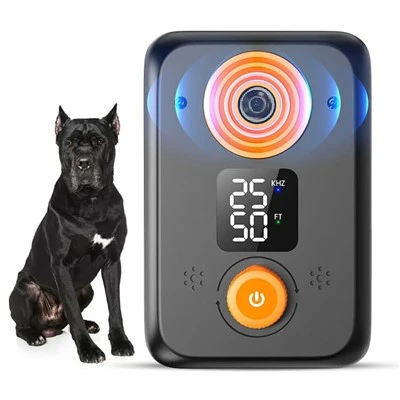
If you’re a small dog owner who’s been testing out options, or if you’ve had a bad experience with a wrong system before, we’d love to chat. We work with all types of small breed owners, from Chihuahua parents to Toy Poodle lovers, and we can help you pick the right system that fits your dog’s size, your yard, and your budget. No pressure, just real advice based on what we’ve seen work for hundreds of small dogs.
Ultrasonic Bark Control References:
- Pet Health Network. (2022). Behavioral Differences Between Small and Large Dogs. American Veterinary Medical Association.
- Journal of Veterinary Behavior. (2021). Corrections and Stress Responses in Pet Fence Systems for Small Breed Dogs. Elsevier.
- ASPCA. (2023). Safe Outdoor Containment for Small Dogs. American Society for the Prevention of Cruelty to Animals.
Shenzhen TIZE Technology Co., Ltd.
Shenzhen TIZE Technology Co., Ltd. is one of the most professional electric dog fence manufacturers and suppliers in China, also supports high quality customized service. Welcome to wholesale the newest electric dog fence made in China here and get pricelist from our factory. Also, 1 year warranty is available.
Address: Building 2, Guangyu Industrial Zone, Huangtian Community, Hangcheng Street, Bao’an District, Shenzhen, Guangdong Province, China
E-mail: apple@cntize.com
WebSite: https://www.cntize.com/
