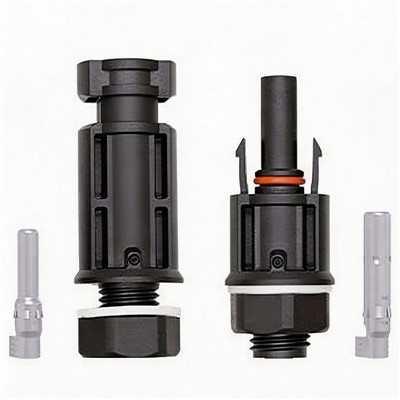
MC4 Branch Connector Hey there, if you’re deep in the solar game (or just starting to wrap your head around setting up a new array), you’ve probably heard the phrase “the whole system is only as good as its weakest link” – and for DC solar setups, that weak link is way too often overlooked: DC cables. I’m part of a solar DC cable supplier, so I’ve seen it all: folks grabbing random cables from the hardware store because they “look thick enough”, only to deal with voltage drops, overheating, or even failures a year later. That’s the last thing you want when you’re dropping thousands on panels and inverters, right? Let’s cut through the noise and break down exactly how to pick the right solar DC cables, no jargon required. First off, let’s get one thing straight: solar DC cables aren’t like regular extension cords. They’re built to survive brutal conditions – 100+ degree heat, freezing cold, UV rays that would turn a garden hose brittle in two years, and constant electrical current bouncing through them. Cheap, generic cables just don’t hold up. I’ve seen installers try to save $50 on cable for a 10-panel array, only to pull it all apart 18 months later because the insulation cracked from sun exposure. That’s a nightmare. So step one: forget the hardware store junk. Stick to cables that are specifically rated for solar use. Now, what specs actually matter here? Let’s start with gauge (that’s the thickness of the wire, for anyone who doesn’t geek out on electrical terms). A lot of newbies think thicker is always better, but that’s not exactly true – it depends on how far the cable has to run from the panels to the inverter. Here’s the quick rule of thumb: if your panels are within 10 feet of your inverter, 10AWG works for small to medium arrays, but if it’s 50 feet or more, you’ll need 8AWG, and even 6AWG if it’s over 100 feet. Why? Because voltage drop. When electricity travels through a wire, it loses a tiny bit of power along the way – the longer the run, or the thinner the wire, the more power you lose. A 2% voltage drop might not sound like a big deal, but over a year, that’s hundreds of dollars in lost energy, not to mention your inverter working harder than it needs to, which can shorten its lifespan. I’ve had customers come to us after their first install and say “my system should be putting out 5kWh a day, but it’s only 4.5” – 9 times out of 10, the issue was wrong gauge cable. Don’t skip this step. Next up, ratings. This is where you can’t cut corners, no matter how tempting it is. Solar DC cables need to be rated for two main things: UV resistance and temperature. Regular outdoor cables aren’t UV-stabilized – leave them out in the sun for a year, and the insulation will turn brittle, crack, and expose the copper inside. That’s a fire hazard, plain and simple. All our solar DC cables come with TÜV and UL 4703 ratings, which are the gold standard for this industry. UL 4703 specifically means they’re tested for solar application, including UV resistance, ozone resistance, and extreme temperatures (-40°C to 120°C, if you’re curious). Skip cables without these ratings, and you’re playing Russian roulette with your system. Another thing people sleep on: conductor material. Copper vs aluminum. Aluminum is cheaper, but it’s a worse conductor, and it’s also more prone to corrosion if not installed perfectly, plus it needs larger gauge to carry the same current as copper. Copper is the way to go for solar DC cables, full stop. Yes, it’s a tiny bit more expensive upfront, but it’s way more reliable, has lower resistance (so less voltage drop), and lasts longer. I’ve had customers who tried aluminum and had to re-cable their whole array 3 years in – that’s way more costly than paying a little extra for copper cables up front. Now, installation context matters too. Are you running the cables underground? Through conduit? Or exposed on your roof? If it’s going to be exposed to the elements directly, you need sunlight-resistant, double-insulated cables (that’s another thing to check – double insulation is non-negotiable for solar, because it adds an extra layer of protection against wear and tear). If it’s going in conduit, you might have a tiny bit more flexibility, but still, stick to the rated solar stuff. Also, think about voltage. Your panels have an open-circuit voltage (Voc), right? Your cable needs to be rated for at least that Voc plus a buffer – usually 1000V for residential systems, or 1500V for commercial setups that use high-voltage panels. Don’t just match your panel voltage – add that buffer, because on super cold days, panel voltage can spike higher than your rated number, and a cable that’s only rated for 1000V could fail if it hits 1050V on a frosty morning. I see this all the time with people who buy off-brand cables – they’re rated for 1000V, but not tested for those spike conditions, so they break down faster. Wait, also, length and number of runs. If you’re wiring panels in series, each run of cable needs to be the same length, right? Mismatched lengths can cause uneven current flow between panels, which hurts overall system efficiency. I always tell installers to measure the exact distance from each panel to the combiner box, add an extra foot or two for slack when you’re running it, then pick a gauge that fits the longest run – don’t just do each panel individually, that’s a pain and you might end up with inconsistent cable specs. Oh, and let’s talk about connectors, because they’re part of the cable system too. A lot of people buy cheap cables and then use off-brand connectors, which is a mistake. The whole setup is only as good as the weakest point, so get cables that come with compatible, solar-rated connectors (like MC4, which is the standard for almost all panels now) or make sure the connectors you pair are also UL 4703 rated. I’ve had a customer call us last month saying his system kept tripping the breaker, and it turned out his cheap connectors were arcing because they weren’t made for high DC voltage. Don’t skip this part. Now, what about common mistakes to avoid? Let’s list them out, because I’ve seen so many: 1. Buying generic outdoor cables. They don’t have the UV or temperature ratings, so they fail way earlier. 2. Picking the wrong gauge to save money. That ends up costing more in lost energy and re-cabling. 3. Forgetting voltage buffer. Your cable’s voltage rating needs to handle spikes, not just normal operating voltage. 4. Pairing solar cables with non-solar connectors. Arcing and corrosion are real issues here. 5. Not checking local codes. Wait, right! Local electrical codes might have specific requirements for solar DC cables in your area. Always check with your city or county’s electrical department to make sure your choice is compliant – no one wants a fine because their cable isn’t up to code. Let’s use a quick example to make this concrete. Suppose you have a 10-panel residential system, each panel has 30V Voc, total array voltage is 300V, and the run from panels to inverter is 80 feet. What do you pick? Copper cable, 8AWG, rated for at least 1000V, UV-resistant, double insulation, MC4 connectors, UL 4703 rated. That’s it. Simple, right? Another example: a 20-panel commercial system with 150ft runs, high-voltage panels (1500V Voc). You’d go with 6AWG copper, 1500V rated, same other specs, of course. Now, why does this matter for the long run? A good solar DC cable setup should last 25+ years, same as your panels. A bad one might last 5 years, max. When you’re investing in solar, you want that return on investment to last, not have to redo parts of it every few years. At the end of the day, solar DC cables are the unsung heroes of your entire system. They carry the power from the panels where it’s generated to the inverter where it’s converted to usable electricity for your home or business. Mess them up, and all the high-efficiency panels and top-tier inverters won’t work as well as they should. If you’re not sure what gauge or rating you need for your specific setup, don’t guess. Reach out – we’re a solar DC cable supplier that works with residential installers, big commercial teams, and even DIY folks who want to get it right the first time. We can help you calculate the right specs, answer any questions, and make sure you get cables that are built to last, no cutting corners. Don’t let a bad cable choice ruin your solar investment – get it right from the start.
References: Solar DC Cables
- UL 4703 Standard for Safety for Photovoltaic Cable, Underwriters Laboratories Inc.
- TÜV Rheinland Photovoltaic Cable Testing and Certification Requirements
- Solar Voltage Drop Calculations, National Renewable Energy Laboratory (NREL)
- NEC 690: Solar Photovoltaic Systems Electrical Requirements, National Fire Protection Association (NFPA)
Tianjin Xilingke New Energy Technology Co., Ltd.
As one of the most professional solar dc cable manufacturers and suppliers in China, we’re featured by quality products and low price. Please rest assured to wholesale durable solar dc cable made in China here from our factory. For quotation, contact us now.
Address: Suite 2601, Tower B, Wanghai International, Haihe East Road, Hebei District, Tianjin, China.
E-mail: robin@sinelinkev.com
WebSite: https://www.sinelinkenergy.com/
