If you’ve ever stood in a crowd at an outdoor concert, watched a live sports game on a massive screen at a stadium, or followed a festival’s lineup broadcast across a public square, you’ve probably wondered: why does that LED video wall look so crisp, vibrant, and unwashed out even in bright midday sun? As someone who’s spent the last decade designing, supplying, and troubleshooting outdoor LED video walls (I started this journey fixing old projector systems that gave up the ghost at every first hint of sunlight), this is one of the most common questions I get from clients—small event planners, municipal facility managers, and even big broadcast networks alike. The short answer isn’t just a single number; it’s a balance of science, use case, and real-world performance, and as a supplier, I’ve seen firsthand how getting the peak brightness right can make or break a project. Outdoor LED Video Wall
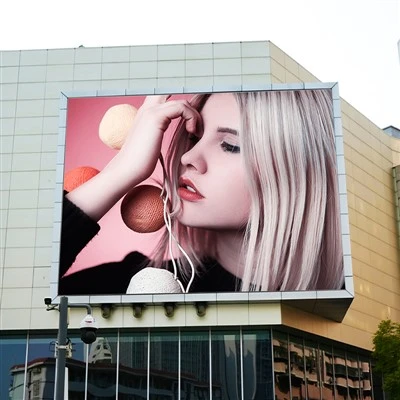
Let’s start with the core science, because you can’t talk about outdoor LED brightness without grounding it in how light works outside. Human eyes adjust to a wide range of light levels, from the dim glow of a starry night (about 0.001 nits, for the tech folks) to bright midday sunlight that clocks in around 100,000 nits on a reflective surface. For a screen to be visible under those conditions, it needs to emit enough light to outshine the ambient light hitting its surface, with a buffer built in so the image doesn’t look washed out or dull. That’s where peak brightness is measured: in nits, a term that stands for candela per square meter, the standard unit for measuring light intensity from a surface.
A lot of first-time clients assume “brighter is better,” but that’s not always true. Too little brightness, and your screen fades into the background on a sunny day, or viewers squint to make out details. Too much, and you’re wasting energy, overheating the LED panels, or even creating unnecessary light pollution for nearby homes or businesses. This balance is where the peak brightness of an outdoor LED video wall gets defined—and as a supplier, I’ve helped clients nail that balance every day by matching brightness to their exact needs.
Now, let’s get to the actual numbers, because that’s what most people want to know. The baseline for any functional outdoor LED video wall is around 2,000 nits. That works great for shaded or partially shaded outdoor spaces, like small event tents, evening wedding ceremonies, or indoor-outdoor venues where sunlight only hits the edge of the screen for an hour a day. But if you’re using the screen in full, unobstructed midday sun? Those 2,000 nits won’t cut it. I saw this firsthand a few years ago when a local music festival client tried to use a cheap imported LED wall rated for 2,000 nits for a main stage headliner set. By 2 PM, the screen looked like a faded old TV from the 90s—viewers could barely make out the band’s logos, and even the vibrant stage lighting looked muted compared to the backdrop. After we swapped in our standard high-brightness panels, rated for 5,000 nits, the difference was night and day. The reds popped, the details in the lead singer’s jacket were sharp, and every viewer across the 10,000-person crowd could see the screen clearly, even in direct sunlight.
But 5,000 nits isn’t the end of the range. For applications where visibility is absolutely non-negotiable, like stadium outfield screens, highway billboard-style information displays, or outdoor festival main stages that run all day in full sun, we supply panels rated up to 8,000 nits. We’ve even worked on a large-scale outdoor projection for a national sports championship that used custom 10,000-nit panels, designed to cut through the glare of a bright summer afternoon and be visible from the top of the stadium’s upper deck, 300 feet away. That number isn’t arbitrary, either—we test every panel batch in our climate-controlled testing facility, simulating midday sun temperatures and light levels to make sure they hit their rated peak brightness consistently, no matter the environment.
What’s important to note here is that these peak brightness numbers are the maximum the panel can produce, not the average brightness it runs at 24/7. In fact, running a panel at full brightness all the time is a fast way to shorten its lifespan—LEDs degrade over time, and running at maximum output adds extra heat that accelerates that process. That’s why we design our outdoor LED walls with dimming capabilities, so clients can adjust brightness based on the time of day: 5,000 nits at noon, dropping to 2,000 nits at dusk, and even lower to 500 nits for evening events, where ambient light is minimal. This not only saves on energy costs, it also extends the lifespan of the panels by years—something I always highlight to clients who are worried about long-term maintenance.
Another factor that affects perceived brightness is not just the peak nit number, but the panel’s pitch (the distance between individual LED pixels) and contrast ratio. A 5,000-nit panel with a 10mm pixel pitch will look dimmer to the human eye than a 5,000-nit panel with a 2.5mm pixel pitch, because smaller pixels mean a denser, more uniform image. You might have a high nit count, but if pixels are spaced out, the image looks grainy, and the overall perceived brightness drops. I’ve had plenty of clients come to me thinking they just need the highest nit number, only to realize that pairing the right brightness with the right pixel pitch for their viewing distance gives them a far better result. For example, a 10mm pitch screen meant for a distant festival crowd doesn’t need 8,000 nits—5,000 nits works perfectly, because viewers are far enough away that the pixel pitch isn’t noticeable, and the lower brightness keeps costs down and extends panel life.
We also have to talk about edge cases, because outdoor environments are unpredictable. A screen used in a high-altitude area, where sunlight is more intense (the thinner atmosphere means less light diffusion) might need a higher peak brightness, while a screen in a forested area where it’s shaded for most of the day can get away with lower brightness, saving on costs. We recently worked with a national park that wanted an outdoor information screen for a visitor center, where direct sunlight only hits the screen for two hours a day. We supplied a 2,500-nit panel, which was enough for those two hours, and saved them thousands of dollars compared to a higher-brightness unit they’d initially requested. That’s the kind of tailored solution I pride myself on as a supplier— not just pushing the most expensive, brightest panel, but finding the right peak brightness for the exact environment and use case.
Common misconceptions still pop up all the time, though. Some people assume that all outdoor LED walls are way brighter than they need to be, but that’s not true. I’ve also had clients ask me if they can use an indoor LED wall outside, and the answer is almost always no—indoor panels are usually rated at 500-1,500 nits, which is way too low to be visible in direct sunlight, and they’re not sealed to withstand rain, dust, or temperature swings. Another misconception is that higher peak brightness means better image quality, but as I mentioned earlier, it’s about balance. A well-tuned 3,500-nit panel with good contrast will look far better than a poorly calibrated 8,000-nit panel.
As an outdoor LED video wall supplier, I’ve learned that the peak brightness question isn’t just about numbers on a spec sheet—it’s about understanding what the client actually needs. A small local fair doesn’t need a 10,000-nit main stage screen, but a major league stadium might. A city council’s outdoor weather alert display needs enough brightness to be seen by drivers on a busy highway, while a backyard movie night for a neighborhood only needs enough brightness to cut through streetlights and porch lights. Over the years, I’ve built my business on taking the time to walk clients through these details, not just send them a spec sheet. I’ll ask questions: where will this screen be installed? How long will it be used each day? What’s the farthest viewing distance? What’s the local environment like (sunny, shaded, near other bright lights)? All of these factors help us land on the perfect peak brightness that delivers clear, vibrant images, stays within budget, and lasts for years.
If you’re planning an outdoor project—whether it’s a small community event, a large stadium installation, a public information display, or anything in between—and you’re not sure what peak brightness you need, I’m here to help. Too many projects go wrong because clients guess at the right specs, only to have screens that look dull or waste money on unnecessary brightness. As someone who’s worked with outdoor LED walls for over a decade, I can walk you through the science, the use cases, and the real-world performance of every panel we supply, so you get exactly what you need for your project. We offer custom configurations, long-term maintenance plans, and testing to make sure every screen performs as promised, no matter where it’s installed. Don’t settle for a screen that looks washed out in the sun or costs more than it needs to—reach out to discuss your project, and let’s find the right outdoor LED video wall for you.
Novastar Control System References
- "Lighting for Outdoor Displays: A Technical Guide," Society for Information Display, 2021.
- "LED Display Brightness Requirements for Outdoor Environments," National Association of Broadcasters Engineering Department, 2022.
- "Candela per Square Meter (Nit): Unit of Luminance," International Commission on Illumination (CIE) Publication 10-1991.
Shenzhen Starcolor Optoelectronics Co., Ltd.
As one of the most professional outdoor led video wall manufacturers and suppliers in China, we’re featured by quality products and good price. Please rest assured to wholesale discount outdoor led video wall in stock here from our factory. Customized orders are welcome.
Address: 2nd floor, Building A, Hongjingda Industrial Park, Shiyan town, Bao’an District, Shenzhen
E-mail: starcolorled@outlook.com
WebSite: https://www.starcolordisplay.com/
