Hey everyone, it’s Jake here from your go-to tractor squad—you know, the folks who make sure your farm, yard, or small plot’s work doesn’t feel like dragging a plow uphill all day. Last week, I was out at a local farm helping a buddy swap out a sickle bar mower and he asked me, “What even is a PTO, anyway? I see the shaft on the back, but why does it matter so much?” Dude, that question made me stop in my tracks because PTOs are the unsung heroes of every tractor, and most people just sorta ignore ’em until theirs craps out mid-job. Today, we’re breaking down exactly how a tractor PTO works, no stuffy jargon, just real talk from someone who’s been wrenching on these machines for 12 years and selling tractors to folks like you for 8. Tractor
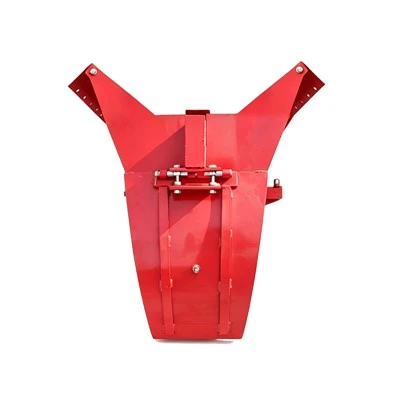
First off, let’s get that acronym straight for anyone who’s new to the game: PTO stands for Power Take-Off. Super simple, right? It’s that big, star-shaped (or splined, if we’re being technical) shaft sticking out the back, maybe the side, sometimes even the front of your tractor. But it’s not just a fancy metal rod—its whole job is stealing power from your tractor’s engine to run other gear that’s not the tractor itself. Think mowers, balers, snow blowers, post hole diggers, even those big grain augers you lug around harvest time. Without a PTO? Your tractor’s just a giant metal workhorse with nowhere to send the power besides its own wheels. Duh.
Let’s start with the basics of how the engine sends power to the PTO. Tractors have a main engine, right? That engine’s crankshaft is what spins to make everything work—wheels, alternator, all that. Now, inside the transmission (that’s the boxy thing under the seat that shifts gears), there’s a separate shaft: the PTO drive shaft. Here’s the key part: that shaft doesn’t spin all the time. If it did, you’d be tearing up your mower blades 24/7, even when you’re just hauling hay down the road. So we’ve got a clutch system for the PTO, separate from the tractor’s main clutch. Most modern tractors let you engage or disengage the PTO with a little lever or a button on the dash, which is way easier than the old days where you had to get out and fiddle with something under the hood.
Wait, but how fast does that shaft spin? That’s where things get interesting, and why matching your PTO speed to your attachment is non-negotiable. You’ve got two standard speeds, mostly: 540 RPM and 1000 RPM. RPM = revolutions per minute, if you forgot. 540 is the workhorse speed for most small to mid-sized stuff—your standard sickle mower, hay rake, small baler. 1000 is for heavier-duty gear, like a big round baler or a grain auger that’s moving 20 bushels of corn at a time. A lot of new tractors also have an “eco” PTO speed, like 540 E, which spins at the same rate but uses less engine power so you save gas. Smart, right? No need to burn extra fuel just to spin a mower when you don’t have to.
Now, let’s talk about that actual shaft that connects your tractor to your attachment—we call that a PTO driveline, or just “the PTO shaft” around the shop. It’s not just a straight metal pole, though. It has two main parts: the drive shaft that sticks out of your tractor, and the implement shaft that hooks up to your mower or whatever. In between, there’s a universal joint (U-joint, for short) on both ends, plus a telescoping section. Why the U-joints? Because when your tractor bounces over a rocky field or you turn sharply, the hitch on the back tilts up or down, so the shaft can’t be perfectly straight. U-joints let it bend without snapping. The telescoping part? That’s so the shaft can get longer or shorter as the hitch moves up and down—no binding, no breaking. If you’ve ever had a PTO shaft pop out mid-job, it’s probably because you didn’t latch the safety guards right, but that’s another story.
Speaking of safety, we can’t skip that because PTOs are no joke. I’ve seen too many horror stories over the years—folks letting their hair or their shirt sleeve get caught in a spinning PTO, that’s a nightmare. Every PTO shaft has a plastic or metal guard that covers the spinning parts, and you always have to make sure it’s locked in place before you engage the PTO. Even when you’re hooking up an attachment, don’t walk around the back of the tractor while the engine’s running, not even to grab your coffee. I know you’re in a hurry, but 10 seconds of caution is way better than a lifetime of regret.
Wait, what about front PTOs? A lot of folks don’t know they exist, but they’re super handy. Some tractors have a PTO on the front, usually 1000 RPM, for things like a snow blower on the front end in winter or a pallet fork with a hydraulic pump. It frees up the back PTO for other stuff, and it’s great if you’re working in tight spaces where you don’t want a long shaft sticking out the back. Most compact tractors don’t have front PTOs, but mid-sized and big ones usually do now.
Let’s get real about how the power actually transfers, for all the gearheads out there. When you engage the PTO, a set of gears in the transmission locks into place, connecting the engine’s crankshaft to the PTO drive shaft. Those gears are sized specific to that 540 or 1000 RPM speed, so if you shift the tractor into the wrong gear while the PTO’s engaged, you’ll mess up the gears or even blow the PTO clutch. That’s why you always engage the PTO when the tractor’s in neutral, right? If you’ve ever heard a grinding sound when you flip that PTO lever, that’s why—you’re moving too fast or in the wrong gear.
I get it, this all sounds like basic stuff if you’ve been around tractors your whole life, but I’ve had so many new customers come in who bought a used tractor and didn’t know their PTO speed was wrong for their mower. They say “my mower’s cutting uneven” and it turns out their tractor’s PTO is spinning 700 RPM instead of 540—no wonder! Matching the speed is half the battle. Also, don’t forget to lubricate your PTO shaft regularly. The telescoping section needs grease every 10 hours of use, or it’ll get rusty and seize up, and then you’re stuck with a $200 repair instead of a $10 grease gun.
Here’s a pro tip from our shop: if you’re hauling an attachment down the road with the PTO connected, make sure you disengage the PTO first. A lot of guys think it’s fine to leave it on, but bouncing down the highway will bend the U-joints or snap the shaft, and then you’re on the side of the road at dusk trying to rig something. Been there, done that, got the t-shirt (and the broken shaft to prove it).
Now, if you’re in the market for a new tractor, let’s chat about PTO options. We sell tractors with both rear and front PTOs, adjustable speeds, even electro-hydraulic engagement—so you don’t have to pull a lever, just push a button from the cab. No more climbing in and out every time you need to turn the PTO on or off, which is a game changer when you’re baling hay in the middle of July. We also teach every customer how to use the PTO safely, no hidden fees, just good advice. If you’re tired of your old tractor’s PTO crapping out, or you need one that can handle bigger jobs, hit us up—we’ll walk you through what you need, no pressure, no salesy garbage.
Wait, one last thing I should mention: PTO power rating. That’s not just the tractor’s horsepower, it’s how much power is actually available at the PTO shaft, not the engine. For example, a 50 HP tractor might only have 40 HP at the PTO, because some power is lost through the transmission and gears. That’s important if you’re buying a new baler that needs 35 HP to run—so you don’t want a 40 HP tractor with a 32 HP PTO, that’ll leave you stuck. We always check the PTO ratings for every tractor we sell, so you don’t have to do the math yourself.
Utility Tractors References:
- Tractor Protection Association. (2022). PTO Safety and Operation Guidelines.
- John Deere & Co. (2021). Modern Tractor Power Take-Off Systems.
- National Farm Machinery Association. (2020). Implement-Tractor PTO Compatibility Handbook.
Shandong Jiayuan Agricultural Equipment Co., Ltd.
As one of the most professional tractor manufacturers and suppliers in China, we have world-leading production equipment and strong manufacturing capabilities. Please feel free to buy advanced tractor for sale here from our factory.
Address: No.2, No.002777 Zhongjiang West 4th Street, Yangzi Subdistrict, Binhai District, Weifang City, Shandong Province, China
E-mail: sdjynyzb@163.com
WebSite: https://www.jiayuantractor.com/
