If you’re running a warehouse or work with warehouse trucks on-site, you’ve probably wondered which OSHA rules actually apply to your operations. As a warehouse truck supplier who’s talked to dozens of warehouse managers over the years, I can tell you it’s not just a random list of jargon-heavy standards—it’s all about keeping workers safe and making sure your equipment doesn’t become a hazard. OSHA’s rules for warehouse trucks are spread across a couple of main standards, and mixing them up is a quick way to end up with fines, or worse, an accident. Warehouse Truck
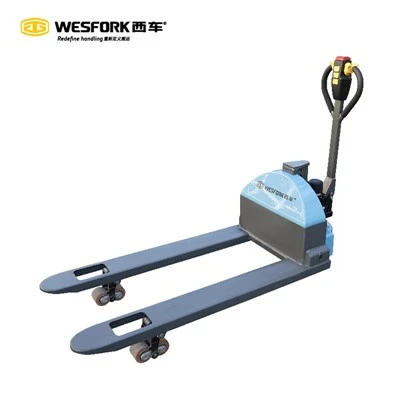
First, let’s get one thing straight: when OSHA says “warehouse trucks,” they’re talking about a range of powered industrial trucks—think forklifts, pallet jacks, order pickers, reach trucks, and even manual pallet jacks that are motorized. If you use any of these to move loads around your warehouse, they fall under OSHA’s Powered Industrial Trucks standard, which is number 1910.178. That’s the big one, but there are other standards that tie into it, depending on your setup.
Let’s break down the most important parts of 1910.178, because that’s where most of the actionable rules live. First, every warehouse truck has to be in good working order, no exceptions. OSHA says you have to inspect every truck before the first shift each day, or after every eight hours of use if it’s running non-stop. You can’t skip this check—no matter how “reliable” your truck is. What does the pre-shift inspection cover? Things like brakes, steering, tires, controls, loads, and even the hydraulics if it’s a lift truck. If you notice a problem, you have to take the truck out of service right away and get it fixed, not just “deal with it later.” I’ve seen way too many managers brush off a weird brake squeak or a leaky hydraulic line, and it only ends up costing someone an injury or a broken truck.
Then there’s operator training. This is another huge part of 1910.178. OSHA doesn’t just let anyone jump on a warehouse truck and drive it. Every operator has to get formal training, hands-on practice, and an evaluation of their skills before they can work independently. The training has to cover things like how to operate the specific type of truck they’re using (because a forklift is way different from a narrow-aisle order picker), load capacity, how to handle uneven surfaces, pedestrian safety, and what to do in an emergency like a truck tipping over. Even if an operator has experience at another job, they still need OSHA-compliant training for your warehouse’s specific setup—like low ceilings, tight aisles, or heavy loads. I can’t tell you how many times a former coworker of mine got a call from a warehouse that had a guy who’d been driving forklifts for 10 years, but he didn’t know how to operate their reach truck, and he hit a pallet and damaged the racking. Training isn’t optional—it’s the law.
Another key rule under 1910.178 is load capacity. Every warehouse truck has a load capacity plate right on the truck, and you can’t exceed it. Full stop. OSHA has seen way too many accidents where people stacked way too many pallets on a pallet jack, or a forklift tried to lift a load heavier than its rating, and the truck tipped over. The load plate isn’t a suggestion—it’s a legal requirement. And it’s not just the total weight; you also have to pay attention to the load’s center of gravity. A heavy load that’s sitting too far forward on a forklift can cause it to tip, even if it’s under the weight limit. That’s why training has to cover center of gravity too.
Beyond 1910.178, there are other OSHA standards that apply depending on your warehouse and the type of truck you use. For example, if your warehouse has narrow aisles, you might be using very narrow aisle (VNA) trucks, which have their own set of guidelines that tie into OSHA’s general aisle safety rules. OSHA’s standard for walk-working surfaces is 1910.22, which covers things like keeping aisles clear of debris, uneven floors, and proper lighting. Even if your warehouse trucks are well-maintained, if your aisles are cluttered with pallets or empty boxes, you’re violating 1910.22 and putting workers and operators at risk. I always tell my customers that buying the right warehouse truck is half the battle—making sure your warehouse layout follows OSHA’s aisle rules is the other half.
If you’re using manual pallet jacks (which are technically warehouse trucks too, even though they’re not powered), there are still OSHA rules to follow. 1910.178 does cover non-powered trucks, so you still have to make sure they’re in good shape—no broken handles, bent forks, or wobbly wheels. Even though manual pallet jacks seem simple, they’re responsible for a lot of back injuries and strained muscles if they’re not working right. So pre-shift inspections apply to them too.
Another thing I get asked all the time: what about electric warehouse trucks vs. gas-powered? OSHA has specific rules for internal combustion engine (ICE) trucks too, under 1910.178. If you use gas or propane-powered forklifts, you have to make sure the engine is properly vented to prevent carbon monoxide buildup in the warehouse. You also have to check the fuel lines regularly for leaks, because a propane leak can be a huge fire hazard. Electric trucks, on the other hand, have their own requirements for battery maintenance—like proper ventilation when charging, and making sure battery terminals are insulated to prevent electrical shocks. I always make sure to explain these differences to my customers, because choosing the right type of warehouse truck means you’re also choosing which set of OSHA rules you need to follow.
Wait, let’s not forget about pedestrian safety. OSHA has a lot to say about separating warehouse truck operators and pedestrians in the workplace. The standard 1910.178 says you have to mark clear aisles for truck traffic, post warning signs at intersections, and maybe even use barriers or mirrors in tight areas. A lot of warehouses make the mistake of letting pedestrians walk in the same aisles as truck operators, and that’s a big no-no. I’ve seen too many near-misses where a pedestrian didn’t see a forklift coming around a corner, or an operator didn’t see a worker stepping into the aisle. Adding mirrors at blind corners and making sure operators sound their horn when entering an aisle is a simple way to comply with OSHA and keep everyone safe.
Now, as a warehouse truck supplier, I know a lot of people come to me looking for trucks that are not just good for their bottom line, but also compliant with OSHA standards. That’s why I only carry trucks that are tested and labeled to meet ANSI (American National Standards Institute) standards, which are often referenced by OSHA. OSHA doesn’t require you to buy new trucks, but if your trucks are outdated, you have to make sure they meet all the current OSHA rules. For example, if you have a 20-year-old forklift, you can still use it as long as you keep it in good shape, upgrade any parts that don’t meet current safety standards, and make sure your operators are properly trained. I always tell customers to ask their supplier if their warehouse trucks come with documentation that shows they meet ANSI standards—because that documentation is key if OSHA comes to inspect.
I also want to clear up a common misconception: OSHA’s standards apply to every warehouse, no matter how big or small. Even if you’re a small warehouse with just 5 workers and 2 pallet jacks, you still have to follow these rules. I had a customer last year who got a $10,000 OSHA fine because their only forklift operator wasn’t trained, and a worker got hit by the truck when he walked into the aisle. They were a small business, and that fine almost put them under. That’s why it’s so important to get this right from the start.
So, to wrap this up: the main OSHA standards for warehouse trucks are 1910.178 (Powered Industrial Trucks), 1910.22 (Walking-Working Surfaces) for aisles and floors, and specific rules for your truck’s power source (electric vs. ICE) depending on what you use. The key takeaways are: inspect every truck before each shift, train all operators properly, never exceed load capacity, keep aisles clear for pedestrian and truck traffic, and make sure your equipment is well-maintained.
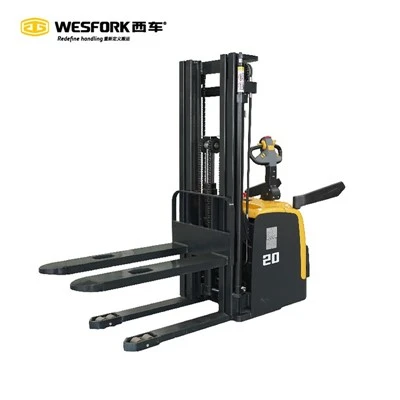
If you’re in the market for new or used warehouse trucks, or you have questions about whether your current setup is OSHA-compliant, feel free to reach out to our team to chat through your needs. We can help you pick the right truck for your warehouse, make sure it meets all safety and OSHA requirements, and even point you to resources for operator training. Don’t wait until an accident or an inspection to get compliant—reach out today to make your warehouse a safer place for everyone.
Hand Pallet Truck References
OSHA. (n.d.). Powered industrial trucks: 29 CFR 1910.178. Occupational Safety and Health Administration.
OSHA. (n.d.). Walking-working surfaces: 29 CFR 1910.22. Occupational Safety and Health Administration.
American National Standards Institute. (2020). Powered industrial trucks safety standard (ANSI B56.1). ANSI.
WESFORK Industries (Zhejiang) Co., Ltd.
As one of the most professional warehouse truck manufacturers and suppliers in China, we also support customized service. Please feel free to wholesale high quality warehouse truck for sale here from our factory. For price consultation, contact us.
Address: 277#Yinhu Road,Yinhu Street,Fuyang District,Hangzhou City,Zhejiang Privince,China
E-mail: sulin@wesfork.com
WebSite: https://www.wesforkintl.com/
