If you’ve ever ordered a custom metal bracket for an industrial machine, a thin steel enclosure for a consumer gadget, or a precision frame for a medical device, chances are it came through a sheet metal fabrication shop. As someone who’s run a small to mid-sized sheet metal fabrication parts supplier for 12 years, I’ve lost count of how many times a new customer will call in, describe a part they have in mind, and ask a very basic question: “Is this a primary or secondary operation part?” Most of the time, I can tell just by the details of their design—whether they’re talking about cutting a ¼-inch steel plate to rough size, or needing something bent, threaded, or polished after that initial cut. The line between primary and secondary sheet metal operations isn’t just some industry jargon; it’s the backbone of how we price parts, schedule production, and deliver on what a customer actually needs. Today, I want to break down what that difference really means, from the perspective of a guy who stands on the shop floor at 6 a.m. every day, watching these processes play out. Sheet Metal Fabrication Parts
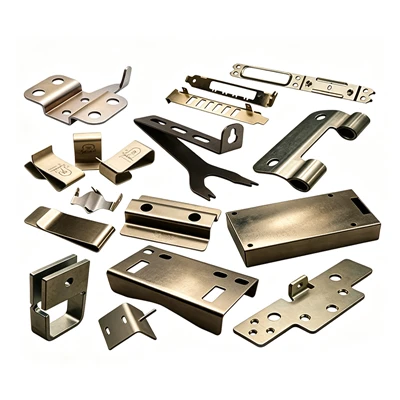
First, let’s get the terms right, because if you mix them up, you end up with parts that don’t fit, or budgets that blow up. Primary sheet metal operations are the first set of steps we do when raw sheet metal comes into our warehouse. Raw sheet metal is just flat, thin metal stock—usually steel, aluminum, stainless steel, or copper, in sheets up to 10 feet long or more. Primary operations are all about cutting that big, flat stock down to the rough shape of the part. They remove material to get the part to its basic, two-dimensional outline, no bends, no holes for fasteners, no surface finishes, nothing extra. Think of it like carving a block of wood: primary operations are the saw that cuts the block into a rough rectangle before you start sanding or shaping the edges.
The two most common primary operations are shearing and laser cutting, and I use both every single day in my shop. Shearing is the old-school workhorse: we feed a 10-foot steel sheet into a hydraulic shear, a giant pair of metal scissors that slices the sheet along a straight line, no heat, no melting, just clean, straight cuts. It’s fast, cheap, and perfect for straight cuts for big blanks—like cutting a 4×8 foot aluminum sheet into four 2×2 foot blanks. But shearing only does straight lines; if you need a round edge, or a cut with curves, or tiny, precise holes, shearing won’t work. That’s where laser cutting comes in. A high-powered fiber laser is controlled by a computer, so it can cut almost any shape—circles, notches, even complex geometric patterns—with tolerances as tight as a thousandth of an inch. We use laser cutting for almost all custom parts now, because most of our customers don’t need a simple straight-edged blank; they need something that’s going to be bent later, so the cut has to be precise. Waterjet cutting is another primary operation, used mostly for thick metal (over ½ inch) that a laser can’t cut, because waterjets use high-pressure water mixed with abrasives to slice through hard metal without heating it, which warps thin parts.
The key thing to remember about primary operations: when we’re done, the part is still a flat piece of metal. It’s got the outline it needs, but it’s not a functional part yet. It’s like a pizza crust before you add sauce and cheese—basic, but not done. That’s where secondary operations come in. Secondary sheet metal operations are all about taking that flat, cut primary part and turning it into a three-dimensional, functional, finished part. They modify the shape, add features, smooth edges, or change the surface so the part works for its intended purpose. If primary is cutting the pizza crust, secondary is adding toppings, baking it, and cutting it into slices.
Let’s walk through the most common secondary operations, because this is where customers get confused all the time. The biggest secondary operation is bending, and that’s what I spend the most time training new shop workers to do. Bending uses a press brake: a machine with a top punch and a bottom die, and we clamp the flat primary part between them to bend it at a precise angle—90 degrees is standard for brackets, but we can do angles from 10 degrees to 170 degrees. The trick with bending is that you have to factor in the metal’s “springback” before you start; if you bend a steel sheet 90 degrees, the metal will spring back a little (usually 1 to 3 degrees), so we have to bend it a bit extra to get the exact angle we want. We also do roll forming, which is bending metal into a curved shape, like a pipe or a curved frame, for things like ductwork or outdoor signs.
Next, we have operations that add features to the flat, bent part: punching and tapping. Punching uses a die and punch to create holes, slots, or lugs in the metal, usually done right after cutting so we don’t have to move the part multiple times. Tapping is when we cut internal threads into a hole, so you can screw a bolt into it—we use tap holders on drill presses or CNC machines to cut threads in steel or aluminum, and that’s a secondary operation because it’s adding a functional feature that the primary cutting didn’t do. Another common secondary operation is notching, where we cut small notches along the edge of a part so it can bend at a precise spot without warping.
Then there are finishing secondary operations, which are just as important for function and appearance. Deburring is the process of smoothing the sharp, burr-filled edges left by primary cutting operations. A laser cut part will have tiny, sharp metal shavings along the cut edge that can cut a hand or scratch another part during assembly, so we run parts through a vibratory tumbler (a big barrel with abrasive media that rubs the edges smooth) or use a belt sander to get rid of burrs. Surface finishing is another big one: we do powder coating, which is a dry paint sprayed on the part and baked to create a durable, scratch-resistant finish; sandblasting, which etches the surface to make it matte; and polishing for stainless steel parts that need a shiny, reflective finish. Some customers also need parts welded together—welding is definitely a secondary operation, because you’re joining two or more primary-cut, bent parts into a single, solid assembly.
Now, the biggest question most new customers ask: “Does my part need primary or secondary operations?” The answer is almost always both, but sometimes one is so minimal that people mix them up. Let’s use a real example from my shop to make this concrete. A few weeks ago, a customer needed 100 steel brackets for mounting solar panels to a roof. The first step (primary operation) was cutting a 12-gauge steel sheet with a laser to the rough outline of the bracket: a flat plate with two ends that bend up. That took 2 minutes per part. The secondary operations were: bending the two ends at 90 degrees (takes 1 minute per part), tapping two holes in the flat plate for bolts (30 seconds per part), and powder coating the bracket black (10 minutes per part). That’s a clear primary + secondary job. Another example: a customer needed 50 aluminum blanks for machine enclosures, each a 2×3 foot flat sheet with no bends, no holes, no finish. In that case, the only operation we needed was primary laser cutting—so the part doesn’t need any secondary work to be functional.
But here’s where I see customers make mistakes all the time: quoting jobs wrong because they mix primary and secondary costs. Primary operations are all about material removal and cutting, so their cost depends mostly on the size of the part, the type of metal, and the complexity of the primary cut. A complex laser cut with dozens of holes will cost more than a simple straight cut. Secondary operations, though, are based on labor and time: bending a single angle is quick, but bending 10 separate angles on a large bracket takes way more time, and adds more cost. Welding two parts together takes way longer than cutting them, so that’s a big cost driver in secondary operations.
Another common mix-up: people think primary is just “cheap, rough cuts” and secondary is “fancy, expensive finishes,” but that’s not true. A simple bent bracket that only needs a 90-degree bend is a secondary operation, but it’s still a basic part, not something fancy. Conversely, a very complex primary cut—like a part with 50 tiny, precise holes for a medical device—can be more expensive than a simple secondary bend. The difference is always in what you’re doing to the part: primary is cutting the flat stock to a 2D outline, secondary is shaping that flat part into 3D form or adding functional features after the initial cut.
I’ve also had customers come to us with a part that was made wrong somewhere else, because the fabricator didn’t distinguish between primary and secondary operations. Last year, a small robotics company brought in a bracket that was supposed to have 4 bent flanges for mounting, but the fabricator had only done primary cutting—they’d left the flat, cut part as is, so the bracket couldn’t hold the robot’s arm. That’s a $5,000 mistake for the customer, all because the fabricator skipped the secondary bending step. Another time, a customer ordered a laser-cut steel enclosure, but they didn’t specify deburring, so the sharp edges cut the technician’s hand during assembly, and they had to pay for reworking every part—another mistake that comes from not clarifying which operations are primary vs. secondary.
What does this mean for you, if you’re someone who needs sheet metal parts? The biggest takeaway is that when you’re working with a supplier, you need to be explicit about both your primary and secondary requirements. Don’t just say “cut a bracket”; say “primary operation: laser cut 12-gauge hot-rolled steel to 4-inch x 6-inch outline, with two ½-inch holes for bolts; secondary operations: bend two 1-inch flanges at 90 degrees, tap the holes for ¼-20 bolts, deburr edges, and powder coat matte black.” Being specific about each step will help your supplier give you an accurate quote, avoid delays, and make sure the part works for your needs.
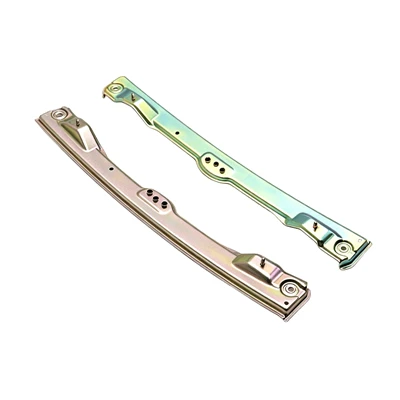
For me, as someone who’s been in this industry for over a decade, the line between primary and secondary operations isn’t just a set of rules—it’s how we treat every part that comes through our shop. Every morning, when I walk onto the floor, I can see the difference: a stack of flat, laser-cut blanks waiting for bending, and a stack of bent parts waiting for welding. Those blanks are primary output, and they’ve got a long way to go before they’re finished parts. The bent parts are already on their way to being something useful. It’s a simple distinction, but it’s the foundation of everything we do, from scheduling jobs to making sure we don’t miss a step that would delay a customer’s order.
Stamping Parts If you’re in the market for custom sheet metal fabrication parts, whether it’s brackets, enclosures, medical components, or industrial equipment parts, the first step is to be clear about what operations your part needs. Every part is different, and sometimes you’ll only need primary operations, sometimes only secondary, but almost always, the best results come from working with a supplier who understands that difference, and can walk you through each step to make sure your part is done right. Don’t hesitate to reach out and talk through your project—whether you have a sketch, a CAD file, or just a rough idea of what you need, we’re here to help you sort through primary vs. secondary operations and deliver parts that meet your exact specs.
References
- Henniges, U. (2019). Sheet Metal Fabrication: Processes, Materials, and Design for Manufacturing. Industrial Press Inc.
- TWI Ltd. (2021). Guidelines for Sheet Metal Primary and Secondary Operations. Welding Institute Technical Report.
- DeGarmo, E. P., Black, J. T., & Kohser, R. A. (2020). Materials and Processes in Manufacturing (13th ed.). John Wiley & Sons.
Jianhu Yuhua Machinery Manufacturing Co., Ltd.
As one of the most professional sheet metal fabrication parts manufacturers and suppliers in China, our products have good reputation in the market. Please rest assured to buy durable sheet metal fabrication parts made in China here from our factory.
Address: No.1 Peiliu South Street, Lugou Town, Jianhu County, Yancheng City, Jiangsu Province, P.R.China
E-mail: 13770213655@163.com
WebSite: https://www.yuhuamfg.com/
