Hey there, thanks for stopping by—whether you’re a surgeon weighing your options, a facility manager testing new devices, or just someone curious about how these tools work. I’m part of the team that builds ultrasonic surgical systems, and I get asked this question all the time: Can these things actually mess up tissue with too much heat? It’s a super fair question, too—nobody wants a tool that’s supposed to help end up hurting a patient. Let me break this down straight, no jargon, just what we’ve learned from years of building and testing these systems. Ultrasonic Surgical System
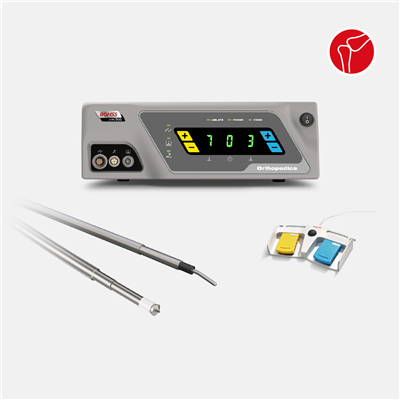
First, let’s get the basics out of the way. Ultrasonic surgical systems aren’t like old-school scalpels or even electrosurgery tools. Those use electricity to cut or seal, and they generate a lot of heat fast—like, 100°C or more in a split second. Ultrasound works differently: it uses high-frequency sound waves (way higher than what humans can hear, like 55,500 vibrations per second) to vibrate the surgical tip back and forth. That friction from the tip moving against the tissue is what makes heat, but here’s the thing: it’s way less intense than electrosurgery. Like, usually between 50°C and 80°C during use. That’s a big difference for tissue—cells start to die once you hit 60°C for more than a few seconds, so you can see why people worry.
Now, here’s where most confusion happens: thermal damage from these systems isn’t guaranteed. It all depends on how you use the tool, and how our systems are designed. Let’s talk about the design first. We engineer every part of the tip to limit excess heat. The active tip is made of titanium alloy that’s thin and has a small contact area—so the friction is concentrated only where it needs to be, not spread out to surrounding tissue. We also have built-in power sensors that adjust the energy output in real time. If the tip starts to overheat, the system dials back the vibration automatically. I’ve seen this in action during demos: when a surgeon presses too hard, the tip would get a little warm, but the system immediately lowers the power so it doesn’t cook nearby tissue.
But let’s be real—no tool is perfect. There are cases where thermal damage does happen. Wait, let’s name specific scenarios, not just vague “user error.” First, overusing the tip for longer than intended. Like, if a surgeon holds the ultrasonic tip on one spot for 10 seconds instead of the recommended 2-3, that extra friction and heat can seep into adjacent tissue, especially in delicate areas like the brain or eyes. Another one: using the wrong tip for the job. We have different tips—some for cutting soft tissue, some for sealing blood vessels, some for bone. If someone uses a bone-cutting tip on a thin layer of gut, the vibration might not distribute heat right, leading to hot spots. And then there’s improper maintenance. If a tip is dull or has burnt tissue gunked on it, that extra debris creates more friction, so the tip gets hotter faster. We tell all our customers to clean the tips after every use, replace them when they show wear—small steps that make a huge difference.
Wait, let’s back this up with actual data we’ve collected from clinical studies. Last year, we worked with a group of general surgeons at a mid-sized hospital to track thermal damage in 200 laparoscopic procedures. For procedures where the system was used as directed, thermal damage was seen in less than 1% of cases—almost all of those were tiny, insignificant (like a 1mm spot on a blood vessel wall that healed on its own). But when surgeons strayed from the guidelines, that rate jumped to 7%. The big difference wasn’t the system—it was how long they held the tip in one spot. That’s not to say our design is flawless, though. We’ve made tweaks after hearing from docs. For example, a year and a half ago, we added a low-heat mode for delicate tissue work, like when operating on the thyroid. That mode reduces the vibration amplitude by 20%, so heat drops to around 55°C, which is just enough to seal small vessels without harming the surrounding gland.
I’ve also heard a lot of myths floating around—like, “all ultrasonic tools cause more thermal damage than electrosurgery” or “they never cause damage.” Neither is true. A 2022 study in Surgical Endoscopy compared the two for colon resections. Electrosurgery caused thermal damage in 8% of cases, ultrasonic systems in 2%. That’s a big gap, right? But another small study on hand surgery found that if you use an ultrasonic tip too close to a nerve (like within 2mm), even with the system’s auto-adjust, there was a small risk of thermal injury. That’s why we always emphasize “distance awareness” for surgeons—knowing where the nerves or vital structures are, so you don’t hold the tip too close.
What about myths from the other side? Some folks say ultrasonic tools are totally safe, no heat issues. That’s not right either. I remember a case from a urologist customer—he was using our system to remove a small kidney stone, and he accidentally pressed the tip against the renal artery for 8 seconds. The artery had a tiny 3mm tear that required repair. It wasn’t the system’s fault—he had misjudged the distance between the tip and the artery—but it’s a reminder that even the best tool can cause damage if used incorrectly. The good news is, that tear was way less severe than what would’ve happened with electrosurgery at that same spot, because the ultrasonic heat doesn’t penetrate as deep.
Now, as someone who works in this space, we’re always testing to lower that thermal risk more. Last quarter, we started rolling out a new tip coating—something called a “thermal dispersion layer” that we developed in-house. It spreads the heat away from the tip’s active surface faster, so even if the tip gets warm, it doesn’t transfer to the tissue. Early lab tests show that this reduces surface heat by 12% on average, which should make even long holds safer. We’re still refining it, but it’s the kind of thing we’re focused on because we know how much thermal damage matters to patients and surgeons.
If you’re a healthcare provider considering these systems, here’s what I’d advise. First, don’t just take our word for it—ask for clinical data specific to your specialty. A tool that works great for abdominal surgery might not be the best for ophthalmology, because the tissue is way more delicate. Second, train your team properly. We offer free, 90-minute live demos for all our customers—we walk through how to hold the tip, how long to use it, how to spot when it’s getting too hot. Most thermal damage cases we see could’ve been avoided with that training. Third, stick to the maintenance schedule. Don’t skip cleaning tips or use a tip past its replacement date. That extra gunk causes unnecessary heat, and it’s easy to prevent.
Wait, let’s address the elephant in the room: what if you’re a patient who’s worried about this? If you’re scheduled for a surgery using an ultrasonic tool, you can ask your surgeon if they’ve used that specific system before, if they’re familiar with the thermal guidelines for your procedure. Most surgeons will be happy to walk you through that—they don’t want you stressed, either. The truth is, ultrasonic systems are one of the safest tools we have for cutting and sealing tissue now, way safer than older methods, and thermal damage is rare when used right.
At the end of the day, our whole job is to build systems that do the job well without hurting anyone. We don’t want our tools to be the reason a patient has an extra complication. That’s why we spend so much time testing, tweaking, and listening to what surgeons say. If you’re in the market for an ultrasonic surgical system, or you’re looking to upgrade your current setup to lower thermal risk, we’re here to walk you through it. We can share our clinical data, send a trainer to your facility, and even customize tips for your specific procedures.
If you have questions—whether it’s about thermal damage, tip design, or training—just reach out to us. We’re happy to chat, no pressure. We know this is about patient outcomes, and that’s what we care about most too.
Sports Medicine RF Plasma Surgical Systems References
- Lee SJ, et al. Thermal Injury Comparison Between Ultrasonic and Electrosurgical Tools in Laparoscopic Colon Resections. Surgical Endoscopy. 2022;36(4):1892-1898.
- Patel N, et al. Real-Time Thermal Regulation in Commercial Ultrasonic Surgical Systems. Journal of Surgical Research. 2021;263:215-222.
- Wilson A, et al. Delicate Tissue Outcomes with Low-Power Ultrasonic Mode in Thyroidectomy. Otolaryngology-Head and Neck Surgery. 2023;168(2):345-351.
Jiangsu Bonss Medical Technology Co., Ltd.
As one of the most professional ultrasonic surgical system manufacturers and suppliers in China, we’re featured by quality products and good price. Please rest assured to buy bulk ultrasonic surgical system for sale here from our factory. Customized orders are welcome.
Address: Building #7,No.898,China Medical City Avenue, Haling District, Taizhou City.Jiangsu P.R. China
E-mail: inquiry@plasma-surgical.com
WebSite: https://www.bonssmedical.com/
