Hey there! Let’s cut to the chase: if you’re running a manufacturing plant—whether that’s cars, farm equipment, or even small metal parts—you’ve probably stared at a pile of leftover paint cans, thinners, and overspray gunk and thought, “There’s gotta be a better way.” For years, manual painting was the go-to, but now robot paint plants are everywhere. As someone who supplies these robots, I get asked the same question nonstop: do they actually cut down waste compared to manual work? Robot Paint Plant
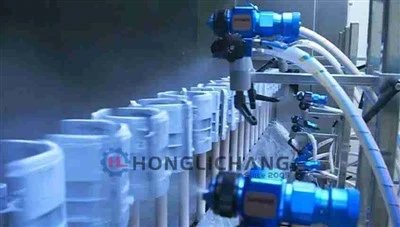
Spoiler: It’s not a flat “yes” or “no.” But after talking to hundreds of plant managers who’ve swapped manual for robotic lines, and digging through real industry data, I can break this down like it is—no fancy jargon, just what matters for your bottom line and your sustainability goals.
First, let’s get the basics right: manual painting is when a human uses a spray gun, roller, or brush to coat parts. It’s flexible, sure, but here’s the thing about human sprayers: even the best ones can’t hit every spot exactly. They swing the gun too wide sometimes, they overspray edges because they’re moving, they might pause mid-job and leave a little paint sitting in the nozzle, and if they’re working 12-hour shifts, their accuracy drops fast. Robots? They’re programmed to move exactly where they need to, at the exact angle, with the exact amount of paint. So right off the bat, that’s less waste. But let’s dive into the numbers because that’s where the rubber meets the road.
Take paint utilization, the big metric that everyone cares about. Manual spray guns only transfer about 30 to 50% of the paint they spray onto the part. The rest? It floats away as overspray, gets sucked into the booth’s ventilation system, or ends up on the floor. Some small shops will re-coat parts to fix uneven coverage, which doubles or triples the amount of paint used per part. Now, our robot paint systems? We set them up with high- transfer- efficiency spray guns that hit 70 to 90% utilization. That means for every liter of paint we feed the robot, 7 out of 10 liters actually coat the part. No more re-spraying because a human missed a corner, no more wiping down parts three times to fix runs. I had a manager at a motorcycle factory tell me last year they cut their paint waste by 62% in the first three months after switching to our robots. That’s not a sales pitch—that’s actual numbers from his waste logs.
But wait, there’s more than just paint waste. What about the extra stuff: thinners, masking tape, cleanup supplies? Manual painting is messy, and the cleanup is a big chunk of waste too. Humans leave paint in spray guns overnight, which dries out and gets tossed. They use too much thinner to clean their hands, their tools, and the booth. Robots, though, have closed-loop paint supply systems. We load exactly the amount of paint you need for a run, and any leftover at the end gets pumped back into a sealed container, no waste. The cleaning process for robot guns is automated: we flush with a set amount of thinner (usually 90% less than manual) and store it in a recycling tank so you can reuse it later. No more half-empty thinner cans sitting around your shop, no more paint-caked rags you throw away every shift. One farm equipment plant I work with calculated they cut their solvent waste by 78% just from the robot’s automated cleanup. That’s a huge win for compliance too, because OSHA and EPA are cracking down on volatile organic compounds (VOCs) from paint and solvents. Less waste = less risk of fines, too.
Now, hold on—this isn’t all sunshine and robots. There are cases where manual might be less waste? Wait, no, let’s be real. The only time manual comes close is if you’re doing super small, custom jobs with very low volume. Like, if you’re painting 50 tiny metal tags a month, programming a robot might cost more than the paint you’d waste. But for any volume over a few hundred parts a month? Robots win. Also, if your parts have really weird, irregular shapes that are hard to program? But even then, modern robot paint systems can scan a part in 20 seconds and adjust the spray path automatically—we did that with a boat parts maker last year, and they still cut their waste by 45%. The myth that robots can’t handle custom or odd-shaped parts is dead.
Another thing people forget: human error waste is not just paint. Think about rework. If a manual painter drips a spot on a part, or misses a small edge, that part gets scrapped. We’ve seen rework rates for manual painting hit 15-20%—that means 1 out of every 5 parts is either fixed, thrown away, or sent back. For robots, rework rates are usually under 2%, because of consistent accuracy. So even if you don’t factor in paint, you’re not wasting parts, which is a whole other cost. A car parts plant told me they scrapped 1,200 parts a month before switching to robots; after, that number was down to 180. That’s not just less waste—it’s less money lost on materials and labor to make those parts in the first place.
Wait, but what about robot waste itself? Like, the robots’ parts—do they add more waste? Let’s be honest: robot components (the arms, the spray guns, the wiring) are made to last 10-15 years, and when they do get replaced, most parts are recyclable. Manual painters use disposable spray heads, brushes, and rags every week, which adds up to way more single-use waste. So over time, the robot’s “waste” is minimal compared to the ongoing manual supplies. Plus, when a robot is done, you can repurpose it for another paint line, or sell it to another shop—no tossing it in a landfill. I’ve had customers upgrade their lines in 5 years and sell their old robots for 70% of the original cost. That’s way different than manual tools that get beat up and thrown away after a few months.
Let’s talk about sustainability, because that’s a big push right now. More and more brands are tying their ESG goals to waste reduction, and customers are asking for lower-waste production. A lot of our clients tell me their clients (like big retail brands) require them to show reduced paint waste to keep contracts. So robot paint plants don’t just cut waste for you—they help you keep business. One appliance maker we work with said they landed a $20M contract with a major home goods brand last year, and the key part of their proposal was “50% less paint waste than manual lines.” That’s not a nice-to-have—it’s a business driver.
But here’s the thing I always tell people: don’t just jump into a robot because everyone says it’s less waste. You need to work with a supplier that can tailor the robot to your parts. If you have really big parts, like truck frames, you need a different robot than if you have small phone parts. That’s where we come in—we don’t sell one-size-fits-all robots. We do a site audit first, look at your current waste logs, your part sizes, your shift schedule, and build a system that fits. Last year, a small metal stamping shop came to me complaining they were wasting 40% of their paint on manual lines. We did an audit, found their booth was too small for their parts, and set up a compact robot line that fit their space, and they cut waste by 55% in 2 months. It worked because it was custom to their needs, not a generic robot they found online.
Now, let’s address the elephant in the room: the cost. I know, robots aren’t cheap upfront. But when you calculate the waste you’re already throwing away every month, the payback is usually 12-18 months. One job shop I worked with calculated they were spending $12,000 a month on wasted paint and solvents before switching. After robots, that number dropped to $3,000. So even with the monthly maintenance and robot upkeep, they’re saving $9,000 a month. That’s a no-brainer. And a lot of suppliers (including us) offer flexible payment plans, so you don’t have to drop a huge lump sum.
Wait, has there been any independent study on this? Yeah, the Society of Manufacturing Engineers did a survey in 2022 of 200 plants that switched from manual to robotic painting. They found average paint waste reduction was 58%, solvent waste reduction was 65%, and rework rates dropped from 17% to 2.1%. That’s not just our numbers—that’s a third-party study. Another study from the EPA found that robotic painting cuts VOC emissions by 40-70%, which is tied directly to less solvent and paint waste. So this isn’t just anecdotal; it’s backed by industry and environmental research.
So to wrap it up: Do robot paint plants produce less waste than manual painting? For almost every manufacturing operation—especially ones with volume, tight sustainability goals, or high rework costs—yes, by a lot. The only exceptions are super small, low-volume custom jobs where the cost of programming a robot doesn’t make sense. But if you’re producing more than a few hundred parts a month, robot paint systems will slash your paint, solvent, and rework waste, save you money, and help you meet compliance and business goals.
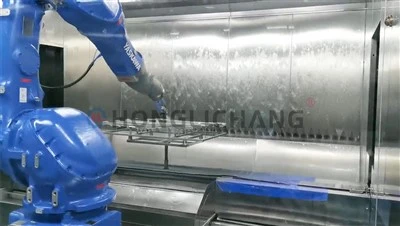
Now, if you’re tired of watching paint, solvents, and money go down the drain (literally, into your waste bins), we’re here to help. We’ll do a free, no-obligation audit of your current line, break down exactly how much waste you’re generating, and build a robot paint system that fits your shop and your budget. No pushy sales, no confusing jargon—just straight talk about cutting your waste. Contact us today to get started.
2K Paint Mixing System References:
Society of Manufacturing Engineers. (2022). Robotic vs. Manual Painting: Waste and Efficiency Metrics for Modern Manufacturing.
U.S. Environmental Protection Agency. (2021). Reducing Waste in Industrial Painting Operations: A Guide for Small and Medium Manufacturers.
National Association of Manufacturers. (2023). Sustainability in Manufacturing: Waste Reduction Strategies for Metal and Fabrication Plants.
Shenzhen Honglichang Machinery Manufacturing Co., Ltd.
We are one of the most professional robot paint plant manufacturers and suppliers in China, also support customized service. Please feel free to buy advanced robot paint plant for sale here from our factory. Welcome to contact us for quotation.
Address: No.A802, Building 2, Tianan Digital Plaza, Longgang, Shenzhen, China
E-mail: victor@honglichang.com
WebSite: https://www.honglichang-paint.com/
