Hey there, if you’re deep in the market for high pressure hydrogen generators, you’ve probably asked this exact question a hundred times—right? Like, when you’re weighing up which unit will actually fit your production needs, or make sense for your budget, or not leave you scrambling for extra supply mid-shift. As someone who’s been selling these bad boys for years, I get it—numbers matter, but only if they’re backed by real-world use, not just some marketing fluff. Today I’m breaking down how much hydrogen a high pressure hydrogen generator can pump out per hour, no fancy jargon, no overpromising, just the straight talk you actually need. High Pressure Hydrogen Generator
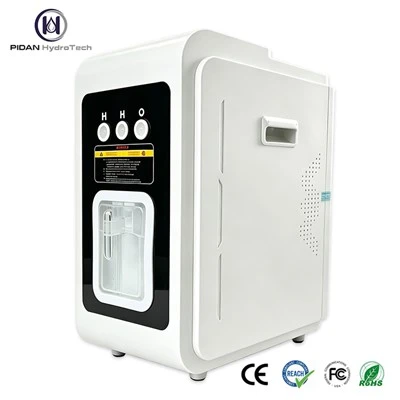
First off, let’s kill a common myth right away: there’s no one-size-fits-all number here. I’ve had customers walk in asking for “a generator that does 100 kg/h” and have no clue if that’s actually what they need for their application. The output of these units depends on way more than the machine itself. Think about it—would a Tesla and a Ford F-150 have the same gas mileage? Nope, same logic applies here. Let’s break down the key factors that shift the per-hour output before I get into actual numbers.
First, the electrolyzer core— that’s the heart of the generator, right? Most modern high pressure hydrogen generators use alkaline electrolyzers (AEL) or proton exchange membrane (PEM) electrolyzers, and they each have different output ranges. PEMs are the newer kids on the block, they’re more efficient at dynamic loads (so if your demand spikes, they can keep up faster) and run at higher pressures more easily. Alkalines are tried and true, usually more cost-effective for steady, consistent output. But even within each type, size is a huge factor. A tiny lab-scale unit that fits on a countertop? It might do like 0.5 to 5 normal cubic meters per hour (Nm³/h) of hydrogen, or roughly 0.04 to 0.4 kg/h. That makes sense for testing small fuel cells or lab experiments, not for full production. Scale up to industrial units, and you’re looking at way higher numbers.
Next, operating pressure. Wait, you might think higher pressure means more output, but it’s a bit of a balancing act. Generators are rated for maximum pressure—like 35 bar, 70 bar, even 100 bar for heavy-duty uses like refueling hydrogen trucks. When you run a generator at its rated max pressure, that will impact how much hydrogen it produces per hour. If you run it at lower pressure, output might go up a little, but then you have to compress it later, which eats into efficiency. So there’s a sweet spot most operators use—run at the pressure you actually need for your process, not the max, to get the best of both worlds.
Then there’s feedstock purity and quality. Hydrogen generators split water into H2 and O2, right? So if your water has impurities—like minerals, metals, even residual gasses—that will mess with the electrolysis reaction. Dirty water slows down the process, reduces efficiency, and can even damage the electrolyzer over time, cranking your per-hour output way lower than the unit’s rated capacity. I’ve seen a customer a couple years back use tap water instead of deionized water (big mistake) and their generator’s output dropped by 30% within a month. Had to replace the electrolyzer membranes because of scaling. Don’t be that guy.
Also, ambient conditions. If you’re running the generator in a sweltering warehouse with no AC, vs. a climate-controlled room, that changes things. Electrolyzers run best at a consistent temp—too hot, and materials degrade faster; too cold, and the reaction is slower. So location, climate, even how well the unit’s cooled will tweak that hourly output number. No two facilities are identical, so the same exact model generator can perform a little differently for someone down the road.
Now for the good stuff: actual per-hour production numbers, split by use case, since that’s what you’re here for. Let’s start with the small to mid-range units, which cover a lot of small businesses, labs, and mid-sized manufacturers. The compact industrial generators—think units that fit in a standard shipping container or a small room—those are usually rated between 10 to 100 Nm³/h. Wait, convert that to kg if that’s easier for you: 1 Nm³ of hydrogen is roughly 0.0899 kg, so 10 Nm³/h is ~0.9 kg/h, 100 Nm³/h is ~9 kg/h. That’s perfect for places like metal fabrication shops that use hydrogen for welding, or small hydrogen refueling stations for cars, or even food processing plants that use hydrogen to make oils. I recently sold a 45 Nm³/h unit to a small trucking company that wanted to set up their own on-site refueling—they were getting like 4 kg/h of hydrogen, which was enough to fuel 2-3 class 8 trucks a day. Worked out way cheaper than buying hydrogen from a third-party supplier.
Then we get into the heavy industrial stuff, the big generators for large-scale production. These are the ones I sell to refineries, fertilizer plants, big hydrogen refueling hubs, and even power companies using hydrogen for energy storage. These units range from 100 Nm³/h all the way up to 2,000 Nm³/h and beyond. Let’s do that conversion: 2,000 Nm³/h is ~180 kg/h. For perspective, the average consumer car’s hydrogen tank holds about 5 kg, so that big unit could fill 36 cars every single hour. Refineries use massive amounts of hydrogen to process crude oil into gasoline and diesel, right? A standard refinery might need 500 kg to 1,000 kg of hydrogen per hour, so you’re talking two to five of those big industrial generators working in tandem.
Wait, but let’s be real—rated output vs. real-world output. A lot of manufacturers will slap a “100 Nm³/h” label on a unit, but that’s at ideal conditions: perfect deionized water, 25°C ambient temp, running at a specific pressure, no downtime for maintenance. In reality, most operators get 80-90% of that rated output over time. You’ll never hit 100% unless you’re doing controlled testing in a lab, which no one does for full-time production. I always tell customers when they’re shopping: take the rated number, knock 10-15% off for real use, and then add in a little buffer if you think you might need to ramp up later.
Let me also address a question I get all the time: can I get a custom output for my specific needs? Hell yeah, that’s half the job of being a supplier, not just selling a generic unit. If you need a generator that does 20 kg/h, or 150 Nm³/h, or even a tiny unit that fits on your workbench for a 2 kg/h lab setup, we can adjust the size of the electrolyzer stack, tweak the pressure settings, even adjust the cooling system to match your facility. A lot of my regular clients come back for second or third units once they see how reliable the first one is, and they need extra capacity as their business grows.
Wait, another point people sleep on: how does pressure tie into actual usable hydrogen? A lot of generators produce hydrogen at low pressure, so you have to add a compressor to get it to the 35 or 70 bar you need for storage or refueling. That compressor takes energy, and it can cut into your total usable output. So when we talk about per-hour production, we’re usually talking about the hydrogen that’s actually delivered at the pressure you need, not the raw hydrogen right after electrolysis. That’s a critical detail—don’t let a sales rep sell you a “100 Nm³/h” unit that’s at 5 bar if you need 70 bar. You might only get 80 Nm³/h at your required pressure, which is a big difference.
Let me throw in a real example to make this concrete. Last quarter, I worked with a craft brewery that wanted to switch to hydrogen-based heating for their malting process, instead of natural gas. They needed around 12 kg of hydrogen per hour, right? That’s roughly 133 Nm³/h. We customized a mid-sized industrial generator, sized for 140 Nm³/h at 15 bar, which was perfect for their heating system. They ended up getting ~122 Nm³/h of usable hydrogen after accounting for pressure adjustments and minor efficiency loss, which is almost exactly what they needed. They’ve saved like 40% on energy costs since switching, and the unit only needs routine maintenance once a quarter. No downtime, no headaches.
Now, what about common mistakes people make when calculating their needed hourly output? First, not accounting for future growth. If your business is expanding, don’t buy a generator that’s exactly what you need right now. I saw a solar installer buy a 5 kg/h unit last year, and they just took on a new contract that needs 10 kg/h, so now they’re looking at adding a second unit instead of getting a bigger one upfront. That’s not a bad move, but it’s worth planning ahead. Second, not factoring in downtime. All generators need scheduled maintenance—like replacing membranes, checking water quality, cleaning filters. Plan for 5-10% downtime per week, so your hourly output needs to be a little higher than your average demand. Third, using the wrong water. Tap water or even filtered water has minerals that will clog the electrolyzer, so deionized or reverse osmosis water is non-negotiable if you want consistent output.
Wait, let’s also talk about efficiency for context. The best high pressure hydrogen generators these days hit around 70-80% energy efficiency when converting electricity to hydrogen. That means for every 1 kWh of power you put in, you get ~0.03 kg of hydrogen. So if you have a 100 kWh generator, that’s ~3 kg per hour. That lines up with the numbers I mentioned earlier, so it’s a good cross-check. If someone tells you their unit is 90% efficient, that’s almost impossible—electrolysis has physical limits, so don’t fall for that hype.
At the end of the day, figuring out how much hydrogen you need per hour boils down to three things: what your end use is, how much space and energy you have, and what your budget is. Lab applications are tiny, welding or small refueling is mid-sized, heavy industry is massive. You don’t need to overspend on a huge unit if you only need a little hydrogen, and you don’t want to undersize and be stuck with production shortages.
If you’re still trying to nail down the exact number for your operation, don’t guess. Reach out, tell me what you’re using hydrogen for, how much you think you’ll need per hour, what pressure you need it at, and what your facility setup is like. I can help you size a unit that fits your needs, no pressure, no sales pitch that ignores your actual requirements. Whether you need a 0.5 Nm³/h lab unit or a 2,000 Nm³/h industrial setup, we can custom tailor a solution that’s efficient, reliable, and actually works for your bottom line. Stop settling for generic numbers, get a unit that’s built for you.
Hydrogen Water Generator References
- International Energy Agency. (2023). The Future of Hydrogen – Data and Projections. IEA Publications.
- Ulleberg, Ø. (2001). Stand-Alone Power Systems with Hydrogen Storage – Optimal Sizing and Operation. Doctoral Dissertation, Norwegian University of Science and Technology.
- Technology Collaboration Programme on Hydrogen and Fuel Cells. (2022). Alkaline and PEM Electrolyzer Performance Benchmarking Report. IEA-HFC.
- US Department of Energy. (2021). Hydrogen Production: Electrolysis. DOE Office of Energy Efficiency and Renewable Energy.
Taiyuan Pidan Technology Co., Ltd.
As one of the most professional high pressure hydrogen generator manufacturers in China, we warmly welcome you to wholesale advanced high pressure hydrogen generator for sale here from our factory. All customized products are with high quality and competitive price. If you have any enquiry about quotation, please feel free to email us.
Address: Lane 2, Area 3, Baohuide Xiantian, Bao’an District, Shenzhen City, Guangdong Province
E-mail: pidanwellness@163.com
WebSite: https://www.pidantechglobal.com/
