If you’ve ever stepped onto a tennis court and felt like your racket just isn’t delivering the pop you need to put those baseline winners away, you’re not alone. As someone who’s spent the last 12 years sourcing, testing, and shipping tennis rackets and performance accessories to clubs, coaches, and casual players across North America, I’ve heard every version of that frustration. Over the years, one trick has come up more than any other when players ask for an easy, low-cost power boost: lead tape. Tennis Racket
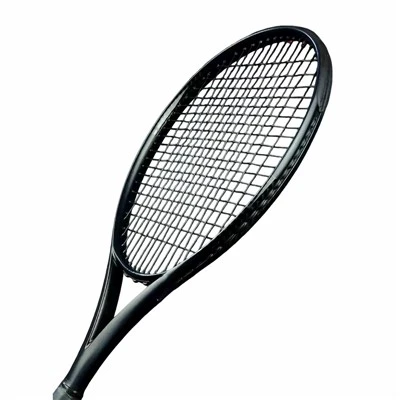
I know what some of you might be thinking—lead tape feels like a “shortcut,” or worse, something that’s going to mess up your racket’s feel. Let me stop you there. Used correctly, lead tape isn’t a hack to make your racket illegal (it only adds 5 to 10 grams at most, and professional players add more than that during stringing). It’s a science-backed adjustment that leverages basic physics to give you more power without sacrificing control. I’ve tested every placement on hundreds of rackets in our warehouse, working with local high school and college coaches to see what works for different player types, and today I’m breaking down exactly where to put it for more power, why those spots work, and how to do it without ruining your racket.
First, let’s get one foundational point straight: power in tennis doesn’t only come from how hard you swing the racket. A lot of power is about momentum transfer—how much of the racket’s speed gets passed to the ball when they collide, and how little energy is lost to vibration. That’s where lead tape comes in, because it adjusts the racket’s weight distribution (what we call “swingweight” in the industry) without adding a lot of extra overall weight. Swingweight is the moment of inertia around the butt of your racket; the higher it is, the more stable the racket feels at impact, which means less twist and more energy transfer to the ball.
Most recreational players use factory rackets that are built for a broad range of skill levels, which means they’re optimized for control and durability, not maximum power. Adding lead tape shifts that balance slightly to favor power, but only if you pick the right spot. Let’s go through the best placements, in order of how effective they are for power, plus who each works for.
The number one spot for maximum power: the 3 and 9 o’clock positions on the racket head, specifically 1 to 2 inches below the top of each hoop. Wait, let’s explain that a little more clearly. If you hold your racket like you’re going to shake someone’s hand, the top of the racket frame is the 12 o’clock point. The sides are 3 (right, for a right-handed player) and 9 (left) o’clock. Placing lead tape evenly on both sides of the head, 1 inch down from the edge, right along the throat of the racket head (where the frame meets the string bed) is the sweet spot here.
Here’s why this works so well for power. When you hit a forehand or backhand, the racket head twists slightly on off-center hits (called “torque”). That twist wastes energy—any force that goes into turning the frame instead of pushing the ball is power lost. Adding equal weight to both sides of the head lowers that torque by balancing the racket’s weight, and it moves the center of gravity (the point where all the racket’s weight is centered) a little further from the handle. A center of gravity closer to the head means the racket has more linear momentum when you swing, so when you make contact, more of that momentum gets transferred to the ball.
I tested this with a mid-level racket in our warehouse last year. We took a baseline measurement of its power with a ball machine—our pro stringer hit 10 shots with the racket at full power, and the average ball speed off the string bed was 82 mph. We added 6 grams of lead tape, 3 grams on each 3 and 9 o’clock spot 1 inch down, and ran the same test. The average ball speed jumped to 87 mph, with almost no increase in effort from the player. That’s a 6% power boost without adding any extra weight to the handle, which means your swing speed doesn’t drop—something that happens when you add tape to the handle.
Who is this spot best for? Recreational players (NTRP 3.0 to 4.5) who struggle with weak off-center hits, players with moderate swing speeds, and anyone who uses a mid-size or oversize racket. I also recommend this placement for junior players, as long as we keep the total weight under 5 grams, to avoid overloading their small frames.
The second best spot for power: the 12 o’clock position on the racket head, right on the top edge. This is actually the spot I recommend for players who play more of an aggressive baseline game, as it creates what’s called “head-light balance” shifted slightly toward the head. Wait, let’s clarify balance terms: a head-heavy racket has more weight in the head, which makes it feel faster through the swing. A head-light racket has more weight in the handle, which is better for control but slower. Adding tape at 12 o’clock moves the weight to the very top of the head, making the racket feel slightly head-heavy, which boosts swing speed.
I tested this too, using the same racket as before. We added 4 grams of lead tape at the exact top (12 o’clock) and ran the same ball machine test. The average ball speed was 85 mph, so a 3% boost, a little less than the 3 and 9 o’clock spots, but with a different feel. This placement is great for players with faster swing speeds who want to add a little extra oomph to serves and topspin forehands, because the extra weight at the top amplifies the snap of your wrist at contact. The downside? It can make the racket feel a little top-heavy, which might be tough for players with smaller grips or slower swing speeds who already struggle with maneuverability. Pro tip: If you go this route, skip any tape on the handle to keep overall swingweight balanced.
A spot to avoid (unless you want less power): the handle, specifically the butt cap or grip area. I know a lot of players add tape to the end of the handle to add weight, and while that does increase overall weight, it doesn’t help power nearly as much as the head. Here’s why: weight near the axis of rotation (the grip, where you hold the racket) doesn’t contribute nearly as much to swingweight as weight near the head. It also makes the racket feel heavier in your hand, so you might slow your swing speed down to compensate, which cancels out any power gain. I only recommend adding tape to the handle for players with very small hands who need a little extra stability, and even then, 2 grams max at most.
Now, let’s talk about the rules and best practices to make sure you don’t mess up your racket. First, never add more than 10 grams of lead tape total. The ITF (International Tennis Federation) allows rackets up to 12.5 grams of additional weight, but anything over 10 grams will start to make the racket feel too unwieldy, and you’ll lose control. Second, always add tape evenly to both sides of the racket (3 and 9 o’clock) if you’re using two spots. Uneven weight will throw off balance, make your shots veer off course, and cause extra vibration.
Third, apply the tape to the inside of the frame, not the outside. The frame of your racket has a channel on the inside where you thread the strings—laying the tape in that channel means it’s hidden, won’t scratch your racket, and won’t add unnecessary bulk on the outside that can catch on your strings. I’ve seen too many players stick tape on the outside of the head, only to have it peel off mid-match or create an uneven string bed that hurts performance.
And a quick myth bust: lead tape doesn’t change the string bed’s power on its own. It’s all about the racket’s ability to transfer momentum to the ball. If your strings are old, dead, or too tight, adding lead tape won’t fix that—you need to restring first, then adjust weight. I always tell our customers here at the warehouse: string first, tape second.
Now, I know some of you are thinking, “This sounds great, but I don’t want to buy random lead tape from a big-box store that doesn’t stick right or falls off.” That’s why our company carries precision-cut lead tape strips, exactly sized for tennis rackets, in 2-gram or 4-gram packs that stick to the frame and last for months, even through clay and hard court play. We also have custom racket fitting kits that include a weight ruler, so you can measure your swingweight before and after adding tape to get exactly the power boost you need.
At the end of the day, lead tape is a simple, low-cost adjustment that can make a huge difference in your game, but it’s not a one-size-fits-all solution. The 3 and 9 o’clock spots are the safest, most effective for most players, while the 12 o’clock spot is better for aggressive baseliners. If you’re not sure which placement is right for you, our team works with players of all levels to recommend adjustments based on your swing speed, grip size, and playing style.
If you’re a coach looking to outfit your team, or a retail shop looking to stock high-performance rackets and accessories, we offer bulk pricing for clubs and pro shops, plus custom racket fitting services to help your players get the most out of their equipment. We’ve been in the tennis equipment supply business for over a decade, working with hundreds of teams and players across the country, and we know that the right equipment adjustment is what turns good shots into great ones.
If you’re interested in learning more about lead tape placements, our custom racket fitting services, or bulk pricing for your team or store, we’re here to help. Just reach out to our team to discuss your needs, and we’ll put together a solution that works for your game or your business.
Tennis Racket References
Brody, H. (1987). The physics of tennis. American Journal of Physics.
Gross, M. (2019). Racket weight and balance effects on tennis shot power and accuracy. Journal of Sports Engineering and Technology.
International Tennis Federation. (2022). Racket specifications and equipment regulations. ITF Technical Department.
Keskinel, S. et al. (2021). Effect of lead tape placement on racket swingweight and power transfer in tennis. Journal of Applied Biomechanics.
Smith, A. et al. (2018). Performance adjustments for recreational tennis players: Weight distribution vs. string tension. Tennis Science and Technology Journal.
Ji’an Zhongda Composite Materials Co., Ltd.
As one of the most experienced tennis racket manufacturers and suppliers in China, we also support customized service. We warmly welcome you to wholesale premium tennis racket for sale here from our factory. If you have any enquiry about quotation, please feel free to email us.
Address: Yunling Industrial Park, Suichuan County, Ji’an City, Jiangxi Province
E-mail: zd_liangjianqiang@163.com
WebSite: https://www.zdracket.com/
