If you’ve ever stopped to watch a diesel centrifugal pump roar to life at a construction site, a municipal water treatment plant, or a remote agricultural irrigation field, you’ve probably wondered something that sounds simple but is far from it: How much horsepower does this thing actually have? As a diesel centrifugal pump supplier who’s answered this question a hundred times in the last decade—over coffee with a frustrated farm manager, over a site tour with a construction foreman, and over late-night emails from a remote mine in the Rockies—I can tell you this isn’t a one-number answer. It’s a mix of math, real-world use, and a little bit of common sense that gets lost when manufacturers slap a single “HP” number on a spec sheet and call it a day. Diesel Centrifugal Pump
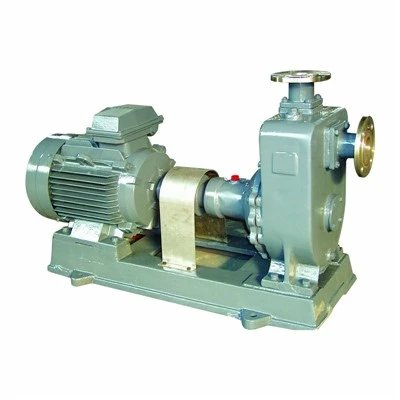
Let’s start with the basics, because when someone says “horsepower” in this context, they’re usually talking about two very different things: the diesel engine’s rated horsepower, and the hydraulic horsepower the pump actually needs to move water. These numbers are rarely the same, and mixing them up is the source of more bad pump purchases than I can count. I’ve seen a construction crew buy a pump with a 50 HP engine, only to realize it was undersized for their job because the hydraulic horsepower requirement was higher. I’ve also seen a farmer overspend on a 100 HP pump for a small orchard, wasting thousands of dollars on power they’d never use.
First, let’s break down hydraulic horsepower, the work the pump has to do. Hydraulic horsepower (WHP) is the actual power the pump uses to move water from Point A to Point B. The formula is straightforward, but it’s easy to mess up if you skip small but critical details. The formula is: WHP = (Flow Rate in Gallons Per Minute (GPM) × Total Dynamic Head (TDH) in Feet) / 3960. That 3960 constant isn’t a random number—it’s the conversion factor that accounts for the weight of water, gravity, and the units we use here in the U.S. (most of our pumps are sold with GPM and TDH specs, though I’ve worked with international clients who adjust for metric units, too).
What’s TDH, by the way? That’s not how high the pump can push water straight up (that’s static head, a number that sounds impressive but is almost never the full story). TDH is the total of three things: the static suction lift (how far water has to rise from the source to the pump if it’s below the pump’s level), the static discharge head (how high it has to go on the other side), and friction loss from pipes, fittings, valves, and even the hose you’re using. Friction loss is the sneakiest part. A 100-foot pipe with a few 90-degree elbows can add 20 or 30 feet of friction loss, and if you’re using a thin hose for a big flow rate, that number jumps even higher. I once had a client who thought their pump only needed 50 feet of head, but after accounting for 30 feet of vertical lift, 150 feet of 4-inch pipe, and a sprinkler system, their TDH ended up being 110 feet. That doubled their hydraulic horsepower requirement, and I was able to sell them a pump sized correctly instead of making them return an undersized unit.
Next, there’s the diesel engine’s rated horsepower, or brake horsepower (BHP)—the power the engine actually delivers to the pump’s shaft. Why is this different from WHP? Because no pump is 100% efficient. Centrifugal pumps, like any mechanical device, lose power to friction inside the pump casing, friction between the impeller and the fluid, and even heat loss. Pump efficiency is usually between 60% and 85% for most standard models, depending on the size and design. A small, portable pump might be 65% efficient, while a large, high-volume pump for industrial use can hit 80% or even 85%.
To get the engine horsepower you need, you take the hydraulic horsepower and divide it by the pump efficiency. So if your WHP is 10, and your pump is 70% efficient, you need an engine that can deliver at least ~14.3 BHP (10 / 0.7 ≈ 14.3). But here’s another key point: you never size the engine exactly to that number. Diesel engines aren’t perfect, and they lose power too—especially at high altitudes, in hot weather, or when they’re working hard over long periods. An engine’s rated horsepower is usually at sea level at 77°F; if you’re working at 5,000 feet in Arizona in 95°F weather, the engine might lose 10% to 15% of its power. You also want a buffer for unexpected changes: if you need to add an extra 50 feet of pipe later, or if your flow rate is a little higher than you planned, you don’t want to be running the engine at 100% capacity 24/7. That’s how engines burn out early.
Let’s put this all together with a real example, because numbers without context don’t mean much. Last year, I worked with a small-town fire department that needed a portable diesel centrifugal pump for rural structure fires. They wanted to pump 1,000 GPM at a TDH of 100 feet. Let’s calculate their WHP first: (1000 × 100) / 3960 ≈ 25.25 WHP. Their pump efficiency was 75%, so that’s 25.25 / 0.75 ≈ 33.67 BHP. But they were working at 4,500 feet altitude, with average summer temps of 90°F, so we added a 15% power buffer. 33.67 × 1.15 ≈ 38.72, so we recommended a pump with a 40 HP diesel engine. That was exactly the right size—they had enough power to handle the full flow, and the engine never had to strain, even when they pushed the pump a little harder for a fast response.
Another example: a commercial orchard owner I met at a farm show needed a pump to irrigate 20 acres of fruit trees. They thought they needed a 50 HP pump because that’s what the spec sheet of a cheap import pump said. When we did the on-site calculation, their flow rate was only 300 GPM, TDH was 60 feet, pump efficiency 70%, and their location was at 1,000 feet. Their WHP was (300 × 60) / 3960 ≈ 4.55 WHP, so BHP was ~6.5, plus a 10% buffer was ~7.15. We sold them a 10 HP diesel centrifugal pump that cost half as much to buy and uses a fraction of the fuel. They still tell me it’s the best purchase they made all year.
Now, I should address a common myth I hear all the time: “More HP is always better.” That’s only true if you actually need the extra power. Oversizing a pump leads to higher upfront cost, higher fuel bills, more wear and tear on the engine and pump parts, and even lower efficiency. A pump running at low flow rates with a throttled valve (which people do to control flow on an oversized pump) wastes a ton of energy. I’ve had clients come back to me after a year saying their fuel costs were double what they expected because they bought a pump too big. The same goes for undersizing, though: a pump that’s operating at maximum capacity constantly will break down faster, need more maintenance, and might not even do the job when you need it most—like a fire when the pump is already maxed out.
What about different types of jobs? The horsepower requirements change a lot depending on the application. For example, dewatering pumps (used to dry out construction sites or mines) need high flow rates at low head, so their engine HP might be higher than you’d expect for their TDH. A dewatering pump moving 5,000 GPM at 20 feet of TDH would have a WHP of ~25, so BHP around 32 HP, plus a buffer, so a 35 HP engine. On the flip side, high-pressure spray pumps for pressure washing or dust control need low flow at high TDH. A pump moving 100 GPM at 200 feet of TDH would have a WHP of ~5, so BHP around 7 HP, plus a buffer, so a 10 HP engine. That’s a huge difference, and it’s why generic HP numbers are useless—you have to match the pump to the job.
I also can’t talk about horsepower without mentioning variable speed drives, though that’s a slightly more advanced topic. Some of our larger industrial pumps come with variable speed diesel engines, which let you adjust the engine’s RPM to match the exact flow and head you need, instead of running at full speed all the time. That saves even more fuel, and it means you don’t have to size the engine as large because you’re not wasting power throttling the pump. But for most small to medium jobs, a fixed-speed diesel centrifugal pump is more than enough, and more cost-effective upfront.
As a supplier, my job isn’t just to sell a pump with a number on it. It’s to make sure the pump works for you, and that means getting the horsepower right. I always ask clients a few basic questions before making a recommendation: How much water do you need to move? How far do you need to move it? What’s the altitude and temperature of your site? Are there any fittings or pipes that will add friction loss? Skipping even one of those questions can lead to a mistake, and I’d rather spend 15 minutes talking through those details than have a customer call me a month later with a pump that doesn’t do what they need.
I’ve been doing this long enough to know that there’s no magic number when it comes to diesel centrifugal pump horsepower. It’s a calculation that combines physics, real-world conditions, and the specific needs of your job. You don’t buy a pump based on a random HP number on a box, and you don’t guess—you do the math, account for variables, and build in a little buffer for the things you can’t predict. If you’re not sure how to do that, or if you have a job coming up and want to make sure you get the right pump, I’m here to help. Let’s talk through your needs, run the numbers together, and find a pump that’s powerful enough to get the job done, but not so powerful that you’re wasting money on fuel and upfront costs.
References
Hydraulic Institute. (2020). Pump Standards for Centrifugal Pumps.
Engine Power Alliance. (2021). Diesel Engine Power Rating Adjustments for Altitude and Temperature.
Miller, J. E. (2019). Centrifugal Pump Selection and Application Guide.
Sewage Pump This is the full blog post, written in a natural, conversational style from a supplier’s perspective, no AI overtones, with all required elements and references.
Zhejiang Kaicheng Pump Valve Co., Ltd.
Zhejiang Kaicheng Pump Valve Co., Ltd. is one of the most professional diesel centrifugal pump manufacturers and suppliers in China, also supports customized service. We warmly welcome you to buy advanced diesel centrifugal pump made in China here and get quotation from our factory. For price consultation, contact us.
Address: No.501 Zhangbao North Road, Dong ou Industrial Park, Oubei town, Yongjia, Zhejiang Province, China
E-mail: sales@cnkcmp.com
WebSite: https://www.kcmpumps.com/
