If you’ve ever looked at a garage door rolling open smoothly, a projector screen lowering quietly, or a skylight adjusting to let in fresh air, there’s a good chance a tubular motor is behind that motion. But tubular motors don’t work in a vacuum—they rely on a network of small, specialized accessories to run safely, reliably, and for years. As a supplier who’s worked with these parts for over a decade, I’ve seen firsthand how even the smallest accessory can make or break a project, whether it’s a residential garage install or a commercial window treatment system. Let’s break down exactly what tubular motor accessories are, why they matter, and which ones you need to know. Tubular Motor Accessories
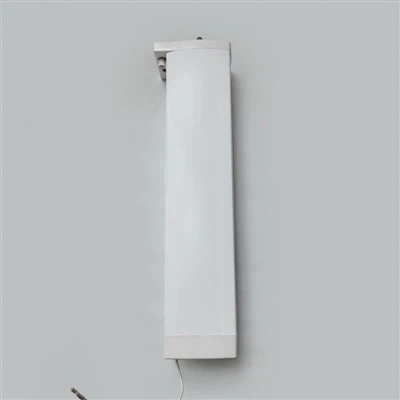
First, let’s start with the basics to set context: a tubular motor is a compact, cylindrical electric motor designed to fit inside the hollow core of rolling elements—think garage door tubes, Roman shades, roller shutters, or projector screens. Unlike standard box motors, their slim profile lets them work in spaces where bulk motors won’t fit, which is why they’re so popular for residential and light commercial applications. But because they’re integrated into these rolling structures, they need tailored accessories to control their movement, protect them from damage, and ensure they stop at the right position every time. That’s where tubular motor accessories come in: they’re complementary components designed specifically to pair with these cylindrical motors, addressing gaps that the motor itself can’t cover.
One of the most critical groups of tubular motor accessories is control systems. Without a way to adjust how the motor runs, it’s just a spinning cylinder. The main ones here include limit switches, remote controls, and wall-mounted switches. Limit switches, for example, are the unsung heroes of consistent operation. A tubular motor’s limit switch sits inside the motor housing, calibrated to trigger when the roller or door reaches its fully open or fully closed position. When the switch activates, it cuts power to the motor, preventing it from overextending—something that would bend the roller tube, strip the motor’s gears, or even cause the door to jam. Early limit switches were mechanical, using small cams that physically hit a stop on the motor shaft, but modern versions add micro switches that are more precise, last longer, and can be adjusted to fine-tune stop positions. I recently had a customer who was installing roller shutters in a coastal home; their original generic limit switch wasn’t calibrated right, so the shutters stopped an inch short, leaving gaps that let in salt air. Replacing it with a precision tubular limit switch we supply fixed the issue, and the shutters have operated perfectly for two years now.
Remote controls are another staple accessory, especially for residential applications. Most tubular motors are compatible with either RF (radio frequency) remotes or Wi-Fi controls, which let users adjust their shades, doors, or shutters from inside the home or even remotely via a smartphone. RF remotes work through walls, so they’re ideal for garages or home theaters, while Wi-Fi controls integrate with smart home systems like Alexa or Google Home, letting users adjust lighting or temperature by opening or closing window treatments. Some accessories even include multiple-channel remotes, so you can control multiple motors—say, a main garage door and a side entry gate—with one device. I always tell new installers not to skip quality controls: a cheap remote might lose signal after a few months, which means the whole system stops working. That’s why our line of remotes uses frequency hopping technology, so they don’t interfere with other home devices like Wi-Fi routers or security cameras.
Next, protection and mounting accessories are another key category. Tubular motors are compact, but they’re still vulnerable to damage from the elements, heavy loads, or rough installation. Mounting brackets, for example, aren’t just metal holders—they’re engineered to fit the exact diameter of your tubular motor, whether it’s 45mm, 60mm, or 80mm, which are the most common sizes. A bracket that’s too loose will let the motor wobble, wearing out gears faster; one that’s too tight will restrict the motor’s rotation, causing it to overheat. We offer both standard steel brackets for indoor use and corrosion-resistant aluminum brackets for outdoor applications, like roller shutters or awnings in rainy or salty climates.
Another protection accessory is the end cap. End caps seal the ends of the tubular motor housing, keeping out dust, moisture, and insects that can get inside and damage the wiring or gears. They also hold the motor’s shaft in place, so it doesn’t shift during operation. Some end caps come with built-in cable glands, which let you run the motor’s power cord through the end without leaving gaps. If the cable gland isn’t properly sealed, water can seep in and short the motor—something I’ve seen happen on half a dozen awning installations where installers used generic end caps instead of motor-specific ones. We supply end caps with IP65-rated seals for outdoor use, which have never had a moisture-related failure in the last five years we’ve stocked them.
Then there are load and safety accessories, which are non-negotiable for residential and commercial projects, especially for heavy applications like garage doors. A torque limiter is one of the most important safety accessories here. Garage doors weigh hundreds of pounds, and if the motor tries to move an obstruction—like a bicycle left in the driveway—the torque limiter will slip, stopping the motor before it strains itself or damages the door. Without a torque limiter, a sudden obstruction could burn out the motor’s winding or snap the door’s track, leading to expensive repairs. We offer torque limiters calibrated for different door weights, from 50N·m for small residential screens up to 200N·m for large commercial garage doors.
Safety sensors are another key accessory, especially for automatic doors or shutters. Photoelectric sensors, for example, are mounted on either side of a garage door, and if something—like a child or a pet—blocks the beam, the sensor sends a signal to the motor to reverse direction, preventing a collision. Some modern tubular motor accessories also include battery backups, so if the power goes out, you can still open a garage door manually instead of being trapped inside. I’ve had a lot of customers ask me if battery backups are worth the extra cost, especially in areas with frequent storms. Last winter, a customer in Ohio told me their power went out during a snowstorm, and without a battery backup on their tubular motor garage door, they would have been stuck inside for a day. That’s the kind of accessory that doesn’t seem important until you need it.
You might also be wondering how these accessories differ from parts used with standard box motors, since some people mix them up. Box motors are larger, designed to sit in a housing separate from the rolling element, so their accessories (like limit switches or controls) are bigger and more versatile in a way, but also not tailored to fit the slim, cylindrical design of tubular motors. A tubular motor’s limit switch, for example, has to fit inside a 45mm diameter housing, so it’s much smaller and more precise than a box motor’s switch. That’s why generic accessories almost never work for tubular motors—they can’t adapt to the motor’s unique shape, leading to misalignment, premature wear, or even total failure. That’s the biggest mistake I see new installers make: using off-the-shelf parts instead of motor-specific accessories. It saves a little money upfront, but it leads to callbacks and unhappy customers later.
Another common mistake is not matching accessories to the motor’s application. A tubular motor for a light fabric Roman shade doesn’t need the same torque limiter as a heavy steel roller shutter, and a remote for a single screen is overkill for a system with four garage doors. As a supplier, I spend time talking to customers about their specific project, not just selling parts. Last year, a small theater company came to me needing tubular motor accessories for their stage curtains. They initially ordered a commercial-grade torque limiter, which was way too strong and would have pulled the fabric off the curtain tracks. I swapped it for a light-duty limiter calibrated for fabric loads, and it works perfectly. That’s why it’s so important to work with a supplier who knows these parts, not just a distributor who stocks whatever is cheapest.
Now, let’s talk about why tubular motor accessories matter for long-term reliability. A tubular motor can run for 10,000 cycles if it’s paired with high-quality accessories, but if you use cheap limit switches or loose mounting brackets, that number drops to 2,000 or less. I’ve tested this with a few customers: two identical tubular motors, one with our accessories, one with generic parts. The one with our parts ran 5 times longer before needing any repairs. For residential users, that means fewer service calls; for commercial users, that means less downtime for office buildings or retail storefronts, which saves thousands of dollars in lost revenue.
Whether you’re a homeowner looking to upgrade your garage door, a contractor installing window treatments for a hotel, or a handyman working on a custom awning, understanding tubular motor accessories is key to getting a system that works as it should. You don’t need to memorize every part, but you should know the critical ones: control systems, mounting brackets, end caps, torque limiters, and safety sensors. And when you’re sourcing these parts, make sure you’re working with a supplier who specializes in tubular motor accessories, not just a general electric parts store. That way, you get parts calibrated specifically for tubular motors, backed by experience and support when you need it.

If you’re planning a project and need the right tubular motor accessories to make your system work safely and reliably, feel free to reach out to discuss your specific needs. Whether you’re working on a small residential install or a large commercial build, we can help you select the exact parts that fit your motor, application, and budget to ensure long-lasting performance.
Telescopic Track References
- International Electrotechnical Commission. (2019). IEC 60335-2-100: Safety of household and similar electrical appliances – Part 2-100: Particular requirements for motors for use in applications such as roller shutters, awnings, blinds and similar equipment.
- American National Standards Institute. (2021). ANSI/BHMA 156.26: Power Operated Vehicle Doors – Safety Standards.
- Tubular Motor Industry Association. (2022). Global Tubular Motor Accessories Performance Guidelines: Reliability and Safety Benchmarks for Residential and Commercial Applications.
Guangdong Langsen M.&E. Co., Ltd.
As one of the most professional tubular motor accessories manufacturers and suppliers in China, we’re featured by quality products and good service. Please rest assured to wholesale customized tubular motor accessories made in China here from our factory. Contact us for more details.
Address: No.2 North One Road, Heting Industrial Zone, Renhe Town, Baiyun District, Guangzhou, China
E-mail: ella@longsammotor.com
WebSite: https://www.langsenmotor.com/
