If you’ve ever worked with pipe fittings, odds are you’ve stumbled on terms like “long radius elbow” and “short radius elbow” and wondered what actually sets them apart. As a pipe fittings supplier who’s been around the block a few times, I get it—when you’re juggling installations, budgets, and tight deadlines, overcomplicating basic fittings is the last thing you need. Let’s break this down like we’re chatting over a coffee, no jargon overload, just real talk about what these elbows do and when to pick which one. Pipe Fittings
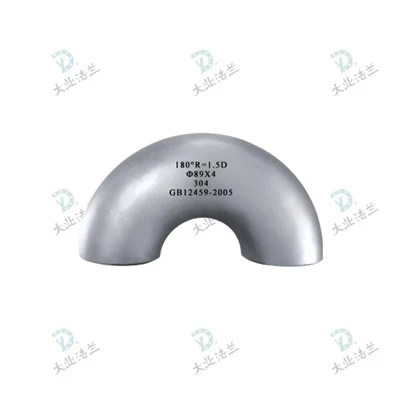
First, let’s start with the basics: an elbow is just a bent piece of pipe that changes the direction of a pipeline—usually 90 degrees, though you’ll find 45, 180, even custom angles too. The radius is what defines whether it’s long or short, and that’s where most people glaze over. So what’s the radius, exactly? It’s the distance from the center of the pipe (the “centerline”) to the center point of the elbow’s bend. Think of it like the curved middle of a paper clip: the radius is how big that curve is.
A short radius elbow (we often call it SR elbow in the shop) has a radius equal to 1 times the nominal pipe size (NPS, that’s the standard size we use for pipes, like 2-inch or 6-inch pipe). So a 2-inch SR elbow has a 2-inch radius—tight, sharp curve. Long radius elbows (LR elbows, for short) have a radius equal to 1.5 times the NPS. That same 2-inch LR elbow? 3-inch radius, a much gentler, wider curve.
Now, why does that matter? It all boils down to pressure, flow, space, and cost. Let’s dive into each, because that’s where you’ll actually pick the right one for your job, not just guess.
First up: flow efficiency. If you’re moving anything that needs to keep moving smoothly—water, natural gas, oil, even slurries—friction is your enemy. A sharp SR elbow tightens the bend so much that the fluid (or whatever you’re pumping) has to turn fast. That creates more turbulence, right? Turbulence means more friction, which means your pump has to work harder to push the same amount of material. Over days, weeks, months, that extra pump work adds up to higher energy bills. A LR elbow’s wider bend lets the fluid flow with less disruption—almost like a gentle turn on a highway instead of a sharp exit ramp. For high-pressure systems, like industrial plumbing or gas lines, that flow difference is huge. We’ve seen customers come back to us for LR elbows because their energy costs dropped 10-15% just from switching from SR in their main lines. That’s not a small number when you’re running a 100-foot pipeline with 10 elbows.
Next, space. If your job has tight quarters—like a basement with limited headroom, or a pipe run that has to squeeze between two beams—SR elbows are your friend. Their small radius takes up way less space. For example, a 4-inch SR 90 elbow only needs 4 inches of straight pipe space ahead and behind to fit, while a 4-inch LR elbow needs 6 inches. That extra 2 inches might not sound like much, but if you’re cramming a dozen elbows into a compact area, suddenly it’s the difference between a install that fits and one you have to tear up to adjust. We keep a lot more SR elbows in stock for exactly this reason—contractors grab them all the time for retrofit jobs where space is tight.
Then there’s pressure rating and durability. Wait, hold on—this is a point a lot of people miss. SR elbows have thicker walls, right? Because the tight bend puts more stress on the fitting. When you bend a pipe sharply, the outside of the curve stretches and the inside compresses, so to handle that stress without cracking, SR elbows are built with heavier wall thickness. That makes them sturdier for high-impact jobs? No, wait—wait, no, let’s get that straight. For standard pressure applications, both are rated similarly, but SR elbows tend to be better for lower-pressure, temporary, or space-constrained jobs, while LR elbows hold up better to sustained high pressure because the stress is spread out over a wider curve. We’ve had industrial clients who run 150 psi water lines tell us LR elbows last twice as long in high-flow zones because there’s less wear from turbulence, while their SR elbows in low-flow corners only last 1-2 years before needing replacement. That’s a big cost over time for maintenance and replacement.
Cost is another big one, especially for budget-conscious projects. SR elbows are cheaper to manufacture, right? Because they’re smaller, use less material. A 6-inch SR elbow is usually 20-25% less expensive than a 6-inch LR elbow. But here’s the catch: that upfront savings can cost you more in the long run. If you’re installing a pipeline that’s going to run 24/7 for years, paying a little more for LR elbows now might save you thousands in energy and maintenance later. We’ve had customers who went cheap on SR elbows for a grocery store’s water line, and within a year they had two elbows crack from pressure surges, leading to a flood that did $10k in damage. They switched to LR elbows after that—no more regret.
Wait, let’s also clear up a common myth: a lot of people think LR elbows are just “bigger SR elbows,” but that’s not true. Their radius is specifically standardized by industry groups like ASME (American Society of Mechanical Engineers) to make sure fittings are compatible. You can’t just bend a pipe extra wide and call it a LR elbow—there’s a set measurement for the radius that ensures it fits with standard flanges and other pipe components. If you’re mixing elbows from different suppliers, make sure the radius matches, otherwise you’ll have gaps or leaks. We always tell our customers: if you’re not sure, ask for our spec sheet—we’re happy to send it over, no charge.
So when do you pick which? Let’s make a quick cheat sheet, because that’s what most guys who work with pipe need:
- Go for SR elbows when: You have limited space, it’s a low-pressure, temporary line, or you’re on a tight upfront budget (and you’re not running high-volume flow). Perfect for small residential plumbing, temporary construction lines, or small cross-under pipes where space is super tight.
- Go for LR elbows when: It’s a main line (water, gas, oil), high pressure, high flow, or you want lower long-term maintenance and energy costs. These are the go-to for commercial buildings, industrial facilities, municipal water lines, and any pipeline that’s going to be in place for 10+ years.
Let me throw in a real example from last quarter, because that makes it concrete. A local contractor came to us for a 12-inch pipeline for a new industrial warehouse. They originally quoted SR elbows, but after we chatted, we pointed out that the main supply line runs 200 feet with 8 elbows, so switching to LR would cut their pump energy by almost $2,000 a year. We showed them the numbers, they went with LR, and three months later their foreman sent us a text saying their electric bill was way lower than projected. He was so happy he referred two other contractors to us for the same job. That’s the stuff we live for—helping customers make the right call, not just selling them what’s cheap.
Now, as a pipe fittings supplier, I should mention some other things to look out for when ordering. First, material: both elbows come in steel, stainless steel, PVC, CPVC, copper, even cast iron. The radius is the same no matter the material, so that part doesn’t change—just pick the material based on what you’re transporting (PVC for water, stainless for corrosive chemicals, etc.). Second, angle: we’ve talked about 90 degrees, but both LR and SR come in 45 degrees too, same radius rules apply. Third, size: make sure you’re ordering the right NPS size, not the outer diameter of the pipe—there’s a difference, and mismatching size is the #1 mistake we see customers make when ordering elbows.
Wait, one more myth: some people think LR elbows are only for big pipes, but no—we sell LR elbows as small as ½-inch for residential gas lines, and SR elbows as big as 24-inch for industrial mains. The radius is based on NPS, not the actual pipe diameter, so even a small LR elbow is a gentle curve, while a small SR is tight.
At the end of the day, it’s not a matter of one being better than the other—it’s about matching the elbow to your specific project. Too many folks go with what they know, or what’s cheaper upfront, without thinking about the long game. As someone who’s been supplying pipe fittings for over a decade, I’ve seen the good, the bad, and the ugly of wrong elbow choices. Don’t let your project be the ugly one.
If you’re planning a job and not sure which elbow fits your needs—whether it’s a small residential retrofit or a big industrial pipeline—hit us up. We can send you a free quote, help you calculate flow needs, or even send a sample to check fit. No pushy sales stuff, just straight talk about what will work best for you.
Pipe Fitting Tee References
- ASME B16.9, Factory-Made Wrought Steel Buttwelding Fittings, American Society of Mechanical Engineers, 2023.
- Pipe Fittings Handbook: Elbow Design, Flow Characteristics, and Installation Guidelines, National Pipe and Tube Association, 2022.
- “Pipe Fitting Radius and Pressure Loss,” Industrial Plumbing Journal, Vol. 47, No. 2, 2021, pp. 32-38.
Zhejiang Daye Flange Co., Ltd.
Zhejiang Daye Flange Co., Ltd. is one of the most experienced pipe fittings manufacturers and suppliers in China. With a professional production team, we offer a wide range of flanges with superior quality and competitive price. Welcome to buy CE approved pipe fittings in stock here and get pricelist from our factory. We also accept customized orders.
Address: Headquarter: 8, Gangqiang Road, Yongxing Street, Longwan District, Wenzhou City, Zhejiang Province, China
E-mail: sales@dayeflange.com
WebSite: https://www.daye-flange.com/
