If you’ve ever stood in a worksite parking lot, watched a light truck hook up to a dual-axle landscape trailer loaded with sod, or seen a contractor fasten a flatbed stacked with power tools and portable generators, you’ve probably asked the same question: How much can a light truck actually tow? As a light truck supplier who’s spent the last decade walking lots with tradespeople, listening to small business owners complain about underpowered rigs that leave them stuck mid-job, and testing our trucks in the mud and heat of real worksites, I can tell you the answer isn’t a one-size-fits-all number. It’s a balance of math, physics, and the way your truck’s design was built to work—not just what a brochure claims in big, bold print. Light Truck

Let’s start with the basics most people skip: towing capacity isn’t just a number. It’s the maximum weight a truck can pull safely, and it breaks down into two critical figures that dictate everything: Gross Vehicle Weight Rating (GVWR) and Gross Combined Weight Rating (GCWR). GVWR is the total weight of your truck, fully loaded with fuel, passengers, tools, and whatever you’re carrying in the bed. GCWR is the total weight of that truck plus the fully loaded trailer. The sweet spot for light trucks—think half-ton models, the most popular for small businesses and weekend projects—usually sits at a GCWR between 10,000 and 14,000 pounds. But here’s the catch: you can never max out both GVWR and GCWR at the same time. If your truck is already packed with 1,500 pounds of materials and a crew of three, your available towing capacity drops fast. It’s like lifting a box: if you’re already carrying 20 pounds of gear in one hand, you can’t lift a 50-pound box with the same arm.
A lot of first-time buyers fixate on the engine, and rightfully so. The sweet spot for light truck towing is usually a V6 engine with turbocharging, or a mild hybrid setup, which balances power and fuel efficiency far better than a gas-guzzling V8 for most day-to-day use. Older light trucks with naturally aspirated V6s might top out at 7,000 pounds of towing, but our latest models pair a 2.7L turbo V6 with a 10-speed automatic transmission and a Class IV trailer hitch, pushing that number to 11,000 pounds when properly configured. That’s enough to pull a 24-foot enclosed trailer loaded with a compact excavator, or a 20-foot flatbed holding 4,000 pounds of lumber and a small portable generator. But torque matters most, not just horsepower. Torque is what gets a load moving from a stop and keeps it steady on hills—crucial if you’re working on a job site with steep driveways or rural roads with long inclines. Our light trucks produce 400 lb-ft of torque at just 2,500 RPM, which means you don’t have to rev the engine to a screaming pitch to pull a heavy load, reducing wear and tear over time.
But engine and rating numbers don’t tell the whole story. You have to account for tongue weight, the silent killer of safe towing. Tongue weight is the downward force the trailer exerts on the back of your truck, usually 10 to 15 percent of the trailer’s total weight. If you’re pulling a 10,000-pound trailer, that means 1,000 to 1,500 pounds of that weight is pushing down on your truck’s rear axle. If your truck’s GVWR is 6,000 pounds, and you already have 5,000 pounds of weight in the cab and bed, adding 1,500 pounds of tongue weight pushes you 500 pounds over your GVWR, even though you’re technically under your GCWR. That throws off your truck’s balance, makes steering feel slow, and increases stopping distance by as much as 30 percent. We see this mistake all the time: a landscaper hooks up a heavy trailer, fills his truck bed with mulch, and can’t stop fast enough when a customer’s kid steps out into the road. That’s why we build our light trucks with an integrated hitch receiver and a rear stabilizer bar tuned specifically for tongue weight, so even at max towing, the front wheels don’t feel light and easy to lose control of.
There’s also a difference between conventional towing, fifth-wheel towing, and gooseneck towing, though for light trucks, fifth-wheel and gooseneck are less common than for heavy-duty rigs. Conventional towing, which is what most small businesses use, means a hitch mounted on the rear of the truck, and that’s where our Class IV setup shines. If you’re a weekend warrior pulling a 6,000-pound travel trailer for a camping trip, that’s well within the range of our base model light truck, but if you’re a contractor pulling a 10,000-pound equipment trailer, you’ll want to step up to our heavy-duty tow package, which adds an auxiliary transmission cooler, a larger radiator, and a brake controller that syncs your truck’s brakes with the trailer’s. Overheating is a top cause of towing breakdowns, especially in summer. We test all our tow packages in Death Valley and the Rocky Mountains, so if you’re working in 100-degree heat or pulling up a 6 percent grade, your truck won’t lose power mid-job.
Wait, but what about diesel light trucks? A lot of buyers assume diesel means more towing, and it’s true—for some use cases, it’s better. Our diesel light truck model offers up to 13,000 pounds of towing, which is enough for a small fleet of ATVs or a large cargo trailer, but diesel comes with higher upfront costs and higher maintenance, which might not make sense for someone who only tows a few times a month. For most small businesses, the turbo V6 is the sweet spot: it’s cheaper to buy, gets better fuel mileage when you’re not towing, and has enough power for 90 percent of the jobs our customers bring us in for.
I want to call out a common myth here: “If a truck has a towing number of 12,000 pounds, it can pull any 12,000-pound trailer.” That’s not true. Towing numbers assume ideal conditions: dry pavement, level ground, no extra weight in your truck, and a properly loaded trailer with the right tongue weight. If you’re towing on gravel, or up a hill, or you’re carrying tools and a full tank of gas, that 12,000-pound number drops to 10,000, or 9,000, or even lower. We always tell customers to add a 15 percent buffer to their trailer weight. If your trailer is 8,000 pounds when fully loaded, don’t buy a truck that only does 8,000. Buy one that can do 9,500, just to cover the extra weight of a full tank, a couple of passengers, or a last-minute load of materials you forgot to account for.
We also see a lot of buyers skimp on the accessories, and that’s where safety takes a hit. A cheap trailer hitch that doesn’t match your truck’s towing rating can fail mid-tow, especially at highway speeds. A trailer brake controller that’s not properly adjusted means your truck’s brakes have to do all the stopping, which wears them out fast. And weight distribution hitches, not just a basic hitch, are a must for trailers over 5,000 pounds. They spread the tongue weight evenly across all four wheels of the truck, instead of just the rear, keeping your steering stable and your braking consistent. We include a free weight distribution hitch with every tow package we sell, because we’d rather our customers have the right gear than risk an accident.
Let me use a real example from a customer of ours, a small landscape business in Ohio who bought our light truck last year. He was towing a 22-foot flatbed trailer, and he thought he could load it up with 9,000 pounds of topsoil, which would push his truck’s combined weight to over 12,000 pounds. But when we calculated, his truck’s GVWR was 6,200 pounds, and his crew of two plus tools was 1,200, so his available towing capacity was only 8,800 pounds. He ended up cutting the load to 7,500 pounds, and told us later that the ride was way more stable than his old pickup, which had a weaker hitch and kept swaying on the highway. That’s exactly why we work with customers to walk through their specific needs, not just sell them the highest towing number on the lot.
Another point many people miss: payload, which is the weight your truck can carry in the bed and cab, also impacts towing. If you need to carry 3,000 pounds of materials in the bed, you can’t also tow a 10,000-pound trailer. Our light trucks have a maximum payload of up 3,500 pounds, so you’ll have to choose: carry tools and materials, or tow a heavy trailer. That’s not a flaw in the design, that’s physics. A light truck can’t carry and tow maximum weight at the same time, because it’s built for versatility, not just raw power. If you need to both carry and tow heavy loads, you might look at a heavy-duty truck, but for most small businesses, the trade-off works: tow on job site moves, carry materials when you don’t need to pull anything.
I’ve been in this industry long enough to know that a lot of customers just look for the biggest number, but the best towing capacity is the one that matches your daily use. If you only tow a small utility trailer for moving furniture on weekends, a base model light truck with 5,000 pounds of towing is more than enough, and it’ll cost you $10,000 less than a model with 11,000 pounds. If you’re a contractor who tows an equipment trailer three times a week, you’ll want the heavy-duty tow package. There’s no right or wrong, just what works for you.
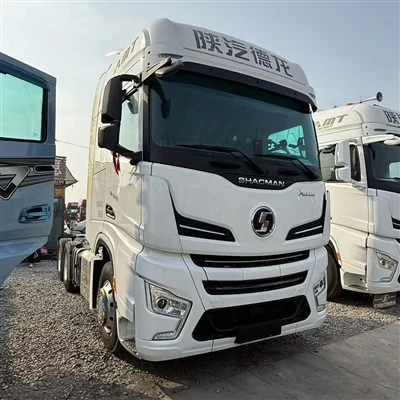
At the end of the day, towing isn’t about bragging rights. It’s about being able to get your job done, safely, without breaking down halfway. That’s why our light trucks are engineered to balance power, safety, and versatility, not just chase high towing numbers. If you’re in the market for a light truck to tow a trailer, and you want to talk through what setup makes sense for your work or your weekend projects, reach out to our sales team. We’ll walk you through your needs, show you our test models, and help you pick a truck that works for you.
Dump Semi-trailer References
National Highway Traffic Safety Administration. (2022). Light Truck Towing Safety Guidelines.
Society of Automotive Engineers. (2021). Towing Capacity and Vehicle Weight Rating Standards for Light Duty Pickups.
American Trucking Associations. (2023). Small Business Light Truck Use and Towing Practices.
Liangshan Guanyue Auto Trading Co., Ltd.
As one of the leading light truck manufacturers and suppliers in China, we warmly welcome you to buy bulk high quality light truck at low price from our factory. If you have any enquiry about pricelist and quotation, please feel free to email us.
Address: Liangshan County, Jining City, Shandong Province
E-mail: guanyuetruck@gmail.com
WebSite: https://www.gytruck.com/
