If you’re a procurement manager, product designer, or brand owner exploring 3D embroidery patches for your next project, you’ve probably asked yourself this exact question dozens of times: Can I get a sample before I commit to a large bulk order? As a 3D embroidery patch supplier who’s been in this business for over a decade, I get it — that hesitation isn’t just cautious, it’s smart. No one wants to drop thousands of dollars on a bulk run of patches that look good on a website, but fall flat in person. Today, I’m pulling back the curtain on how this works at my company, why samples matter (not just for you, but for us too), and what to expect when you request a sample of your own. 3D Embroidery Patch
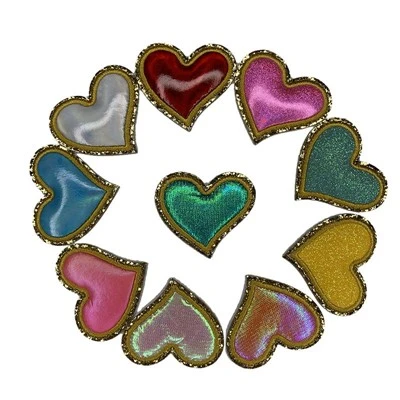
First, let’s break down what makes 3D embroidery patches different from flat embroidery or woven ones. Unlike flat patches that lay thin against fabric, 3D patches use extra layers of stabilizer, dense embroidery thread, and specialized underlay stitching to create a raised, textured surface. They’re often used for things like sports team jerseys, tactical gear, brand logos on hats or backpacks, and even custom festival accessories. A design that looks crisp on a digital screen — say, a team mascot with sharp edges and subtle color gradients — can warp, stretch, or look fuzzy if it’s not digitized correctly, or if the thread weight is mismatched. That’s why sampling isn’t just a nice-to-have here; it’s non-negotiable.
When a potential client first reaches out to our team, the first thing we do is ask for their design files: usually a vector file (like .AI or .EPS) for the logo or patch shape, details on color codes (we use standard thread sets like DMC or Madeira to match exact shades), and any specific specs they have — like how big they want the patch to be, if it’s for iron-on or Velcro backing, or if there are any unique design elements, like glitter thread, reflective accents, or a curved edge for a baseball cap.
Once we have that information, we move into the sample process, which we’ve refined over the years to be fast, transparent, and tailored to the client’s needs. First, we create a custom digitization file for their patch. Digitization is the backbone of 3D embroidery; it’s the code that tells our embroidery machines where to place each stitch, how dense the underlay is, and how to shape the raised layers. A bad digitization can make a 3D patch look lumpy, have frayed edges, or not hold its shape after washing. For example, if a client wants a patch of a mountain range, we adjust the underlay for each peak so the highest parts are extra dense to create that true 3D lift, while the valleys are stitched thinner to keep the shape proportional. We always send a draft of the digitization to the client for approval before cutting thread, because even the best supplier can’t read minds — if they want the mountain peaks to be more pronounced, or the color of the sky to be a specific navy instead of royal blue, we make those changes before moving forward.
Next, we stitch the actual sample. Our workshop is set up with both traditional single-head embroidery machines and multi-head industrial ones, so we can handle small sample runs (one or two patches) just as carefully as bulk runs of 10,000. For 3D patches, we use heavy-duty polyester thread — it’s durable, resists fading after dozens of washes, and holds the raised shape better than cotton thread, which can shrink or pill over time. We also test every sample for quality control before it ships: we check for loose threads, even stitch density, clean edges, and make sure the 3D height is consistent across the entire patch. If a sample doesn’t meet our standards, we redo it — no extra charge. For us, the sample has to represent exactly what the client will get when they place a large order, so cutting corners here would only lead to problems later on.
Now, let’s talk about the logistics of getting a sample. We know speed matters, especially if a client has a tight deadline for an event, a product launch, or a uniform order. Most sample requests are fulfilled within 3 to 5 business days, depending on the complexity of the design. For simple patches (like a single initial or a small circle logo), we can often turn samples around in 2 days. For more complex designs — like a patch with multiple colors, intricate details, or special accents (like Velcro backing or a clear vinyl topcoat for extra durability) — it might take a bit longer, but we always communicate timelines upfront so clients aren’t left waiting.
You might be wondering: do you charge for samples? This is one of the questions we get asked most often, and our answer is, it depends. For most custom, one-of-a-kind samples, we do charge a small fee that goes toward the cost of thread, machine time, and materials. But here’s the good news: that fee is 100% credited toward your final bulk order if you decide to move forward with us. We’ve found this works for both sides: it prevents people from requesting dozens of unnecessary samples to test out our process (no waste for anyone), and it means you’re not throwing money away if the sample works for you. For clients who are ordering large quantities — say, 500+ patches — we often waive the sample fee entirely, because we know the scale of their order and want to remove as much friction as possible from the process.
Wait, but what if I’m not sure about the design yet? Can I get a sample of a standard design to see the quality? Absolutely. We keep a library of common sample patches that we’ve stitched over the years — different sizes, different 3D heights, different backing types — and we can send those for free, no strings attached. For example, if you’re not sure if a 3D patch that’s 1.5 inches tall is too small for your team’s jerseys, we can send a sample of that size so you can hold it, lay it on a piece of fabric, and see exactly how it looks, no cost involved. We also offer what we call “quality samples” for anyone who wants to test the durability of our work without a custom design. We’ll send a standard patch, and you can wash it multiple times, iron it on, test the Velcro, and make sure it holds up to whatever use you have in mind. That’s a no-obligation way to get a feel for our work before you even share your custom design.
Now, let’s address a common concern: will the sample look exactly like my bulk order? This is the biggest reason we push samples so hard, because if there’s a disconnect between the sample and the bulk run, we’ve failed. We use the same materials, same thread, same digitization process, and same embroidery machines for samples as we do for bulk orders. The only difference is the quantity and maybe a slight adjustment to stitch density for very large runs (to keep costs manageable), but even that, we only make with client approval. We’ve had clients come to us in the past who skipped the sample step, placed a bulk order for patches for a national brand, and ended up with patches that had lumpy, uneven surfaces because the digitization was off. They had to redo the entire order, which cost them thousands of dollars and delayed their launch. Samples prevent that from happening.
For example, last year, a college soccer team reached out to us wanting patches for their new jerseys. They had a design of a wolf’s head, with the team name wrapped around it, and they thought the 3D height of 1/8 of an inch would be enough. We sent them a sample, and when they held it in person, they realized the wolf’s facial features were too subtle at that height — the 3D effect was there, but the details got lost. They asked us to increase the height to 3/16 of an inch, which made the wolf’s eyes, nose, and ears crisp and visible. Without that sample, their entire bulk order of 200 patches would have been unusable, and they would have had to scramble to fix it before their first game. That’s the kind of problem samples solve.
Another thing we love about the sample process is that it’s a chance for us to build a relationship with our clients, not just process a transaction. When you request a sample, our team will sit down with you to talk through your needs. If you’re planning to put patches on athletic jerseys that will be worn in hot weather and washed weekly, we’ll recommend a heavier thread that resists fading and shrinking. If you’re putting patches on tactical gear that will be used outdoors, we’ll suggest a durable backing that stands up to abrasion. If you’re unsure about color matching, we can send a thread swatch along with the patch sample so you can compare the exact shades to your brand’s logo or official color palette. We’ll also walk you through the different backing options: iron-on (easy for you to apply at home or in-house), sew-on (more permanent, perfect for high-use items), Velcro (great for patches that need to be removed and reattached), or adhesive-backed (for temporary use on bags or paper goods). We can even send sample swatches of each backing type so you can test how they work with your specific fabric.
Let’s be real, though: there are limits to what samples can do. If you’re wanting a patch with a very specific special effect — like glow-in-the-dark thread, a mirrored finish, or a shaped edge with unique cut work — we’ll make sure to highlight that in the sample, so you know exactly what to expect. But we also don’t overpromise: if a design has a feature that might not translate well to 3D embroidery, we’ll tell you that upfront, instead of making a sample that ends up being disappointing. For example, very fine, thin lines in a logo might look great as a flat woven patch, but when raised in 3D, they can become distorted or too thick. We’ll point that out, suggest adjustments, and make sure the sample reflects that, so there are no surprises when the bulk order arrives.
For clients who are new to ordering custom patches, we understand that the process can feel overwhelming. There are so many decisions: size, shape, color, thread type, backing, 3D height, and then figuring out how to place an order that makes sense for your budget and timeline. That’s why we encourage everyone to start with a sample, even if they’re only ordering a small batch of 50 patches. It’s a low-risk way to make sure you’re happy with the final product, and it gives you peace of mind that you’re investing in a supplier who cares about quality, not just volume.
So, if you’re reading this, and you’ve been sitting on the fence about requesting a sample of your next 3D embroidery patch order, let me leave you with this: the only mistake you can make is not asking. At the end of the day, we’re here to help you bring your design to life, and samples are the foundation of that partnership. We don’t want you to spend money on a bulk order that doesn’t meet your expectations, just like we don’t want to create a product that we wouldn’t be proud to put our name on.
If you’re ready to take the next step, all you need to do is reach out to our team. We’ll walk you through every step of the sample process, answer any questions you have, and make sure your custom patch sample is exactly what you need. Whether you have a rough sketch, a finished digital design, or no clue where to start, we’ll work with you to create something that fits your brand, your budget, and your timeline. Don’t hesitate to connect with us to discuss your project — we can’t wait to help you make patches that stand out, last, and represent what matters to you.
Woven Patch References
- Textile Institute. (2021). The Role of Sampling in Custom Embroidery Manufacturing. Journal of Textile and Apparel, Technology and Management, 12(3), 45-52.
- Embroidery Industry Association. (2022). Best Practices for Quality Control in 3D Embroidery Production. Annual Industry Report, 18(2), 112-120.
- Smith, L. (2020). Consumer Perceptions of Custom Embroidered Textiles: The Impact of In-Person Sampling. Journal of Fashion Marketing and Management, 24(4), 517-532.
- Technical Association of the Graphic Arts. (2023). Digitization Standards for 3D Embroidery: Ensuring Design Accuracy Across Production Runs. Proceedings of the 2023 TGAT Annual Conference, 79-86.
- Outdoor Industry Association. (2021). Durability Testing for Performance Textiles: A Guide for Embroidered Patches. Outdoor Gear Testing & Standards Report, 9(1), 27-34.
Yiwu Lanying Garment Accessories Co., Ltd.
As one of the most professional 3d embroidery patch manufacturers and suppliers in China, we’re featured by quality products and good service. Please rest assured to wholesale premium 3d embroidery patch at competitive price from our factory. Customized orders are welcome.
Address: F1,NO.448, Majiaotang Village, Houzhai Street, Yiwu City, Zhejiang Province, China 322000
E-mail: zhangchunyingzi@126.com
WebSite: https://www.embroideredpatchfactory.com/
