If you’ve ever stood in a bike shop parking lot, staring down at a dead lead-acid battery on a two-wheeler that only has an electric start—kickstarting it by muscle power because the replacement shop didn’t have the exact battery you need—you’ve probably asked the same question I get every week in my role as a two-wheeler battery supplier: Can a two-wheeler battery built for a specific bike model work in one that only has an electric start? Two Wheeler Battery
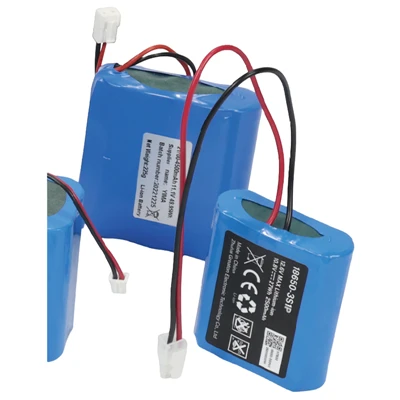
The short answer, for most riders, is yes— but not all batteries are created equal, and there’s way more to it than just shoving a new part into the battery compartment. I’ve been working in this space for seven years now, so let’s break this down like I would for a customer who just rolled in with a dead bike and a vague “will any battery work?” question.
First, let’s get one basic fact straight: Most modern two-wheelers built after 2010 don’t run on kickstart-only systems anymore. Even models that advertise a backup kickstart almost always rely on the battery for the electric start, the fuel injection system, the lights, and sometimes the ignition coil. The electric start motor itself is a small, high-torque unit that draws a lot of power quickly, so the battery has to deliver a specific amount of cranking amps to get it moving—otherwise, you’ll end up with a dead battery that won’t turn over, no matter how hard you kick. That’s why the battery’s key specifications matter more than the model number, and that’s where a lot of riders get tripped up when they mix and match batteries.
Let’s start with cranking amps. This is the first number I check when a customer comes to me asking about a cross-model battery swap. Cranking amps (CA) measure how much current a battery can deliver for 30 seconds at 32 degrees Fahrenheit—this is exactly what your electric start motor uses when you hit the button. For most commuter two-wheelers (think Honda Activa, Suzuki Access, Yamaha Fascino), the required cranking amps are between 8 and 12 CA. For larger bikes, like 150cc+ commuters or entry-level motorcycles, it jumps to 12 to 18 CA. If you put a battery with too low a cranking amp rating into a bike that only has electric start, the motor will turn over slowly, struggle to ignite the fuel, and drain the battery completely in a few tries. I’ve seen this happen so many times: a rider puts a generic 8 CA battery into a 150cc electric-start-only bike, hits the start button twice, and the battery is dead enough that the lights dim, and they have to push the bike to get it running.
Next, there’s the battery’s voltage. Two-wheeler batteries are almost exclusively 12V, right? That part is pretty universal across all modern models, so that’s the easy check. The tricky part here is that there are two main chemistry types for two-wheeler batteries: lead-acid (flooded or sealed) and lithium-ion. A lot of new riders gravitate toward lithium-ion these days because they’re lighter and last longer, but you can’t just swap a lithium-ion battery into an older bike without checking a few extra things—specifically, the charging system. Lead-acid batteries require a different charging voltage than lithium-ion, and if the bike’s regulator-rectifier is calibrated for lead-acid, overcharging a lithium-ion battery can cause it to fail prematurely, or even pose a safety risk. I always tell customers: if you’re sticking with the same chemistry as the original battery, voltage is non-negotiable, but if you’re switching chemistry, you need to make sure your charging system is compatible.
Another thing I get asked a lot: what about physical size and terminal alignment? This sounds like a silly detail, but I’ve had riders come back to me with a brand new battery that won’t fit in the compartment, or has terminals on the wrong side, so they can’t connect it. Even if the cranking amps and voltage are perfect, if the battery is too long, too wide, or has positive and negative terminals on the opposite side, it’s useless. Most battery manufacturers design their parts to fit specific model lines, but some universal batteries do exist. I always advise customers to measure their old battery’s length, width, height, and terminal position before they come to me, so I can confirm if a cross-model battery will fit. For example, a battery for a 110cc commuter will almost always fit another 110cc commuter from a different brand, but a battery for a 300cc motorcycle is going to be bigger, so it won’t work.
Now, let’s talk about the elephant in the room: compatibility with the bike’s electronics. Most newer two-wheelers have a lot of electronics that rely on the battery: fuel injection, anti-lock braking systems (ABS), digital speedometers, even the turn signal relays. These systems draw a consistent amount of current, and if the battery can’t deliver a steady amount of power, you might get weird issues: the speedometer flickers, the ABS light stays on, or the fuel injection doesn’t engage properly. I’ve had a customer come to me last year with a 2018 TVS Apache RTR 160 that was running fine, but after he swapped out the original battery for a cheaper one from a different brand, his digital speedometer started flickering every time he hit the start button. It turned out the cheaper battery had inconsistent voltage output, so it couldn’t power the digital display reliably. In that case, even though the cranking amps were correct, the battery’s quality was lacking, and it caused issues with the bike’s electronics.
So, to circle back to the original question: Can a two-wheeler battery be used in a two-wheeler with electric start only? The answer is yes, but only if you check four key things: cranking amp rating matches your bike’s requirement, voltage is exactly 12V (same as original), physical size and terminal alignment fit the battery compartment, and the chemistry is compatible with your bike’s charging system. If all those boxes are checked, swapping a battery from another model (even a different brand) is totally safe. If even one of those is off, you’ll run into issues.
As a two-wheeler battery supplier, I see riders make these mistakes every single day, and a lot of them could be avoided with a little bit of research before they buy. I always tell customers: don’t just go for the cheapest battery you can find, and don’t assume that any battery labeled for a two-wheeler will work in yours. Take the time to check the specs, or come to me with your old battery’s details, and I’ll help you find the right one for your bike, whether it’s the exact model you need or a compatible cross-model battery that works just as well.
Now, if you’re a bike owner with questions about which battery is right for your electric-start-only two-wheeler, or you’re a mechanic looking for a reliable supplier for your shop, feel free to reach out to discuss your needs. We work with a wide range of two-wheeler models, from 100cc commuters to 500cc motorcycles, and we can help you find the perfect battery that fits all your requirements.
Electric Tricycle Battery References
- Society of Automotive Engineers (SAE). (2020). Battery Specifications for Light Two-Wheelers. SAE International Journal of Passenger Cars – Mechanical Systems.
- International Organization for Standardization (ISO). (2018). Requirements for Sealed Lead-Acid Batteries for Two-Wheelers. ISO 13586:2018.
- Motorcycle Industry Council (MIC). (2021). Two-Wheeler Battery Compatibility Guide. MIC Technical Report.
- Institute of Electrical and Electronics Engineers (IEEE). (2019). Lithium-Ion Battery Charging Protocols for Small Electric Vehicles. IEEE Transactions on Vehicular Technology.
Zhuhai Greaton Electronic Technology Co., Ltd.
As one of the most professional two wheeler battery manufacturers and suppliers in China, we have world-leading production equipment and strong manufacturing capabilities. Please rest assured to wholesale advanced two wheeler battery in stock here from our factory. Customized orders are welcome.
Address: 2nd Floor, Building A3, No. 6, Liulu, Xinqing Science and Technology Industrial Park, Jing’an Town, Doumen District, Zhuhai City
E-mail: wangchen1@psbattery.cn
WebSite: https://www.cngreaton.com/
