If you’ve ever stared up at a network of steel towers strung with power lines crisscrossing your city or the countryside, you’ve probably wondered: just how tall do these overhead line towers actually get? As an overhead line tower supplier who’s been in this game for over a decade, I get that question all the time—from new clients building rural solar farms to urban developers upgrading grid infrastructure. It’s not a random number, either; the max height of these towers is a mix of engineering rules, local weather, terrain, and what the power lines themselves need. Let me break this down straight, no jargon, and give you the real scoop. Overhead Line Tower
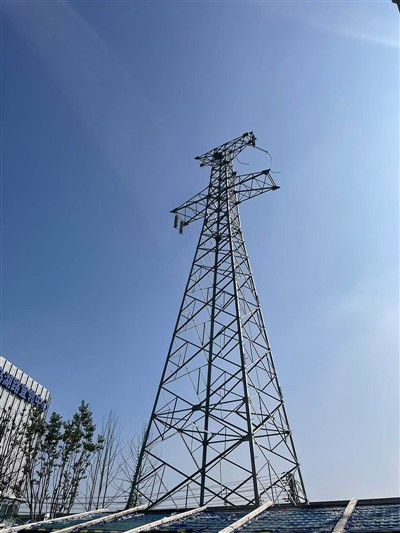
First off, let’s clarify: when people talk about “overhead line towers,” they’re not all the same size. There are tiny distribution towers for neighborhood power lines, and massive transmission towers that carry high-voltage power hundreds of miles. The max height only applies to those big transmission ones, right? Distribution towers usually top out at like 30 to 60 feet—they’re for local lines, so they don’t need to clear much or span wide gaps. We’re talking 100 feet and up here, but what’s the ceiling?
Engineers set that max height based on two big non-negotiables: ground clearance requirements and structural limits. The Federal Energy Regulatory Commission (FERC) in the US, and similar bodies globally, mandate that power lines have a minimum clearance above ground. That’s not just to avoid accidents—lines can sag when they’re hot (from carrying more power) or heavy (from ice or wet snow). So if a tower is taller, you can keep the lines higher off the ground without sagging into trees, roads, or farmland. But there’s a catch: taller towers need way more steel, deeper foundations, and they have to withstand way stronger wind. A 400-foot tower isn’t just a scaled-up 200-footer—it’s a whole different beast.
The current global max for overhead line towers that are in active use? I’ve seen units around 410 feet tall, built for ultra-high-voltage (UHV) transmission lines. Those lines carry 1,000 kV or more, way higher than the standard 345 kV you see in most places. Why so tall? They were built across hilly, mountainous terrain in China—super rugged, so you can’t just dig a foundation any deeper. Spanning valleys is another factor; sometimes a tower needs to be tall enough so the line doesn’t dip too low between two towers. If you have a 1-mile span between two towers, you need extra height to keep the line from sagging into the ground in between.
Wait, but could they go even taller? Let’s talk about the limits that stop towers from just getting higher and higher. First, wind load. Taller towers act like big sails when the wind blows. At 400 feet, a tower is exposed to much faster, steadier wind than a 100-footer at ground level. Engineers have to calculate the “wind pressure” at that height—if a tower’s too tall, the steel needed to hold it up against wind gets prohibitively expensive, and the risk of collapse goes way up. I’ve had clients ask for 500-foot towers, but we usually talk them out of it because the cost jumps like 30% just for extra steel and reinforced foundations, with barely any benefit for their project.
Then there’s transportation and installation. Most steel tower components are fabricated in sections, then shipped to the site. If a tower is 400 feet, each section is like 80 to 100 feet long—you can’t drive a truck with a 100-foot section down a narrow rural road, or lift it with a standard crane. Some projects in remote areas have to use smaller, lighter sections, which means no super tall towers there. Urban areas add another layer: zoning laws. Most cities have height limits for structures to avoid messing with air travel (low-flying helicopters, small planes) or just to keep the skyline from getting cluttered. A 400-foot tower in downtown Chicago? Forget it. That’s way taller than most buildings there.
Terrain plays a huge part too. If you’re building on flat land, a tower doesn’t need to be super tall to clear trees or roads, so max height might be 250 feet. But if you’re building over mountains or across wetlands where you need to span wide gaps, you’ll go taller. I once worked on a project in the Pacific Northwest where we built 380-foot towers to cross the Columbia River Gorge—they needed to clear the river and the steep hills on either side, so height was non-negotiable. If we’d tried to use shorter towers, we’d have needed way more of them, which would have cost way more and taken up way more land.
Another thing people don’t think about: ice and snow load. In cold climates, power lines get covered in ice, adding hundreds of pounds of extra weight per line. That makes the line sag more, so towers have to be taller to compensate. We once did a project in northern Canada where the towers hit 390 feet—they had to account for 2 inches of ice on the lines, which would have made a shorter tower’s lines sag right into the ground.
Now, what about the future? Are we gonna see even taller overhead line towers? UHV transmission is growing fast because it’s way more efficient for moving power long distances—less energy lost along the way. But I don’t think we’ll hit 500 feet any time soon, for a few reasons. First, cost. Taller towers aren’t just more steel; foundations for a 400-foot tower are like 20 to 30 feet deep, sometimes with concrete piers that go even deeper into bedrock. That adds up fast. Second, maintenance. Climbing a 400-foot tower to fix a line is way more dangerous and expensive than a 200-footer. Workers need specialized gear, cranes, and sometimes even helicopters to get up there—something most utilities try to avoid when they can.
Also, there’s pushback from communities. No one wants a giant tower in their backyard, so utilities stick to the minimum height they need, not the max. That’s why most projects end up with towers between 150 and 300 feet, not the 400-foot max we see in special cases.
Wait, let me correct a common myth: some people confuse overhead line towers with electricity pylons (which is the same thing, different name) with cell phone towers or communication towers. Those can be taller—some go up to 1,000 feet or more—because they don’t have to support heavy power lines. Our towers have to hold up steel cross-arms, insulators, and power lines that can weigh thousands of pounds total, so they’re built for way more stress, which caps their height.
So when a client comes to me and asks, “What’s the max height I can go?” I don’t just give them a number. I walk through their specific project: where is it? What’s the terrain? What’s the voltage of the lines? What’s the local weather like? If they’re building a UHV line across a flat, remote desert with no zoning restrictions, maybe we can talk 350 to 400 feet. If they’re building a distribution line in a suburban area, we’re looking at 50 to 70 feet, easy.
I see a lot of people online guessing the max height, but it’s not a one-size-fits-all number. It’s a balance between engineering, cost, regulations, and the job the tower has to do. As someone who’s been building these towers for years, I’ve seen projects where a 300-foot tower was overkill, and projects where a 350-foot tower was exactly what made the project work.
If you’re working on a grid upgrade, a new renewable energy line, or anything that needs overhead towers, don’t waste time guessing what height you need. We can help you figure out the right height, structure, and design that fits your project’s needs without overspending. Whether you’re in North America, Europe, or anywhere else, we can tailor our towers to your location, voltage requirements, and terrain.
Reach out to our team to talk through your project details, no obligation. We’ll give you straight answers, no hidden fine print, and help you get the right towers for your needs.
Corrugated Steel Culvert References
- North American Electric Reliability Corporation (NERC) Transmission Tower Design Standards
- International Electrotechnical Commission (IEC) 60826: Design Criteria of Overhead Transmission Lines
- Federal Energy Regulatory Commission (FERC) Power Line Clearance Regulations, 2022 Edition
- China Electricity Council: Ultra-High-Voltage Transmission Tower Installation and Engineering Reports
Hebei Yifeng Steel Structure Co., Ltd.
As one of the most professional overhead line tower manufacturers and suppliers in China, we offer a wide range of products with superior quality. Please feel free to buy cost-efficient overhead line tower for sale here from our factory. Contact us for more details.
Address: Guangchuan Town Industrial Zone, Jing County, Hengshui City, Hebei Province
E-mail: hbyfgjg@163.com
WebSite: https://www.yf-powertowers.com/
